

Wholesale indoor playground manufacturer and supplier

Wholesale sourcing of an indoor playground requires more than comparing unit prices: B2B buyers need a supplier with verifiable production capacity, clear minimum order quantities (MOQs), repeatable quality controls, suitable safety documentation, and a shipping plan for the destination market. This guide explains how distributors, retailers, and project buyers can evaluate factory-direct and local supply options, request comparable quotations, reduce bulk-order risk, and confirm logistics and compliance requirements before placing an order. Because no target country or region is specified, regulatory and freight details should be confirmed for each destination.
How the Indoor Playground Wholesale Market Works
Match the sourcing model to your business
Wholesale buyers generally source through a local distributor, a regional importer, or a direct manufacturer. A local supplier may offer shorter delivery times, local-language support, and access to stock already in the country. Direct factory sourcing can provide broader customization and a clearer view of production, but it may require a larger commitment, more project coordination, and international freight management. Neither model is automatically better: the right choice depends on order size, launch schedule, service requirements, and the buyer’s ability to manage import processes.
For a distributor or retailer building a product range, assess whether the supplier can provide repeatable models, replacement components, product documentation, and consistent packaging across orders. For a single venue project, installation planning and site-specific design may carry more weight than a low per-unit price. A wholesale indoor playground supplier should explain what is standard, what is configurable, and which changes affect engineering, lead time, or cost.
Define the project scope before requesting prices
Quotations are only useful when suppliers price the same scope. Prepare a brief covering intended users and age groups, available floor area and ceiling height, expected traffic, equipment type, preferred materials and colors, installation responsibilities, and delivery address. Include plans or measurements where possible. State whether the request covers a compact soft-play unit, a multi-level structure, trampolines, climbing features, toddler zones, or a mixed indoor recreation layout. These details help manufacturers estimate materials, labor, packing volume, and production time more accurately.
Clarify whether the quote includes design drawings, samples, inspection, installation guidance, spare parts, and shipping. Ask for a line-item breakdown rather than a single headline figure. A low initial price can exclude costs that matter later, such as crating, port handling, customs charges, local delivery, or installation. Confirm which items are estimates and which are fixed, and how long the quotation remains valid.
Set realistic expectations for MOQs and customization
There is no universal MOQ for indoor play equipment. A supplier may set different minimums for a complete project, individual play modules, replacement parts, or custom colors. The minimum may also depend on material availability, production scheduling, packaging, and the complexity of a design. Ask for the MOQ by product configuration and identify whether it applies to one site, a combined shipment, or a production run across several orders.
Buyers testing a new market can ask whether a standard design, shared color palette, or mixed-SKU order can meet the supplier’s production requirements with less initial commitment. Do not assume that a lower MOQ is necessarily the best offer: confirm whether the same materials, inspection steps, warranty terms, and support apply. Put any agreed pilot-order conditions in writing, including how pricing and lead time may change if the next order is larger.
How to Evaluate a Factory and Its Quality System
Verify capacity, experience, and communication
Assess a manufacturer using evidence rather than claims alone. Request a current product catalogue, project references relevant to your equipment type, production photographs or a live factory walkthrough, and an explanation of the steps from design approval to packing. Ask who manages engineering changes and who will be your point of contact during production. If a supplier outsources fabrication, coating, sewing, or assembly, ask which processes are subcontracted and how the supplier controls them.
Capacity should be evaluated against your actual order and delivery window. Ask how many units or project packages can be produced in the period you need, what work is already scheduled, and whether capacity is shared among product lines. A capable factory should be able to explain its production sequence and identify dependencies such as customer approval of drawings, material procurement, or final inspection. Request a realistic schedule with milestones rather than relying on an informal delivery promise.
Management-system credentials can support supplier evaluation but do not, by themselves, prove that a particular product is safe or suitable. For example, buyers can ask what scope is covered by a supplier’s quality-system certification and verify the certificate with its issuer. The ISO 9001 quality management overview describes the standard’s focus on quality management systems; it is not a product safety certification.
Make bulk quality control measurable
Agree on written product specifications before production. These should identify dimensions, materials, colors, surface finishes, hardware, stitching or joining requirements, packing method, and approved drawings. For a multi-site buyer, retain a signed-off reference sample or approved sample images and specifications. Record acceptable tolerances and the process for handling a proposed substitution. If a material or component changes, require written approval before production continues.
Ask the supplier to describe its incoming-material checks, in-process inspections, final inspection, and recordkeeping. Agree on the inspection scope and timing, including whether the buyer or an independent inspection provider may check the order before dispatch. Sampling and inspection do not replace product design review or compliance assessment, but they can help identify workmanship, quantity, labeling, and packing issues before shipment. Keep the inspection criteria practical and tied to the purchase specification.
Safety requirements vary with product design, intended users, installation, and destination. Buyers should identify the applicable national or local rules with a qualified compliance professional or the relevant authority before ordering. For soft-contained play equipment, ASTM F1918 is a relevant voluntary consensus standard in the United States; buyers should confirm the current edition and applicability to the specific product and project. The U.S. Consumer Product Safety Commission’s Public Playground Safety Handbook provides playground safety guidance, but it is not a substitute for checking requirements that apply to a commercial indoor installation or another jurisdiction.
Compare wholesale pricing on a like-for-like basis
Wholesale pricing commonly reflects order quantity, design complexity, materials, customization, packaging, inspection requirements, and shipping terms. Rather than expect a universal discount schedule, request written price breaks at the quantities you may realistically purchase. Ask whether pricing is per item, per set, or per project, and whether tooling, design work, samples, or spare parts are charged separately. Confirm the currency, payment milestones, validity period, and treatment of taxes, duties, and freight.
| Quotation item | What to request | Why it matters |
|---|---|---|
| Quantity and MOQ | Price breaks by configuration and order volume | Shows whether mixed models or a pilot order qualify |
| Product scope | Specifications, drawings, materials, and included components | Prevents comparison of different equipment packages |
| Quality and inspection | Inspection stages, acceptance criteria, and documentation | Defines how bulk consistency will be checked |
| Packaging and freight | Package dimensions, estimated weight, shipping basis, and destination charges | Helps estimate landed cost and warehouse requirements |
| Schedule and support | Production milestones, dispatch estimate, warranty, and spare-parts terms | Clarifies service and delivery expectations after purchase |
Compare total landed cost, not just the factory’s unit price. The calculation may include product cost, inland transport, export handling, freight, insurance, customs duties, taxes, port or terminal fees, destination delivery, and installation. Which charges apply depends on the trade route, contract, and local rules. Ask the supplier to state the agreed delivery term and named place precisely, and check the responsibilities against the relevant ICC Incoterms rules. Incoterms allocate specified delivery responsibilities between buyer and seller; they do not settle every payment, ownership, or compliance issue in a sales contract.
Plan International Logistics and Ongoing Supply
Confirm packing, freight, and delivery responsibilities
Indoor play equipment can be bulky, irregularly shaped, or shipped in multiple packages. Before confirming an order, request estimated carton or crate dimensions, gross weight, loading information, and the number of shipping units. These figures help a freight forwarder assess container or other transport options and help the buyer prepare receiving space. Confirm whether packing is designed for the chosen transport route and whether labels, package counts, and handling instructions will be provided.
Ask who books the transport, who arranges export documentation, and who is responsible for insurance, customs clearance, duties, and delivery to the final site. The answer depends on the contract and delivery term; do not rely on assumptions based on phrases such as “shipping included.” Have a freight forwarder or customs broker review the proposed route and import requirements for the destination before paying a deposit. Allow time for customs review and inland transport in addition to the supplier’s production estimate.
Build a schedule around approvals and installation
A useful project schedule separates design approval, material procurement, production, inspection, dispatch, transit, customs clearance, final delivery, and installation. Ask which dates are targets and which depend on buyer decisions or external transport providers. Late approval of drawings, changes to colors or dimensions, or missing site information can affect the production sequence. Establish a process for approving revisions and keep the latest signed drawings accessible to the purchasing, operations, and installation teams.
Before production, confirm site access, delivery restrictions, unloading equipment, storage conditions, and who will assemble or install the structure. A shipment that reaches a port on schedule can still miss a venue opening if unloading, site readiness, or installation labor has not been arranged. For a distributor managing several customers, align delivery windows and packing labels with each site’s receiving process, and agree how shortages or transit damage should be reported and documented.
Plan for repeat orders and after-sales support
For a wholesale program, the first purchase is only one part of supplier performance. Ask how the manufacturer identifies product versions, maintains specifications, and supports reorders if a component or finish changes. Confirm availability and identification of replacement parts, the process for reporting defects, warranty coverage, and the response time buyers can expect for technical questions. These terms should be stated in the purchase agreement or supporting documents rather than inferred from a general sales conversation.
Keep a record of approved drawings, specifications, inspection reports, packing lists, and order changes for every production run. When a second order is placed, compare it against the approved baseline and require the supplier to disclose any proposed change in materials, dimensions, or construction. A reliable indoor playground supply relationship is built through documented expectations and consistent follow-through, not price alone. Buyers who regularly review landed costs, product performance, delivery accuracy, and service can make better decisions about consolidating orders or expanding a product range.
Contact us to discuss wholesale pricing, MOQs, and bulk indoor playground orders for your target market.
Frequently Asked Questions
What is the MOQ for a wholesale indoor playground order?
There is no universal MOQ. Minimums may differ for a complete project, individual modules, replacement parts, or custom colors, and can depend on materials, scheduling, packaging, and design complexity. Ask for the MOQ by configuration and whether mixed products or a pilot order are possible.
How can I compare wholesale indoor playground suppliers fairly?
Request comparable written quotations covering the same specifications, quantity, materials, customization, inspection, packing, delivery term, and support. Compare total landed cost rather than only the unit price, and verify factory capacity, quality processes, and relevant documentation.
What quality checks should I request for a bulk order?
Agree on written specifications and approved drawings, then ask about incoming-material checks, in-process inspections, final inspection, and records. Define acceptance criteria and whether you or an independent inspector can review the order before dispatch.
Which safety standards apply to indoor playground equipment?
Requirements depend on the product, intended users, installation, and destination. Identify applicable rules with a qualified compliance professional or relevant authority. ASTM F1918 is a relevant voluntary consensus standard for soft-contained play equipment in the United States, but buyers should verify its current edition and applicability.
How can I estimate the landed cost of an imported indoor playground?
Consider product cost, inland transport, export handling, freight, insurance, duties, taxes, port or terminal fees, destination delivery, and installation where applicable. Request package dimensions and weights, specify the delivery term and named place, and consult a freight forwarder or customs broker about the destination.
What should a wholesale supplier provide after delivery?
Agree in writing on warranty coverage, replacement-part availability, the defect-reporting process, technical support, and response expectations. Keep approved specifications, drawings, inspection reports, packing lists, and change records to support future reorders and claims.
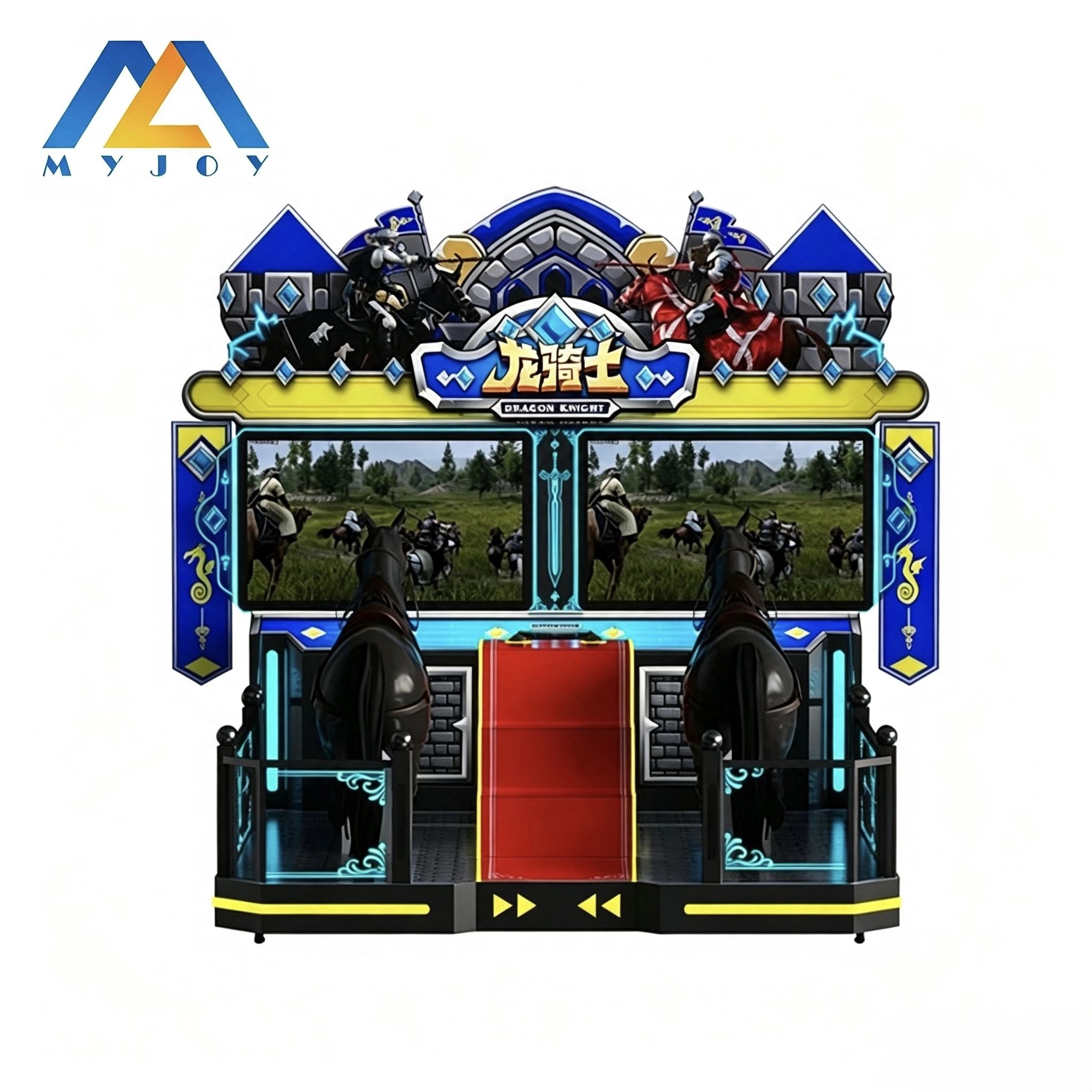
Flying Dragon Knight Horse Racing Simulator is a premium two-player arcade entertainment machine designed for amusement parks, shopping malls, arcades, family entertainment centers and themed attractions. Inspired by medieval knights and fantasy dragon adventures, this simulator combines realistic horse riding motion, interactive racing gameplay and an impressive visual design to create an unforgettable entertainment experience.
Featuring two realistic horse models, dual HD displays, dynamic motion control, vibration feedback and immersive sound effects, players can experience exciting horse racing competitions, adventure challenges and jumping missions. The machine recreates the feeling of real horseback riding through synchronized movement and responsive control systems.
With its eye-catching dragon knight appearance, colorful LED lighting, multiplayer competition mode and safe commercial design, Flying Dragon Knight Horse Racing Simulator is an excellent attraction solution for increasing customer engagement and entertainment value.
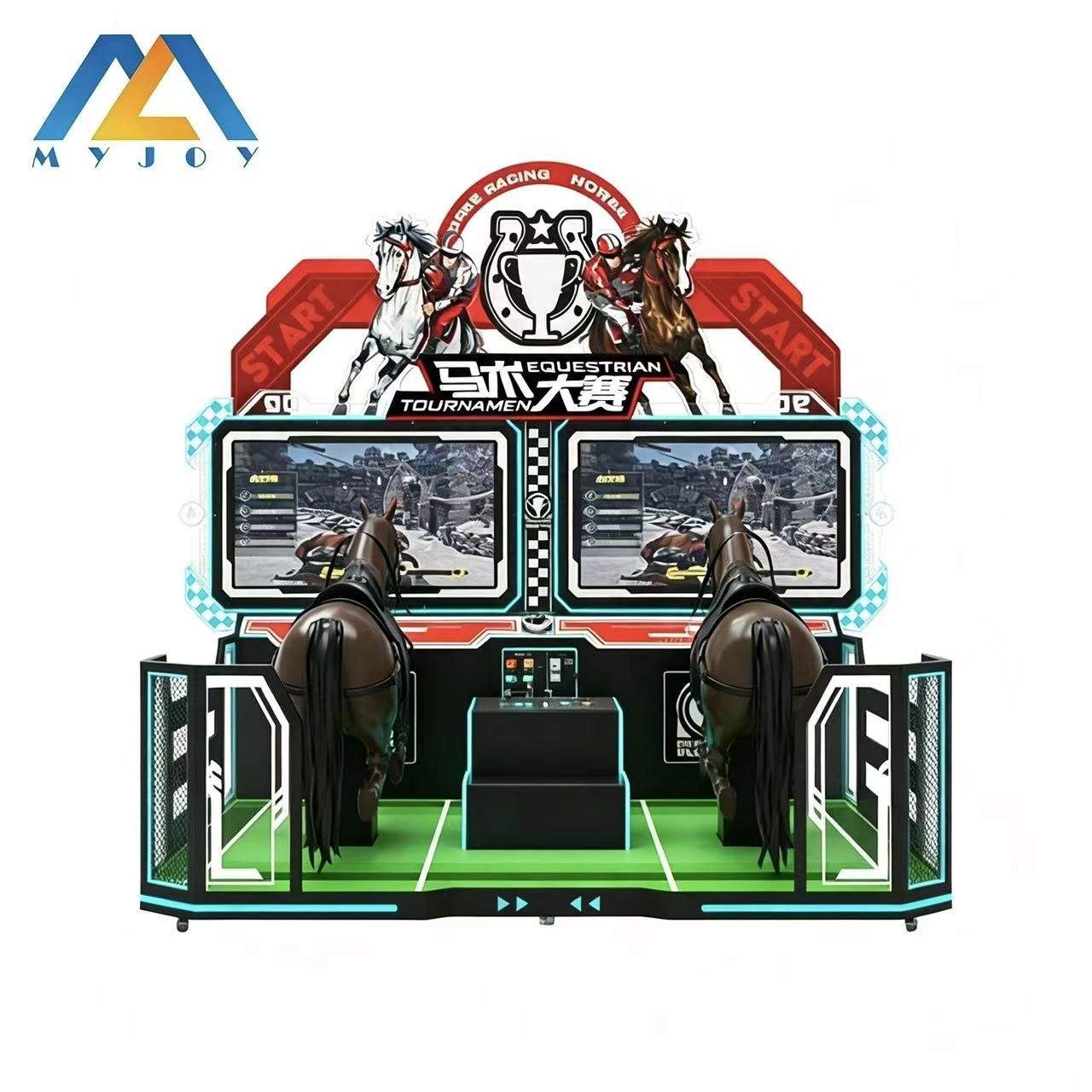
The Horse Racing Championship is a dual-player interactive sports simulator developed by Guangzhou Meiyilian Animation Technology Co., Ltd. It combines simulated horseback riding, competitive racing, physical interaction, and immersive visual effects to create an exciting attraction for players aged 5 to 50.
The machine features two realistic horse models equipped with comfortable saddles and reins. Players control their horses through riding movements and compete on two HD screens. Multiple racing scenes, difficulty levels, and challenge modes make the experience suitable for beginners and experienced players alike.
With its striking equestrian-themed design, dynamic LED lighting, green racetrack-style platform, and competitive ranking system, the machine easily attracts attention and encourages repeat play. It is ideal for amusement arcades, shopping malls, family entertainment centers, sports venues, theme parks, clubs, and tourist attractions.
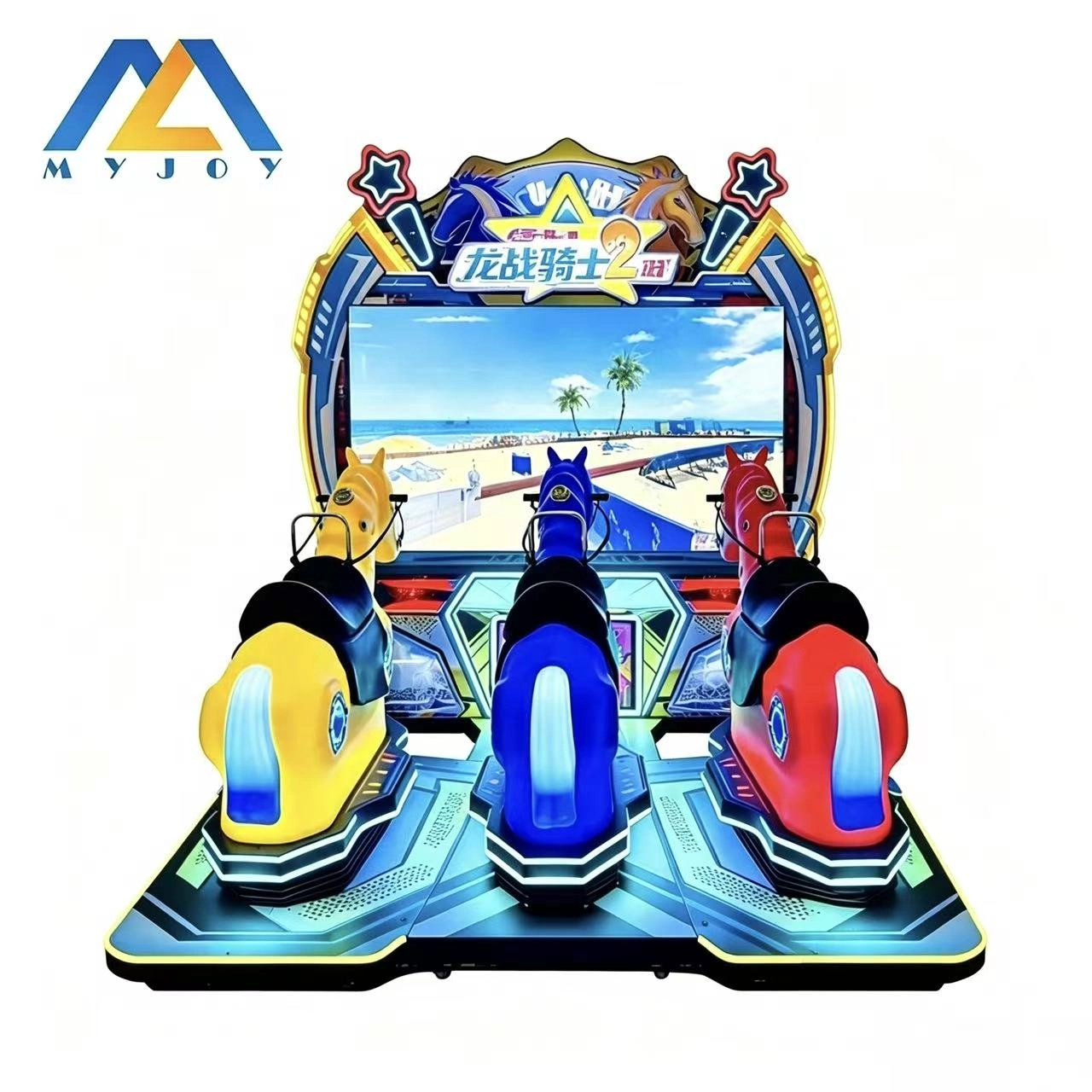
Dragon Warrior Knight 2 – Bring Real Horse Racing Excitement to Indoor Entertainment Venues
Dragon Warrior Knight 2 is an immersive interactive horse riding arcade machine designed around horse racing, obstacle challenges, and multiplayer competition. Featuring a cute and colorful horse design, large HD display, dynamic lighting effects, surround sound system, and realistic rein-control operation, this simulator creates an exciting horse racing experience for children, teenagers, and families.
Players can experience the feeling of riding a racing horse by controlling the reins to accelerate, change direction, and jump over obstacles. The realistic riding movements and interactive gameplay provide strong immersion and encourage repeat play.
The machine supports single-player challenge mode and 3-player competitive racing mode, allowing players to compete with friends, family members, or teammates. It is an ideal attraction for children's playgrounds, arcades, shopping malls, amusement parks, and family entertainment centers.
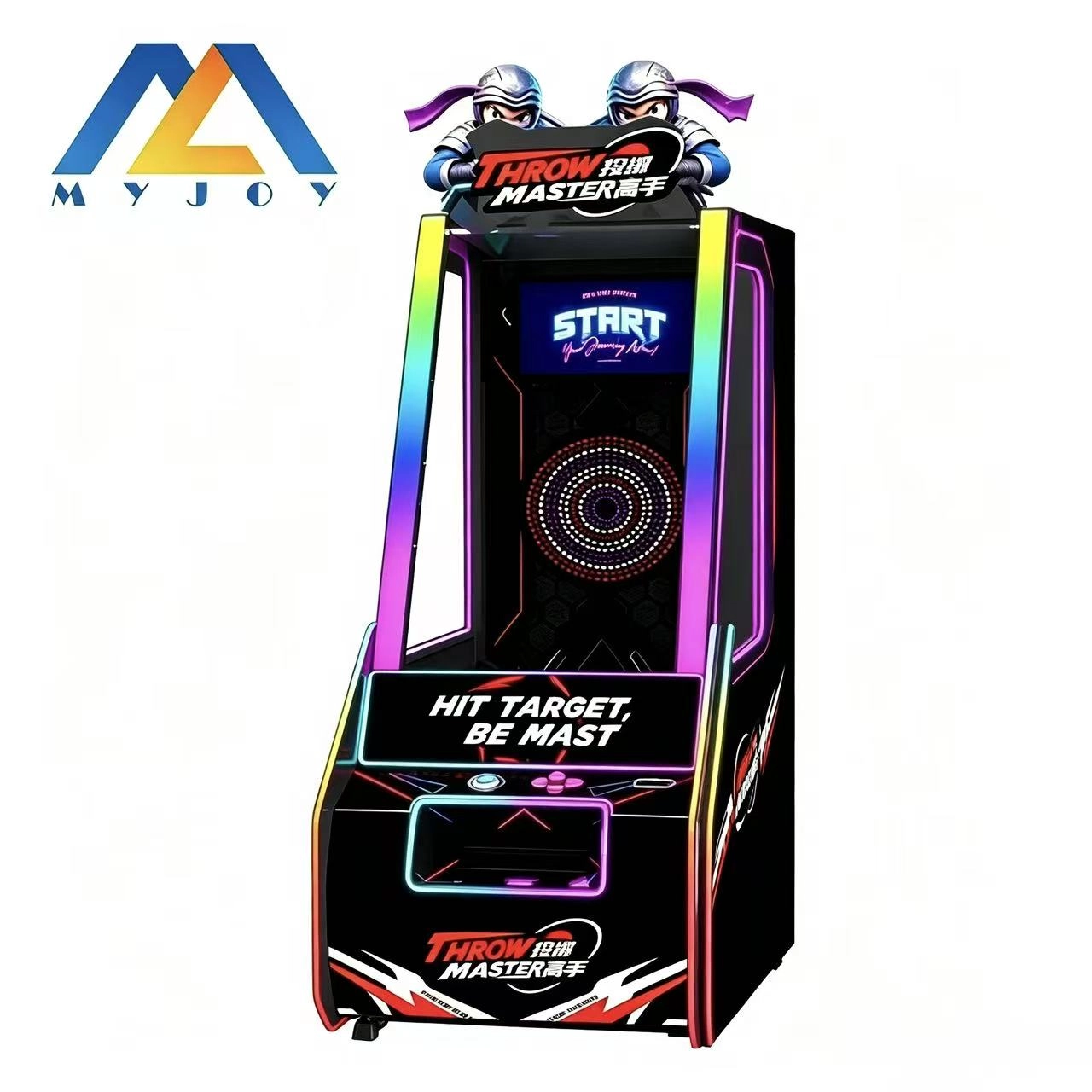
THROW MASTER is a commercial interactive dart throwing arcade machine that combines physical throwing action with an electronic target, digital scoring, on-screen interaction, and camera-based hit detection.
Designed for arcades, family entertainment centers (FECs), indoor amusement venues, shopping malls, and competitive entertainment spaces, THROW MASTER delivers an engaging mix of casual fun and skill-based competition.
Players insert coins, select their player and game mode, and throw darts at the large colorful electronic target. The system detects each result and displays scores, objectives, remaining throws, and game progress on the screen.
With Standard Mode for score-based challenges and Skill Mode for precision target challenges, the machine is suitable for both casual players and those looking for a more competitive experience. Leaderboards, adjustable game settings, and optional ticket rewards also make it well suited for commercial arcade operation.
Its large upright cabinet, colorful circular target, and vibrant RGB-style lighting create a futuristic arcade appearance that helps attract attention in busy entertainment venues.


No. 3, Wenjian Second Road, Wenbian Village, Shiji Town, Panyu District, Guangzhou City, China
Facebook