

Wholesale amusement equipment manufacturer manufacturer and supplier
Choosing an amusement equipment manufacturer for wholesale supply requires more than comparing unit prices: B2B buyers need verifiable production capacity, clear minimum order quantities (MOQs), repeatable quality controls, suitable product documentation, and a landed-cost plan for their destination market. Before placing a bulk order, define the equipment mix, installation conditions, compliance needs, delivery schedule, and after-sales requirements. Then assess prospective factories against those criteria using samples, written specifications, inspection checkpoints, and a transparent quotation. A disciplined sourcing process helps distributors, venue operators, and retailers control risk while building a dependable supply relationship.
Wholesale Sourcing Trends and the Buyer’s Market
Match equipment to the commercial use case
Amusement equipment covers a wide range of products, from soft-play structures and arcade machines to inflatable attractions, trampolines, and mechanical rides. Their safety considerations, installation needs, useful life, and shipping constraints differ considerably. Buyers should define the intended venue, user age range, operating hours, indoor or outdoor exposure, and expected throughput before requesting quotations. A supplier that specializes in one category may not be qualified to engineer or produce another. Ask for product-specific references and technical information rather than assuming that a broad catalog represents equivalent expertise across every item.
For a mixed wholesale order, separate products into categories and specify the expected quantities for each. This gives an amusement equipment manufacturer a realistic basis for costing materials, production time, packaging, and inspection. It also makes supplier comparisons more meaningful: two quotes should cover the same configuration, accessories, finishes, documentation, and delivery terms. If the products require site preparation or installation, identify who is responsible for those tasks before approving the purchase order.
Turn requirements into a comparable request for quotation
A clear request for quotation (RFQ) should state product models or functional requirements, dimensions, materials, electrical specifications where relevant, branding, packaging, destination, target shipment window, and requested quantities. Identify which details are mandatory and which are open to supplier recommendations. Include drawings, reference photographs, or performance requirements when they will reduce ambiguity, and ask the supplier to list all assumptions and exclusions. This avoids a common sourcing problem: receiving low headline prices based on different specifications.
Ask every candidate to quote the same quantity breaks, such as an initial trial quantity and planned repeat-order volumes. Request separate pricing for product, optional accessories, export packaging, and freight where available. Freight quotations may change with route, shipment size, season, and carrier availability, so confirm validity dates and the exact shipping basis. An experienced amusement equipment manufacturer should be willing to clarify what is included rather than relying on an informal total that cannot be audited.
Confirm supplier identity and relevant experience
Verify the legal entity named on the quotation, contract, invoice, and bank instructions. Ask whether the business is the factory, a trading company, or a combination, and request a clear explanation of which production steps are performed in-house or by subcontractors. Review product references that resemble your order in type, complexity, and scale. A factory visit, live video walkthrough, or independent audit can help verify facilities, but each method has limits; none substitutes for written specifications and order-specific inspection.
Evaluate the supplier’s ability to communicate technical changes, manage production records, and support spare-parts requests after delivery. For an amusement equipment manufacturer relationship, practical responsiveness is a commercial capability: delayed clarification can affect tooling, approvals, and the shipping schedule. Ask who will own the project after order confirmation and how design changes, defects, and delivery updates will be documented.
How to Evaluate Capacity, MOQ, Pricing, and Quality
Assess production capacity and minimum order quantities
MOQ is not a universal measure of factory size. It can reflect minimum material purchases, color or print setup, engineering work, packaging requirements, or the economics of a production run. Ask the supplier to explain the MOQ by product and configuration, and whether a smaller first order is possible at a different unit price. For a broad assortment, negotiate MOQs at the model or product-family level rather than assuming one total quantity can be freely divided among many variants.
To assess capacity, request a realistic production plan showing material procurement, fabrication, assembly, testing, packing, and inspection milestones. Ask what portion of the planned schedule depends on components or subcontractors, and whether the factory is already committed to other orders. Do not treat a stated monthly capacity as a guarantee that your order can be completed by a particular date. The purchase agreement should identify the approved schedule, the information and approvals you must provide, and the process for communicating delays.
Compare tiered pricing on a like-for-like basis
Bulk pricing usually depends on quantity, specification, customization, order frequency, and packaging. A lower unit price may come with a larger MOQ, longer lead time, less customization, or additional charges outside the quoted amount. Compare the total delivered cost, not only the factory unit price. Depending on the agreed shipping terms, the buyer may need to budget separately for freight, insurance, customs clearance, duties, taxes, inland transport, installation, and local compliance work. Confirm responsibilities in the contract and obtain destination-specific advice from a customs broker or logistics provider.
| Order tier | Typical commercial purpose | What to verify with the supplier |
|---|---|---|
| Sample or pilot | Review fit, finish, packaging, and product documentation before a larger commitment. | Sample cost, customization limits, lead time, and whether the sample represents production materials. |
| Initial wholesale order | Test market demand or equip a first venue with a controlled product mix. | Per-model MOQ, setup charges, inspection plan, and approved production specifications. |
| Repeat or program order | Replenish proven products or coordinate supply across locations. | Price validity, forecast commitments, capacity allocation, component continuity, and spare-parts support. |
The tiers above are a negotiation framework, not a universal price schedule. Ask each amusement equipment manufacturer to provide actual breaks for your selected models and quantities. If a supplier offers a discount for a forecast or annual volume, clarify whether it is a binding purchase commitment, a nonbinding planning estimate, or a price review arrangement. Put any rebates, price holds, or staged deliveries in writing, including the conditions that apply.
Build quality assurance into the purchase order
Quality should be defined in measurable terms before production begins. The approved specification can cover dimensions, materials, color references, finish, electrical components, labeling, packaging, and the documents required at shipment. Agree how samples are approved and how later production will be checked against them. For complex or safety-relevant products, consider a pre-production review, in-process inspection, and final inspection before dispatch. Define who selects the inspector, what sampling or test method applies, how defects are recorded, and what corrective action is expected.
Ask how the factory controls incoming materials, production changes, nonconforming products, and traceability. A quality-management certificate may provide useful context about a management system, but it does not by itself prove that a specific amusement product meets the rules in your destination market. Review the scope and validity of any certificate directly with its issuer, and verify product-specific claims separately. The ISO overview of quality management systems explains the role of quality-management standards; it should not be mistaken for product approval.
Safety requirements depend on the equipment type and the jurisdiction where it will be installed and operated. Request applicable test reports, manuals, warning labels, maintenance instructions, and declarations or certificates relevant to the product and destination. Confirm these with a qualified local authority, testing laboratory, or compliance adviser before purchase. For example, ASTM International Committee F24 develops standards relating to amusement rides and devices; buyers should identify the specific standards that apply to their equipment rather than assume one standard covers every product or market.
Manage Logistics, Compliance, and the Supplier Relationship
Plan the complete route from factory to site
Shipping plans should start with packed dimensions and gross weights, not just product dimensions. Ask for carton or crate measurements, pallet configuration, loading requirements, and whether goods can be disassembled for transport. Oversized or heavy equipment may require specialized handling, route planning, or delivery-site access checks. Confirm the destination address, unloading arrangements, receiving hours, and storage capacity early, especially if equipment is being delivered to a construction site or venue with a fixed opening date.
Clarify the agreed Incoterm and named place in the sales contract, then confirm that the quotation and shipping documents use the same details. Incoterms allocate certain delivery responsibilities and risks between seller and buyer, but they do not replace a complete contract or determine every issue such as product acceptance or payment. The International Chamber of Commerce guidance on Incoterms rules can help buyers understand the framework; consult a logistics professional to select terms suited to the transaction. Allow time for production, inspection, export handling, transit, customs processing, and inland delivery rather than relying on a single optimistic lead-time figure.
Control documentation and market-specific obligations
Before dispatch, check that commercial invoices, packing lists, transport documents, product labels, and manuals are consistent with the order and shipment. Depending on the product and destination, the importer may need additional safety, electrical, chemical, customs, or language documentation. Requirements can differ by country and by equipment category, so do not accept a generic statement that a product is “internationally certified” without identifying the applicable rule, issuing body, model, and document scope.
Where the equipment is intended for public use, plan for inspection, installation, operator training, maintenance, and recordkeeping after arrival. The venue owner or importer may have local duties that are separate from the factory’s manufacturing obligations. The IAAPA safety and security resources provide industry-oriented information, but buyers should still confirm legal requirements with the relevant authority in the installation jurisdiction. An amusement equipment manufacturer should supply accurate product information and agreed documentation, while the buyer remains responsible for confirming local suitability unless the contract clearly allocates specific services otherwise.
Protect the order with clear terms and after-sales planning
Use a written purchase agreement that identifies the parties, product specifications, quantities, approved samples, price, payment milestones, schedule, inspection rights, shipping terms, required documents, warranty scope, and remedies for nonconformity. Spell out how change requests are approved and priced. Avoid relying on messages that leave uncertainty about which drawing or sample is final. For customized products, document ownership and permitted use of artwork, branding, molds, or tooling where relevant.
Ask about spare parts, replacement components, troubleshooting support, and the process for reporting a defect after delivery. Confirm whether support is remote or on-site, what evidence is required for a warranty claim, and which costs are covered. Keep serial numbers, inspection records, photographs, and installation documents together for each shipment. These practices help the buyer and amusement equipment manufacturer investigate issues efficiently and can support future replenishment planning.
A dependable sourcing decision balances price with evidence, clear specifications, realistic delivery planning, and accountability after shipment. Compare suppliers against a common RFQ, verify claims proportionately to the order’s risk, and begin with a pilot when product fit or factory performance is not yet established. Once a supplier proves consistent, documented purchasing and forecast communication can make repeat orders more predictable without assuming that every market, product, or shipment follows the same rules. Contact us to discuss wholesale pricing, MOQs, and bulk-order requirements for your market.
Frequently Asked Questions
How do I evaluate an amusement equipment manufacturer before placing a bulk order?
Verify the legal entity, clarify whether the supplier is the factory or a trading company, review relevant product references, and request technical specifications and documentation. Compare written quotations against the same requirements, and consider a factory visit, video walkthrough, or independent audit. Use approved samples and order-specific inspection rather than relying on general claims.
Can I negotiate a lower MOQ for a first order?
Ask the supplier to explain the MOQ by product and configuration, since it may reflect material purchasing, setup, customization, or packaging requirements. A smaller pilot order may be possible at a different unit price. For mixed assortments, discuss minimums by model or product family rather than assuming one total quantity can be divided freely.
What should a wholesale quotation include?
Request product specifications, quantities and price breaks, customization, accessories, packaging, production lead time, payment terms, inspection arrangements, and shipping basis. Ask the supplier to state assumptions and exclusions. Confirm whether freight, insurance, customs clearance, duties, taxes, inland delivery, installation, and local compliance costs are included or separate.
How can I maintain consistent quality across bulk and repeat orders?
Approve a detailed specification and representative sample before production. Agree inspection checkpoints, defect records, acceptance criteria, corrective actions, and controls for material or design changes. Request relevant test reports and product documents, and verify any certificate or compliance claim directly. A quality-management certificate alone does not demonstrate that a particular product meets destination-market requirements.
Who is responsible for shipping and customs costs?
Responsibility depends on the contract and the agreed Incoterm and named place. Confirm the shipping basis in writing and identify who handles freight, insurance, export processes, customs clearance, duties, taxes, and inland transport. Get destination-specific advice from a logistics provider or customs broker because requirements and costs vary by shipment and market.
What documents should I request before equipment is shipped?
Check that the commercial invoice, packing list, transport documents, labels, and manuals match the order. Depending on equipment type and destination, request relevant safety, electrical, testing, or other compliance documentation. Identify applicable local requirements before purchase and confirm the documents correspond to the actual product model and configuration.
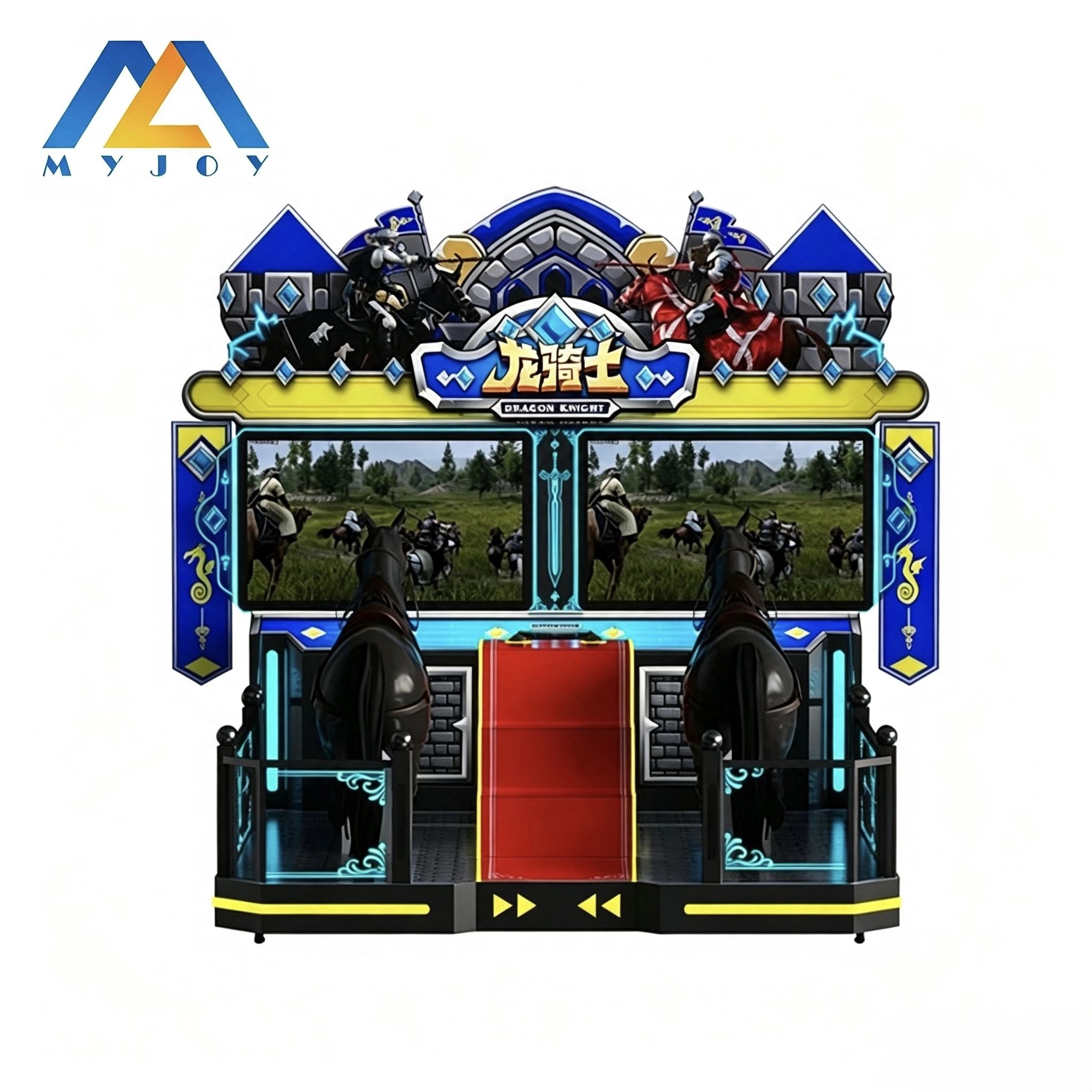
Flying Dragon Knight Horse Racing Simulator is a premium two-player arcade entertainment machine designed for amusement parks, shopping malls, arcades, family entertainment centers and themed attractions. Inspired by medieval knights and fantasy dragon adventures, this simulator combines realistic horse riding motion, interactive racing gameplay and an impressive visual design to create an unforgettable entertainment experience.
Featuring two realistic horse models, dual HD displays, dynamic motion control, vibration feedback and immersive sound effects, players can experience exciting horse racing competitions, adventure challenges and jumping missions. The machine recreates the feeling of real horseback riding through synchronized movement and responsive control systems.
With its eye-catching dragon knight appearance, colorful LED lighting, multiplayer competition mode and safe commercial design, Flying Dragon Knight Horse Racing Simulator is an excellent attraction solution for increasing customer engagement and entertainment value.
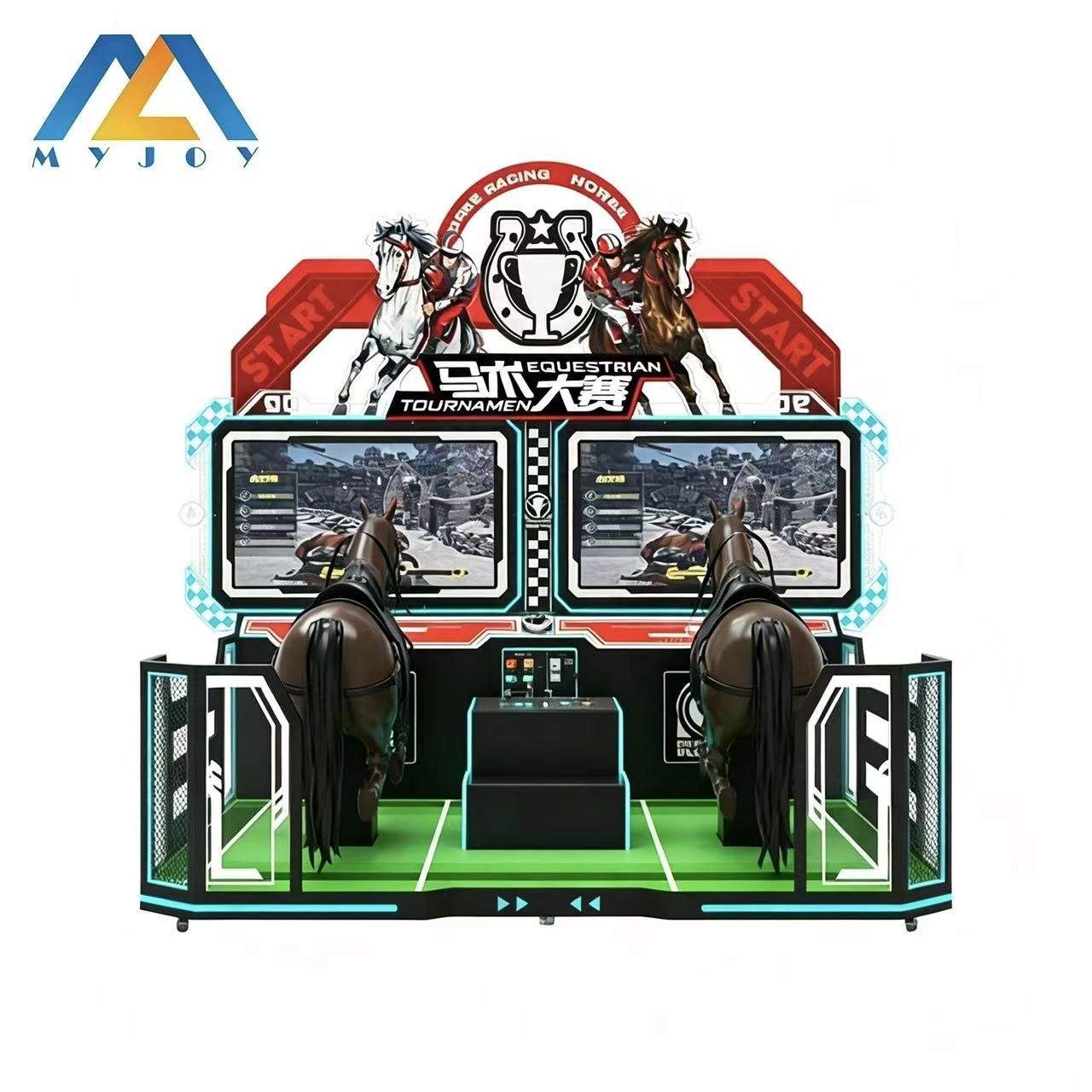
The Horse Racing Championship is a dual-player interactive sports simulator developed by Guangzhou Meiyilian Animation Technology Co., Ltd. It combines simulated horseback riding, competitive racing, physical interaction, and immersive visual effects to create an exciting attraction for players aged 5 to 50.
The machine features two realistic horse models equipped with comfortable saddles and reins. Players control their horses through riding movements and compete on two HD screens. Multiple racing scenes, difficulty levels, and challenge modes make the experience suitable for beginners and experienced players alike.
With its striking equestrian-themed design, dynamic LED lighting, green racetrack-style platform, and competitive ranking system, the machine easily attracts attention and encourages repeat play. It is ideal for amusement arcades, shopping malls, family entertainment centers, sports venues, theme parks, clubs, and tourist attractions.
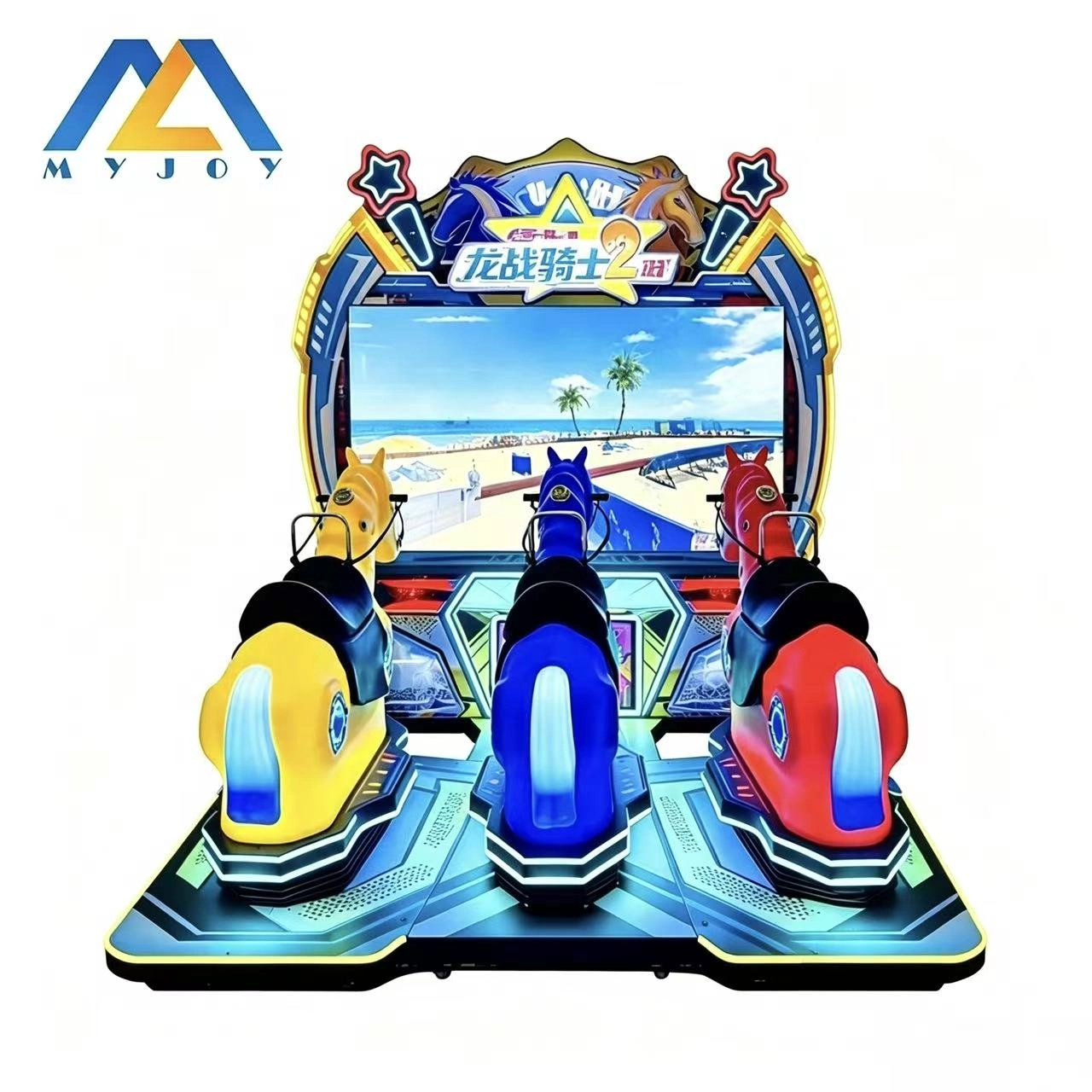
Dragon Warrior Knight 2 – Bring Real Horse Racing Excitement to Indoor Entertainment Venues
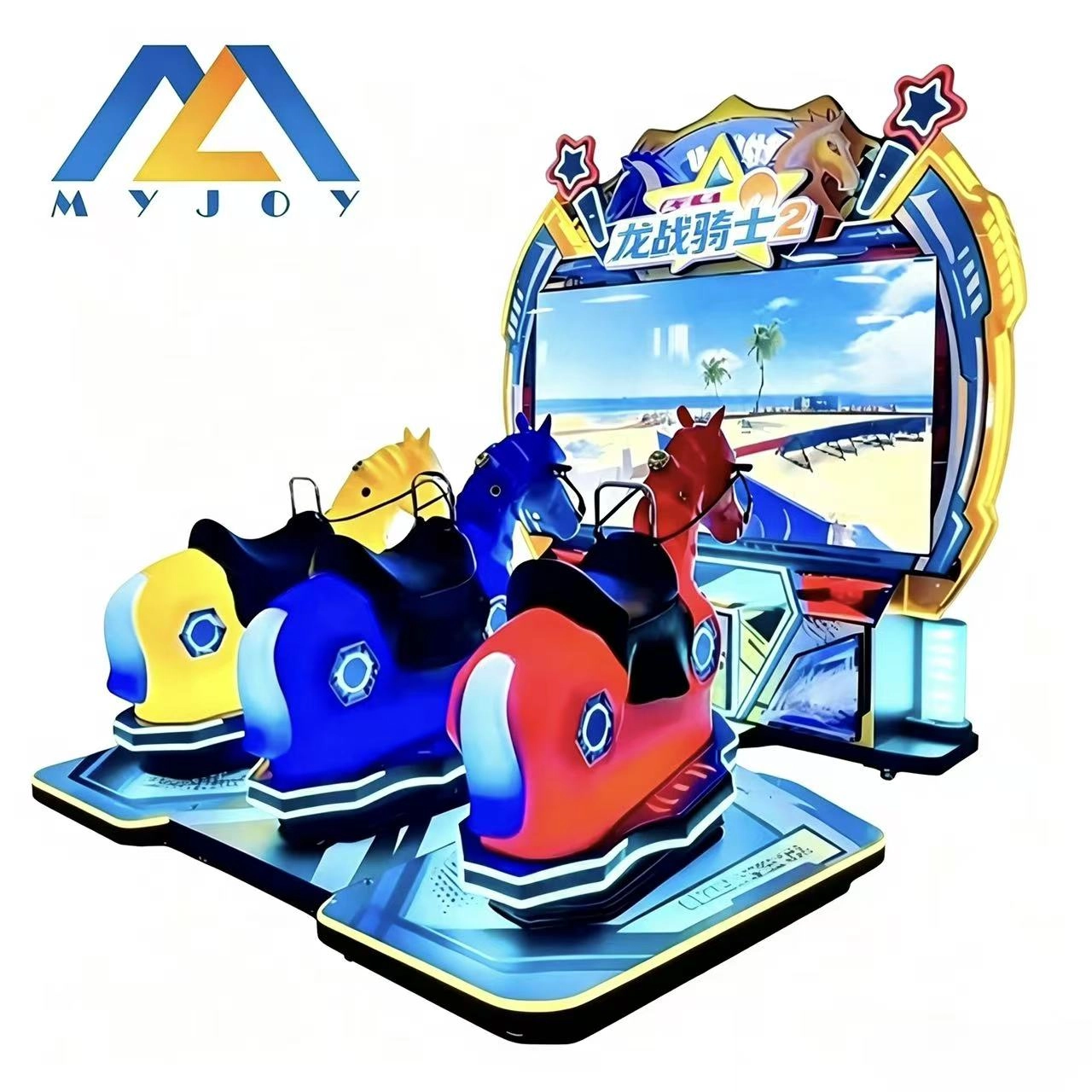
Dragon Warrior Knight 2 is an immersive interactive horse riding arcade machine designed around horse racing, obstacle challenges, and multiplayer competition. Featuring a cute and colorful horse design, large HD display, dynamic lighting effects, surround sound system, and realistic rein-control operation, this simulator creates an exciting horse racing experience for children, teenagers, and families.
Players can experience the feeling of riding a racing horse by controlling the reins to accelerate, change direction, and jump over obstacles. The realistic riding movements and interactive gameplay provide strong immersion and encourage repeat play.
The machine supports single-player challenge mode and 3-player competitive racing mode, allowing players to compete with friends, family members, or teammates. It is an ideal attraction for children's playgrounds, arcades, shopping malls, amusement parks, and family entertainment centers.
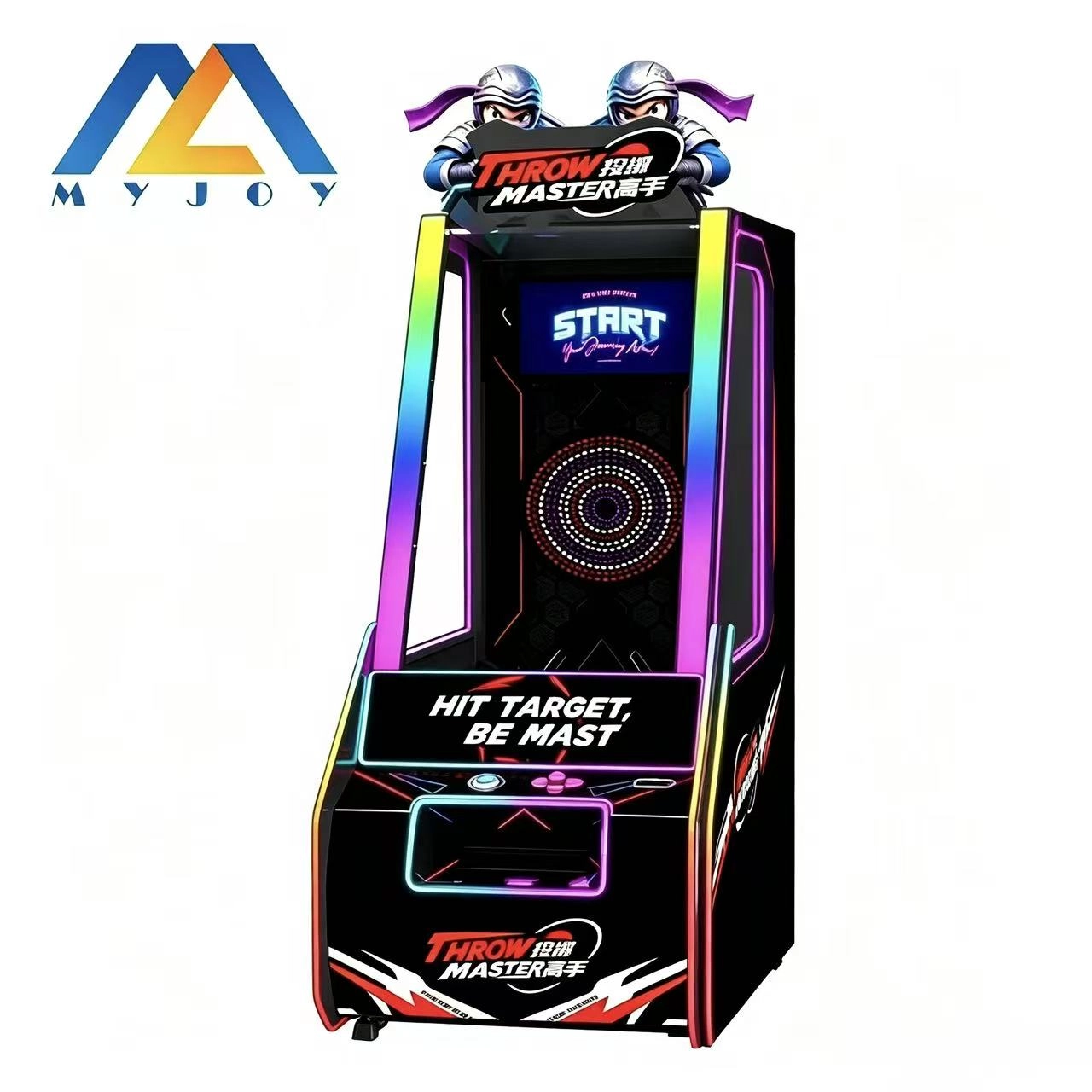
THROW MASTER is a commercial interactive dart throwing arcade machine that combines physical throwing action with an electronic target, digital scoring, on-screen interaction, and camera-based hit detection.
Designed for arcades, family entertainment centers (FECs), indoor amusement venues, shopping malls, and competitive entertainment spaces, THROW MASTER delivers an engaging mix of casual fun and skill-based competition.
Players insert coins, select their player and game mode, and throw darts at the large colorful electronic target. The system detects each result and displays scores, objectives, remaining throws, and game progress on the screen.
With Standard Mode for score-based challenges and Skill Mode for precision target challenges, the machine is suitable for both casual players and those looking for a more competitive experience. Leaderboards, adjustable game settings, and optional ticket rewards also make it well suited for commercial arcade operation.
Its large upright cabinet, colorful circular target, and vibrant RGB-style lighting create a futuristic arcade appearance that helps attract attention in busy entertainment venues.


No. 3, Wenjian Second Road, Wenbian Village, Shiji Town, Panyu District, Guangzhou City, China
Facebook