

What is amusement park equipment? | MYL ARCADE Ultimate Insight

Amusement park equipment includes the rides, attractions, operating systems, and supporting infrastructure that enable a park to entertain guests and run its daily operations. It ranges from roller coasters and carousels to control systems, queue barriers, ride vehicles, safety restraints, and maintenance components. Choosing suitable equipment means evaluating more than excitement or appearance: operators also need to consider intended users, applicable safety requirements, operating capacity, accessibility, maintenance, and long-term cost.
For a new park, expansion, or refurbishment, the term can seem deceptively simple. A ride may be the most visible purchase, but it depends on connected mechanical, electrical, structural, and operational elements. Overlooking those elements can lead to mismatched capacity, difficult maintenance, avoidable downtime, or a poor guest experience.
Those challenges become more serious when buyers compare products using headline features alone. A low purchase price or impressive ride profile does not establish that equipment is appropriate for a site, audience, climate, staffing model, or local regulations. A clear understanding of equipment categories and selection criteria helps owners and operators ask better questions before committing to a project.
The Systems Behind a Complete Park Experience
What the term covers
Amusement park equipment is the broad collection of physical products and systems used to deliver attractions and support their safe, consistent operation. The category includes guest-facing equipment, such as rides and play structures, as well as less visible elements: ride controls, braking and restraint systems, loading platforms, electrical cabinets, operator stations, and inspection access points.
It can also include equipment that supports the wider visitor journey. Examples are queue-management barriers, ticketing hardware, lockers, wayfinding signs, accessibility features, food-service fixtures, and park maintenance tools. These products may not be rides, but they influence how guests move through the site and how effectively staff can operate it. Project teams should therefore define the scope of an equipment purchase carefully, including any installation, integration, training, spare parts, and commissioning work.
Why equipment decisions matter
Equipment affects safety, capacity, reliability, guest satisfaction, and operating economics. A ride’s theoretical capacity, for example, does not necessarily equal the number of people it will serve during a busy day. Loading time, dispatch procedures, accessibility accommodations, staffing, and temporary stoppages can all influence real throughput. Assessing equipment in the context of the whole operation gives a more useful picture than relying on a single advertised figure.
Reliability matters for both visitors and operators. An attraction that is frequently unavailable can disrupt park plans and increase pressure on nearby rides. Maintainable equipment, clear documentation, accessible service points, and a practical supply of replacement components can help a team identify issues and return equipment to service more efficiently. The exact needs depend on the attraction, how intensively it will be used, and the environment in which it operates.
Safety should be addressed from the start rather than treated as a final purchasing check. The ASTM International F24 committee on amusement rides and devices develops standards in this area. Operators and buyers should confirm which standards, regulations, inspections, and documentation apply to their specific equipment and location; requirements can differ by jurisdiction and by equipment type.
Main Categories and How They Work
Rides and motion-based attractions
Mechanical rides create experiences through controlled movement. Common examples include roller coasters, carousels, observation rides, spinning attractions, and family rides. Their designs can involve structures, vehicles, motors, brakes, restraints, sensors, and control systems working together. A ride’s operating sequence is planned so that guests can board, be secured, experience the attraction, and exit according to the manufacturer’s instructions and the operator’s procedures.
Different ride formats create different demands. A coaster may require a long track footprint and carefully planned station operations, while a carousel may suit a more compact family area. A motion ride or simulator can depend on coordinated movement, software, and audio-visual systems. These examples are not a ranking: the right choice depends on the park’s audience, available land, desired experience mix, site conditions, and ability to operate and maintain the attraction.
Water, play, and interactive attractions
Water attractions include products such as flumes, splash features, and other rides or play areas that use water as part of the experience. They add considerations beyond the ride mechanism, including water management, surface conditions, cleaning, and the operation of associated systems. Buyers should identify which responsibilities belong to the equipment supplier and which belong to the park’s design, construction, and operating teams.
Play structures, climbing features, interactive installations, and family attractions can encourage movement and participation without relying on a large ride vehicle. Their requirements may include appropriate surfacing, age or height guidance, visibility for supervising adults, and clear operating or use instructions. Interactive attractions can also depend on reliable sensors, software, or other electronic components, so a maintenance plan should account for those elements as well as the physical structure.
Operating, guest-service, and support equipment
Attractions rely on supporting equipment to function as intended. Control consoles, sensors, communications devices, barriers, loading gates, and safety-related components can form part of an operating system. Guest-service equipment, including ticketing systems, lockers, seating, and queue fixtures, supports the wider visit. Maintenance equipment and replacement parts help technicians carry out planned inspections and repairs.
These categories often interact. A new ride may require changes to power supply, access routes, queue layout, operator training, or maintenance storage. For that reason, project teams should review the complete interface between the attraction and the park rather than treating delivery of the main ride as the end of the project. The International Association of Amusement Parks and Attractions (IAAPA) provides industry information and resources for attraction operators and suppliers.
| Equipment category | Typical examples | Key planning considerations |
|---|---|---|
| Mechanical rides | Coasters, carousels, family rides | Site footprint, operating procedures, capacity assumptions, inspections, and maintenance access |
| Water attractions | Flumes, splash features, water play | Water-system interfaces, cleaning, surfaces, operating controls, and local requirements |
| Play and interactive attractions | Play structures, climbing features, interactive exhibits | Intended age groups, supervision, accessibility, durability, and component servicing |
| Operations and guest services | Controls, barriers, ticketing, lockers, signage | Integration, staff workflows, guest circulation, reliability, and clear instructions |
How to Evaluate Equipment Before You Buy
Start with fit, safety, and evidence
Define the project before comparing vendors. Document the intended audience, attraction purpose, available site area, indoor or outdoor conditions, expected operating schedule, staffing model, and links to existing park systems. Ask suppliers to explain the assumptions behind quoted capacity, including how loading and unloading are counted. A transparent proposal should make it possible to distinguish stated performance from estimates that depend on operating conditions.
Request the documentation needed to evaluate the product and its lifecycle. Depending on the equipment and jurisdiction, this may include technical specifications, operating and maintenance manuals, inspection guidance, training materials, installation requirements, and records relevant to conformity or testing. Have qualified professionals review structural, electrical, mechanical, and site interfaces as appropriate. The ISO 17842 series on safety of amusement rides and amusement devices is one international standards reference; it does not replace checking the rules that apply at the project location.
Buyers should also understand how safety-related design and risk assessment are addressed. The ISO 12100 standard on machinery safety and risk assessment sets out general principles for machinery risk assessment and risk reduction. The relevance of a standard depends on the product and its applicable regulatory framework, so seek advice from competent specialists rather than assuming one reference answers every compliance question.
Compare reliability, serviceability, and total cost
Purchase price is only one part of the financial decision. Consider installation, site preparation, utilities, commissioning, staff training, planned maintenance, inspections, replacement components, software or service fees where relevant, and eventual refurbishment or removal. Ask suppliers to clarify what is included in the quotation and what the park must provide. Compare lifecycle assumptions using the same operating schedule and scope so that proposals are meaningful side by side.
Serviceability deserves specific attention. Ask how technicians access components, which tasks require specialist training, what routine checks are recommended, and how replacement parts are ordered. Confirm whether technical support is available during the park’s operating season and whether the supplier provides clear escalation procedures. These questions help identify possible operational constraints before they become urgent problems.
Reliability claims should be interpreted carefully. Ask what the claim measures, the conditions under which it was recorded, and whether it refers to a particular component or the complete attraction. A documented maintenance schedule, clear troubleshooting guidance, and accessible service support are useful evidence to examine. Avoid treating a marketing claim as a guarantee of performance under every site condition.
Check guest experience, accessibility, and operations
Equipment should suit the experience the park intends to offer. Consider the ride’s theme and intensity, who can participate, how guests understand restrictions, and whether the attraction complements nearby offerings. Review arrival, queueing, boarding, ride, and exit as one continuous guest journey. Layout decisions can affect comfort, visibility, crowd movement, and the ability of staff to support guests.
Ask how people with different access needs can use or experience the attraction and what information guests need before joining a queue. Accessibility is not limited to the ride vehicle; routes, surfaces, communication, waiting areas, and staff procedures can all matter. Applicable legal requirements vary, so include accessibility expertise in design and procurement reviews rather than relying solely on a supplier’s general description.
Finally, confirm that the attraction can be operated by the park’s actual team. Evaluate staffing needs, training time, operating procedures, communications, emergency planning, and the effect of weather or other site conditions where relevant. A well-chosen piece of amusement park equipment is not simply one that looks impressive in a catalogue: it is equipment the park can integrate, operate, inspect, maintain, and support throughout its intended service life.
In summary, amusement park equipment covers attractions and the systems that make them usable, supportable, and part of a complete guest experience. The strongest purchasing decisions connect the intended experience with site fit, safety evidence, capacity assumptions, accessibility, serviceability, and lifecycle cost. Contact us to discuss your project requirements and identify the amusement park equipment considerations that deserve attention before you buy.
Frequently Asked Questions
What is included in amusement park equipment?
Amusement park equipment includes rides and attractions as well as supporting systems and products used to operate the park. Examples include ride vehicles, controls, sensors, restraints, loading areas, queue barriers, ticketing hardware, lockers, signage, and maintenance tools.
What are the main types of amusement park equipment?
Major categories include mechanical rides, water attractions, play and interactive attractions, and equipment that supports operations or guest services. The right mix depends on the park’s audience, site, operating model, and intended experience.
How should buyers evaluate the safety of amusement park equipment?
Buyers should identify the standards, regulations, inspections, and documentation that apply to the specific equipment and project location. They can request technical specifications, operating and maintenance manuals, inspection guidance, and relevant conformity or testing records, and have qualified professionals review the design and site interfaces.
What should I ask an amusement park equipment supplier before purchasing?
Ask about the assumptions behind capacity claims, installation and site requirements, operating procedures, training, maintenance schedules, inspection guidance, replacement parts, technical support, and what is included in the quoted price. Also clarify which responsibilities belong to the supplier and which belong to the park.
How can a park compare the total cost of amusement park equipment?
Compare more than the purchase price. Include site preparation, installation, utilities, commissioning, training, planned maintenance, inspections, replacement parts, relevant service fees, and eventual refurbishment or removal. Use consistent assumptions when comparing supplier proposals.
Why does accessibility matter when selecting amusement park equipment?
Accessibility affects the complete guest journey, including routes, surfaces, communication, waiting areas, boarding, and staff procedures—not only the ride vehicle. Buyers should assess how guests with different access needs can use or experience the attraction and check the applicable local requirements.
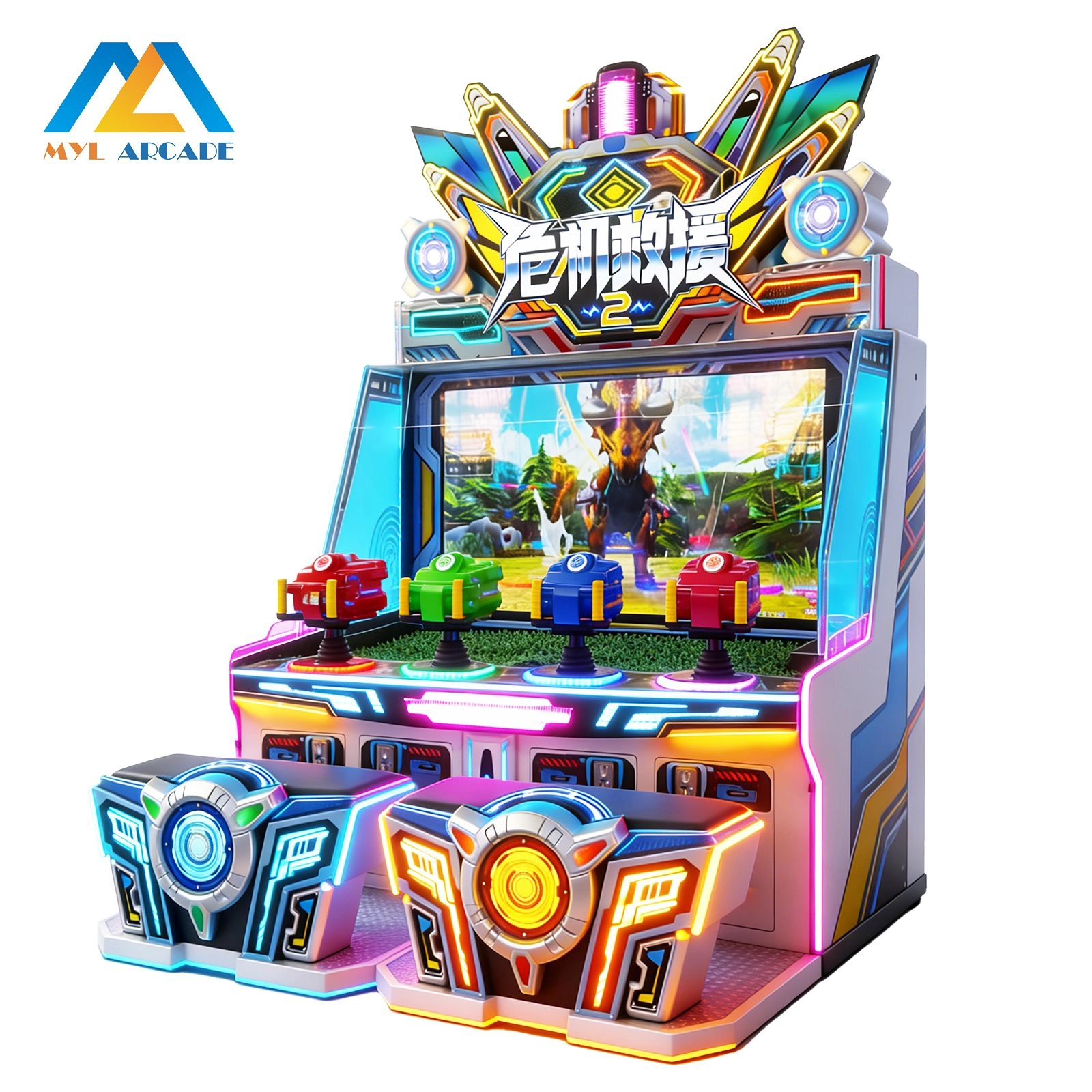
4 Player Water Shooting Arcade Machine with 75-inch HD screen, immersive 3D scenes, colorful effects, and interactive multiplayer gameplay. Designed for arcades, FECs, amusement parks, and family entertainment venues, it delivers exciting, safe, and high-replay gaming experiences for players of all ages.
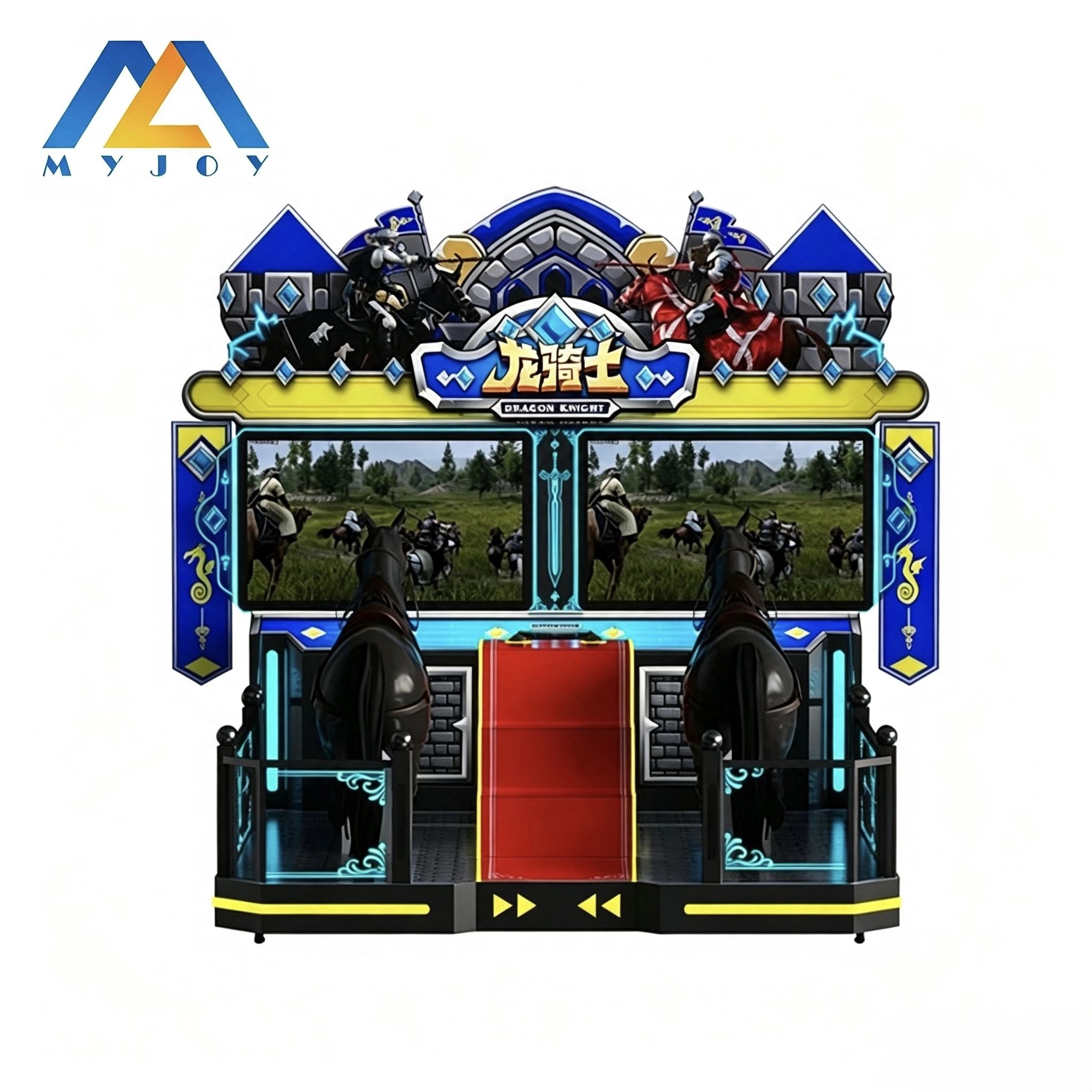
Flying Dragon Knight Horse Racing Simulator is a premium two-player arcade entertainment machine designed for amusement parks, shopping malls, arcades, family entertainment centers and themed attractions. Inspired by medieval knights and fantasy dragon adventures, this simulator combines realistic horse riding motion, interactive racing gameplay and an impressive visual design to create an unforgettable entertainment experience.
Featuring two realistic horse models, dual HD displays, dynamic motion control, vibration feedback and immersive sound effects, players can experience exciting horse racing competitions, adventure challenges and jumping missions. The machine recreates the feeling of real horseback riding through synchronized movement and responsive control systems.
With its eye-catching dragon knight appearance, colorful LED lighting, multiplayer competition mode and safe commercial design, Flying Dragon Knight Horse Racing Simulator is an excellent attraction solution for increasing customer engagement and entertainment value.
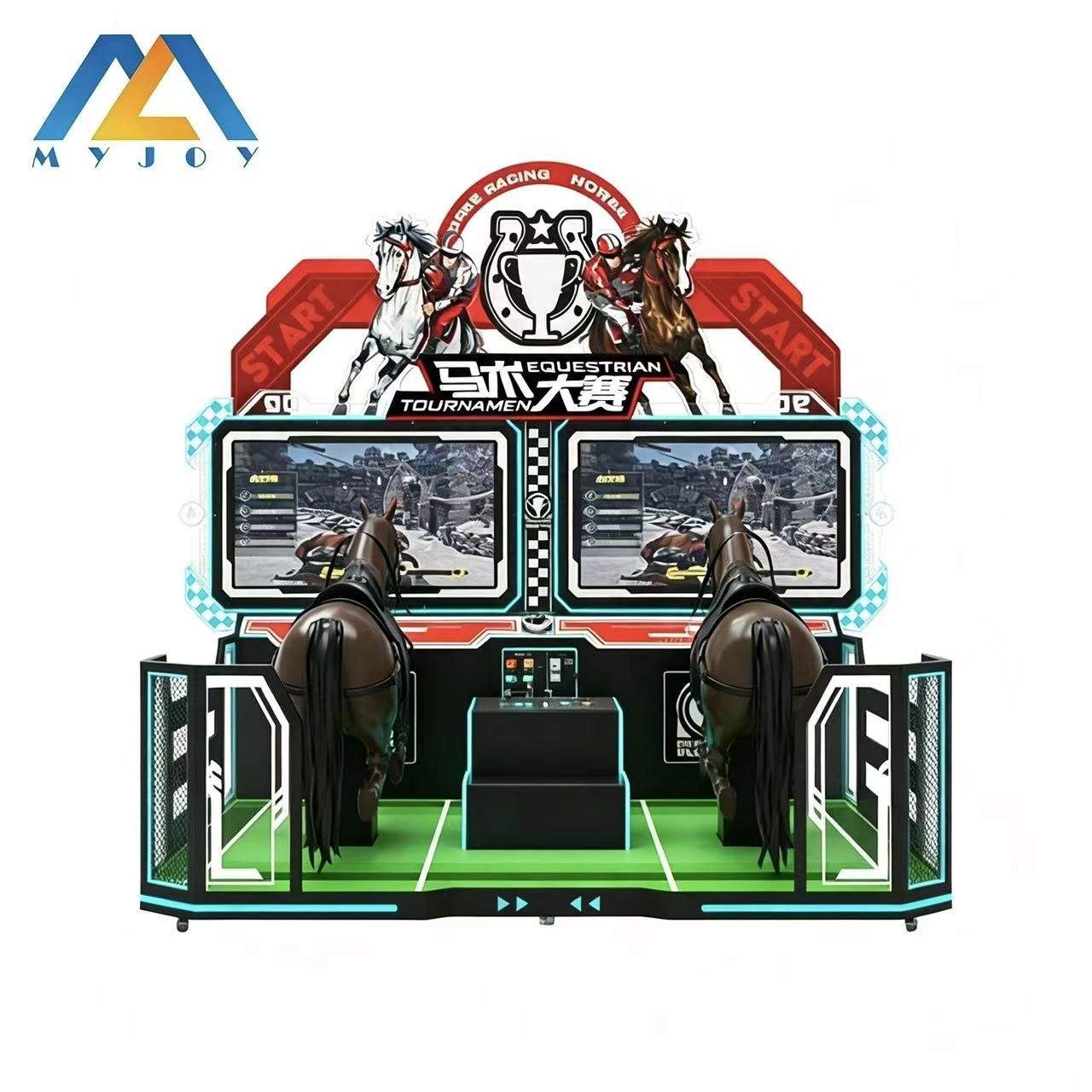
The Horse Racing Championship is a dual-player interactive sports simulator developed by Guangzhou Meiyilian Animation Technology Co., Ltd. It combines simulated horseback riding, competitive racing, physical interaction, and immersive visual effects to create an exciting attraction for players aged 5 to 50.
The machine features two realistic horse models equipped with comfortable saddles and reins. Players control their horses through riding movements and compete on two HD screens. Multiple racing scenes, difficulty levels, and challenge modes make the experience suitable for beginners and experienced players alike.
With its striking equestrian-themed design, dynamic LED lighting, green racetrack-style platform, and competitive ranking system, the machine easily attracts attention and encourages repeat play. It is ideal for amusement arcades, shopping malls, family entertainment centers, sports venues, theme parks, clubs, and tourist attractions.
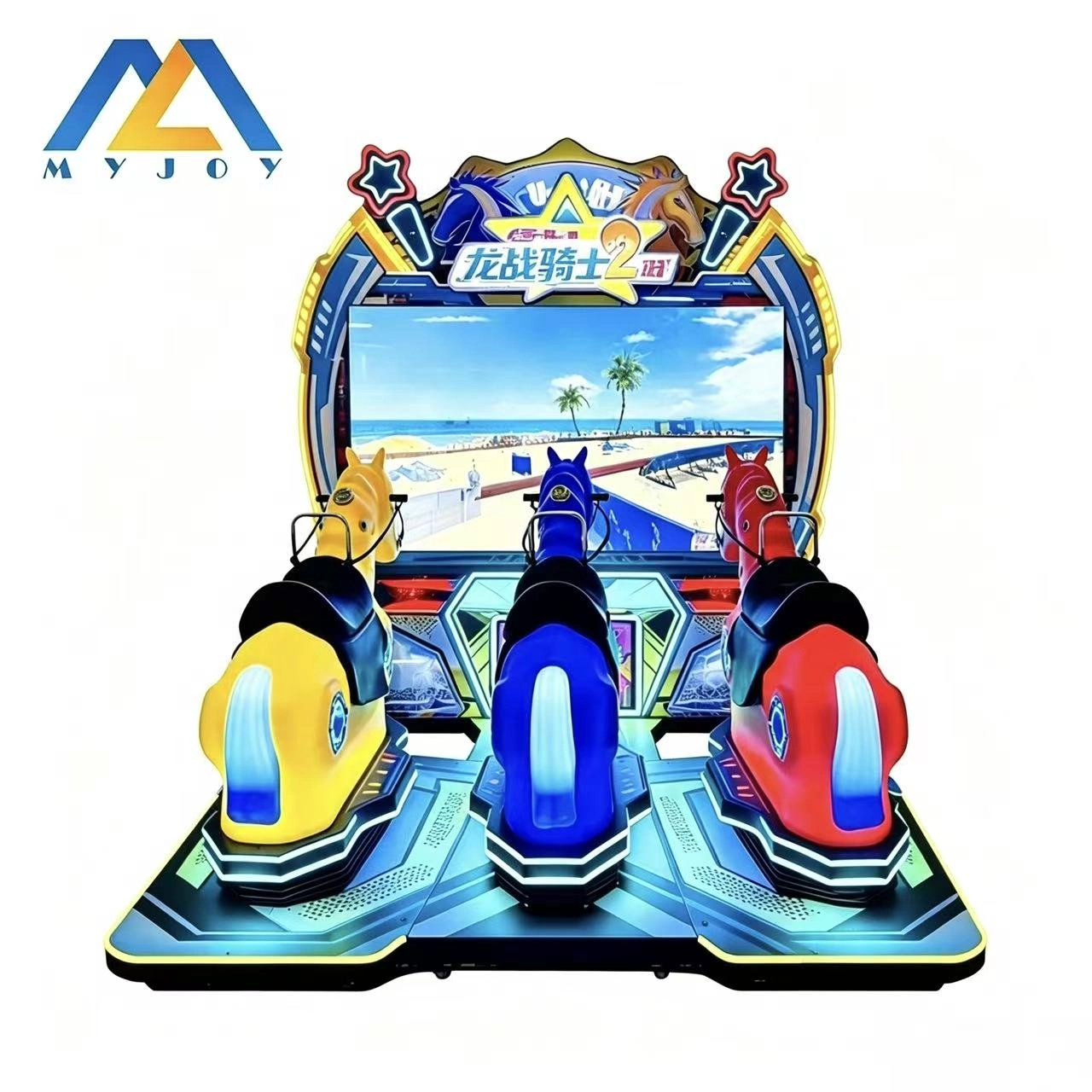
Dragon Warrior Knight 2 – Bring Real Horse Racing Excitement to Indoor Entertainment Venues
Dragon Warrior Knight 2 is an immersive interactive horse riding arcade machine designed around horse racing, obstacle challenges, and multiplayer competition. Featuring a cute and colorful horse design, large HD display, dynamic lighting effects, surround sound system, and realistic rein-control operation, this simulator creates an exciting horse racing experience for children, teenagers, and families.
Players can experience the feeling of riding a racing horse by controlling the reins to accelerate, change direction, and jump over obstacles. The realistic riding movements and interactive gameplay provide strong immersion and encourage repeat play.
The machine supports single-player challenge mode and 3-player competitive racing mode, allowing players to compete with friends, family members, or teammates. It is an ideal attraction for children's playgrounds, arcades, shopping malls, amusement parks, and family entertainment centers.


No. 3, Wenjian Second Road, Wenbian Village, Shiji Town, Panyu District, Guangzhou City, China
Facebook