


What are the different types of boxing arcade machine?

A boxing arcade machine can be a hanging-bag strength tester, a fixed padded-target punch game, or a video-led boxing simulator, with some models combining physical punching and digital feedback. These formats differ in the action they measure, player experience, footprint, maintenance needs, and suitability for venues such as arcades, family entertainment centers, and event spaces. Understanding the distinction between impact-based score games and boxing simulations helps buyers compare equipment on more than appearance, evaluate durability and safety requirements, and choose a machine that suits its location and audience.
How Boxing Arcade Games Have Evolved
From simple strength tests to interactive score games
The familiar boxing arcade machine began as a direct challenge: strike a target, register the impact, and display a score. In a traditional strength tester, a suspended bag swings after a punch and the machine estimates the result using its sensing and scoring system. The appeal is immediate and easy to understand, so a passerby can join without learning a set of controls. This simple format remains common in social venues because it turns one brief action into a visible contest.
Modern machines may add lights, sound, animated displays, multiple game modes, or digital score presentation. These additions can make a game more noticeable and give players more ways to compete, but they do not change the basic distinction between measuring a physical strike and simulating a boxing match. Buyers should check how a machine actually detects and scores a punch rather than assuming that a more elaborate cabinet necessarily measures strength more accurately.
Physical impact and simulated boxing are different experiences
A punch-strength game rewards a single impact or a short series of impacts; a boxing simulator asks players to engage with a virtual opponent or a sequence of on-screen actions. A simulator may use buttons, motion-sensitive controls, or dedicated striking targets, depending on the model. It is therefore important to assess the actual control method, not just the boxing imagery on the cabinet. The history and format of arcade games help explain why physical skill games and video-based games can both belong to the same arcade category while offering different forms of play.
These distinctions also affect the audience. The dramatic, one-hit challenge of an impact machine tends to be easy to grasp in a busy public setting. A video-led game may appeal more to players who enjoy rounds, timing, or opponent-based play. Neither format is automatically the better purchase: the right choice depends on whether the venue wants a quick competitive attraction, a more involved game, or a mix of both.
Safety and operating context matter as much as the game type
Any commercial boxing arcade machine should be installed and operated with its physical surroundings in mind. A punch game needs a clear play area, stable placement, and enough room to prevent nearby guests from entering the striking zone. Operators should follow the manufacturer’s instructions, establish appropriate supervision and maintenance practices, and assess foreseeable misuse. ASTM Committee F24 on amusement rides and devices develops standards for amusement-related equipment; buyers can use its resources as a starting point for understanding the broader safety context, while verifying which requirements apply to their specific machine and jurisdiction.
Main Types of Boxing Arcade Machine
Hanging-bag punch strength testers
The hanging-bag model is the classic boxing arcade machine. A padded bag is suspended within the cabinet and typically releases or swings into a scoring mechanism when a player strikes it. The machine then presents a result, often as a score or strength-style rating. It is designed for a quick, physical challenge rather than a realistic boxing match, and the visible bag makes the purpose clear to potential players.
This type can work well in arcades, bars, and entertainment venues where guests are likely to compete informally. Its mechanical movement and repeated impact mean that the bag, suspension points, cabinet, and sensing components need routine inspection. The exact upkeep varies by design and usage, so buyers should request maintenance instructions and warranty terms rather than relying on a general assumption that all bag machines are equally robust. Players also need adequate clearance around the swinging bag and a suitable floor surface.
Fixed-target punch machines
A fixed-target machine presents a padded striking surface that stays in place rather than swinging like a suspended bag. Depending on the product, the target may be mounted on a cabinet or a dedicated frame, and the game may register a hit through sensors built into the target assembly. This design can provide a more defined striking point and may reduce the moving-part requirements associated with a swinging bag, but its durability still depends on the construction, sensor design, materials, and quality of servicing.
Fixed-target games may suit venues that prefer a more contained play area or want a distinct look from the traditional bag tester. Before buying, ask how the target is attached, what replacement parts are available, how impact is detected, and whether the manufacturer specifies limits on use. A stationary target is not automatically quieter or safer: repeated impacts can still transmit sound and vibration, and the installation must keep players and bystanders at a reasonable distance.
Video-led boxing and boxing-simulation games
A boxing simulator focuses on an on-screen opponent, round, or challenge rather than only reporting the force of one punch. Players may use controls or strike a physical interface, depending on the cabinet. Some versions are primarily video games with boxing-themed gameplay; others combine screen-based feedback with a physical target. This category is best assessed by trying the controls and reviewing the game modes, because two cabinets with similar artwork can deliver very different interactions.
Compared with a straightforward strength tester, a simulator may provide more varied play and a longer session. It can be a good fit where guests expect a conventional video arcade experience or where operators want multiple rounds and replay value. Buyers should confirm whether the game supports one or more players, whether it has adjustable settings, how software updates are handled, and whether specialized components are required for repairs. Its maintenance profile may involve electronic controls and displays as well as any physical striking interface.
| Type | Typical application | Performance focus | Relative cost considerations | Durability considerations |
|---|---|---|---|---|
| Hanging-bag strength tester | Arcades, bars, and social competition areas | Impact-based score or strength-style result | Compare the bag mechanism, scoring system, cabinet, and warranty; price varies by model | Inspect the bag, suspension, moving parts, sensors, and surrounding structure regularly |
| Fixed-target punch machine | Venues seeking a defined striking point and contained layout | Strike detection and score feedback | Compare target assembly, sensor design, footprint, and replacement-part availability | Check padding, target mounting, sensors, and impact-related wear |
| Video-led boxing simulator | Video arcades and venues seeking round- or opponent-based play | Gameplay, timing, and interaction with a virtual challenge | Consider displays, controls, software support, and any physical interface | Assess electronic components, controls, screen protection, and service support |
The table describes broad formats, not guaranteed specifications. Models within one category can differ considerably in footprint, scoring method, materials, price, and service requirements. Request a manufacturer’s technical documentation and compare like with like before making a purchase.
How to Choose the Right Format for Your Venue
Match the game mechanic to the audience and floor plan
Start with the people who will use the machine and the space available. A hanging-bag boxing arcade machine can attract attention with an obvious, fast challenge, but the moving bag and player stance require clear space. A fixed-target game may make it easier to define the striking zone, yet it still needs room for a player to punch without obstruction. A video simulator may fit a venue that prioritizes game variety, but the screen and control layout need to be visible and accessible from the intended play position.
Consider how the attraction will operate during peak periods. A quick-score game can support short turns and informal competition, while a simulator with rounds may hold a player’s attention longer. That difference can affect queueing and how the machine interacts with nearby attractions. Observe the traffic flow, neighboring equipment, and sightlines before settling on a cabinet footprint. Ask the supplier for the machine’s dimensions and installation clearances rather than estimating from product photos.
Compare performance claims, costs, and service support
Do not treat a displayed score as a standardized measurement of a person’s punching power. Arcade machines use product-specific scoring systems, and results should be understood as part of the game unless the manufacturer provides a validated measurement method. Ask how the system detects an impact, whether scores can be adjusted, and whether readings can vary with setup or maintenance. A live demonstration can reveal how the game feels and whether its feedback is easy to understand.
Purchase cost is only one part of the business case. Include delivery, installation, electrical requirements, payment options, spare parts, routine servicing, and any software support in the comparison. Request written warranty coverage and clarify which components are considered wear items. A machine with more features may also have more components to support; a simpler design may be easier to understand but still require attention to its impact surfaces and mechanical parts.
Durability is not determined by category alone. It depends on build quality, expected play volume, the users’ behavior, maintenance, and the availability of replacement components. Ask the supplier for documented service procedures and a realistic parts-support plan. For equipment with safety-related controls, risk assessment should be part of the purchasing and operating process; ISO 12100:2010, Safety of machinery, describes principles for machinery risk assessment and risk reduction. Whether a particular standard applies to an arcade product should be confirmed with the manufacturer and relevant local authorities.
Plan for safe use, accessibility, and long-term operation
Before opening the game to guests, review the manufacturer’s instructions for placement, inspection, cleaning, and operation. Keep the approach and striking area free of obstructions, and make any age, height, or use guidance clear where appropriate. Staff should know how to stop or isolate equipment if a fault appears. For electronics and control systems, buyers can ask suppliers how safety-related functions are designed and documented; ISO 13849-1 addresses safety-related parts of control systems, but it is not a blanket certification of every arcade machine.
Accessibility also deserves consideration. Check whether the controls, display, and playing position can be used by the intended audience, and whether the machine’s instructions are easy to read. A physical punch game necessarily requires a striking action, so it will not be appropriate for every guest; pairing it with other types of games can broaden the venue’s appeal. The International Association of Amusement Parks and Attractions provides industry resources for operators, while site-specific safety obligations should be confirmed for the venue’s location.
For most buyers, the decision comes down to the desired experience: choose a hanging bag for a recognizable impact challenge, a fixed target for a defined strike point, or a video-led simulator for more game-oriented boxing play. Then compare individual models for the space they need, how they score, their service requirements, and the support available after installation. Contact our team to discuss your venue, compare boxing arcade machine formats, and identify the option that best fits your audience and operating needs.
Frequently Asked Questions
What are the main types of boxing arcade machine?
The main formats are hanging-bag punch strength testers, fixed-target punch machines, and video-led boxing or boxing-simulation games. Some models combine a physical target with on-screen feedback.
How is a hanging-bag machine different from a fixed-target punch machine?
A hanging-bag machine uses a suspended bag that swings after a strike, while a fixed-target machine has a padded striking surface that remains in place. Their scoring and sensor designs vary by model.
Does a boxing arcade machine measure a player’s actual punching power?
A machine typically provides a product-specific game score or strength-style rating. Unless the manufacturer documents a validated measurement method, the result should not be treated as a standardized measurement of punching power.
Which boxing arcade machine is best for a small venue?
The best fit depends on the model’s dimensions, installation clearances, and play area, not just its category. Compare technical documentation and make sure the player has enough room to use the machine without obstructing nearby guests.
Are boxing arcade machines expensive to maintain?
Maintenance costs vary with the model, play volume, construction, and parts support. Compare warranty terms, routine service procedures, replacement-part availability, and any software or electronic support requirements before buying.
What should buyers check before installing a boxing arcade machine?
Review the manufacturer’s installation and operating instructions, required clearances, inspection schedule, warranty, and service support. Keep the striking area unobstructed and confirm which safety requirements apply to the venue and jurisdiction.
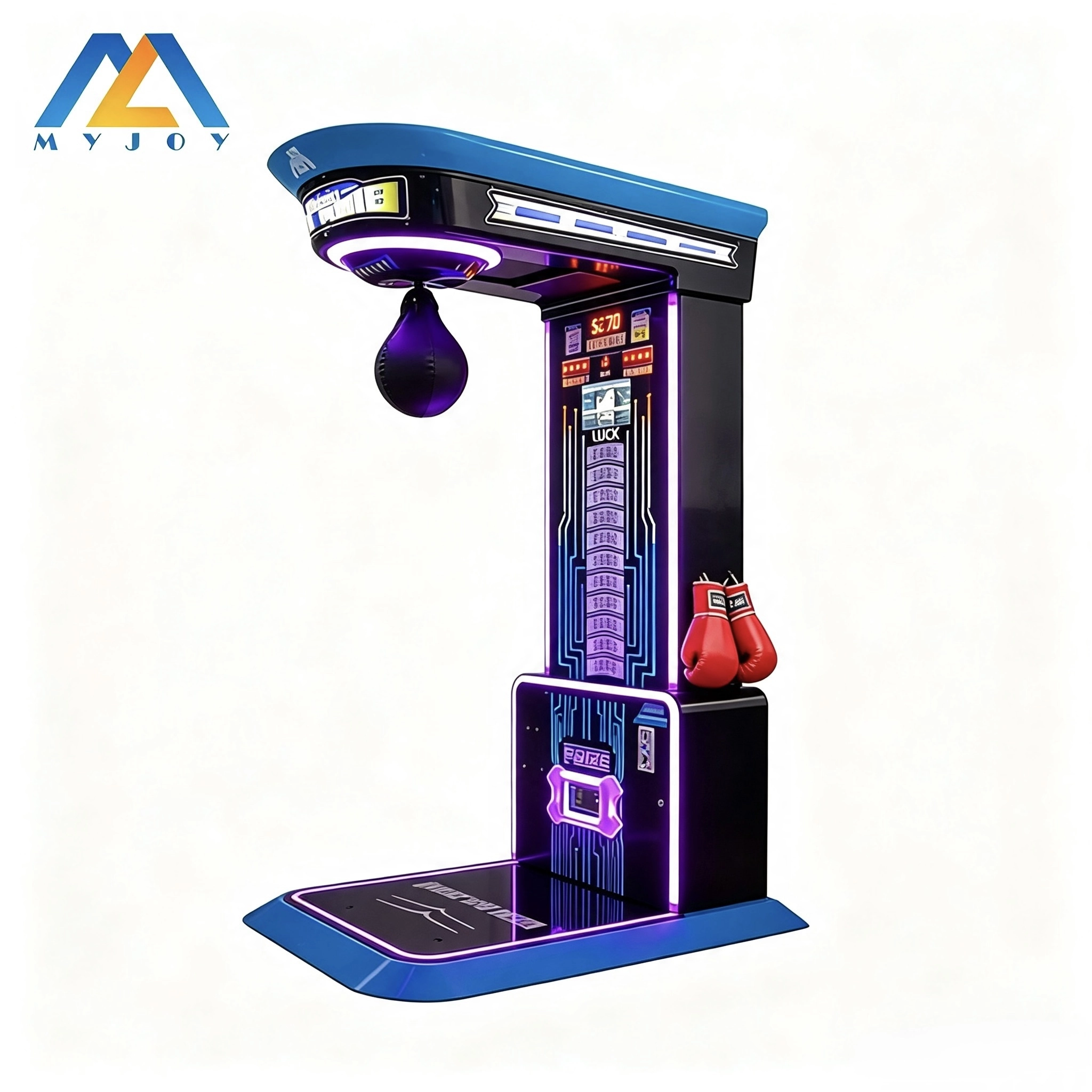
Dragon Punch 3 is an interactive punching arcade machine that combines entertainment and competitive gameplay. It features a futuristic sci-fi design with surrounding LED lighting effects and high-brightness digital displays, creating a strong visual attraction. Players activate the game by inserting coins and perform punching challenges within a limited time. Based on their score, different reward mechanisms are triggered, making it suitable for various commercial entertainment and themed venues.
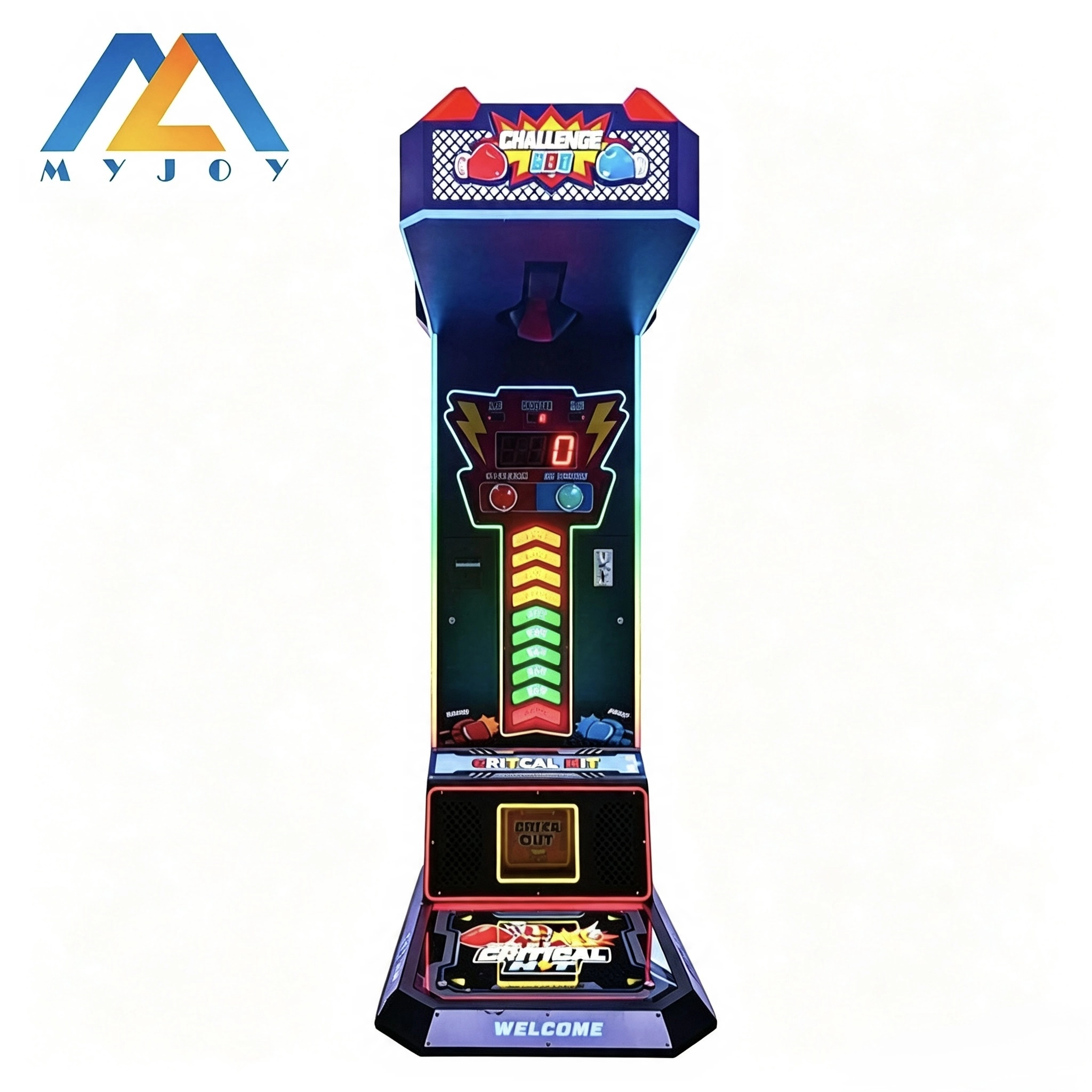
The Challenge 888 Punching Game Machine is a commercial strength-testing arcade machine that combines boxing action, competitive gameplay, colorful lighting, score display, and optional prize rewards.
After inserting coins, swiping a card, or scanning a QR code, the player strikes the suspended punching bag to test their punching power. Each game allows up to two punches. The machine automatically detects the strength of each hit, calculates the combined score, and clearly displays the result on the front strength indicator.
The machine can be configured to dispense tickets or beverages according to the final score, giving players extra motivation to improve their performance. Its eye-catching boxing-themed appearance, simple gameplay, and exciting head-to-head appeal make it ideal for attracting young players, encouraging friendly competitions, and increasing repeat play.
Designed for commercial entertainment venues, it can be installed as a standalone attraction or combined with basketball, air hockey, racing, and other sports arcade machines to create an interactive competitive gaming zone.
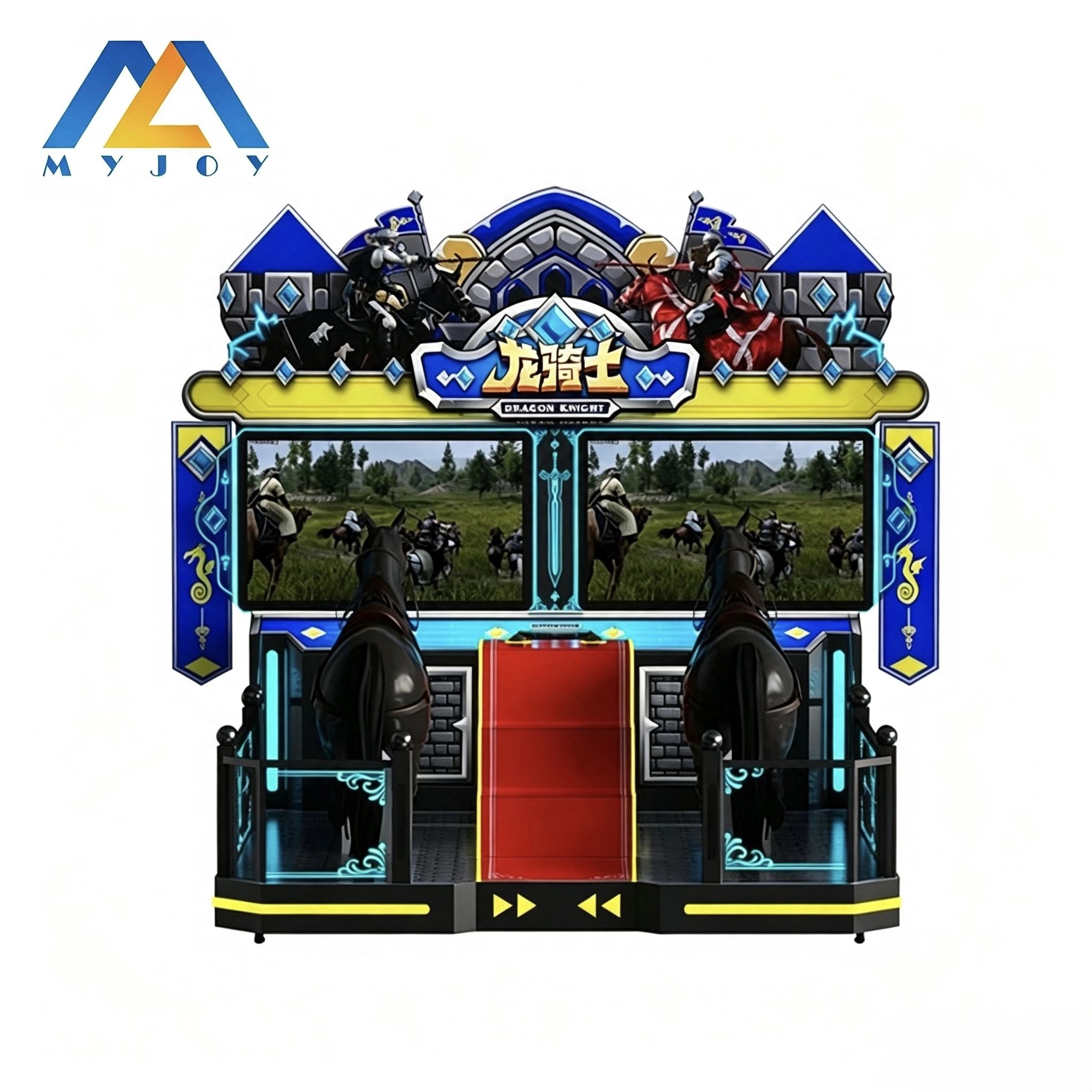
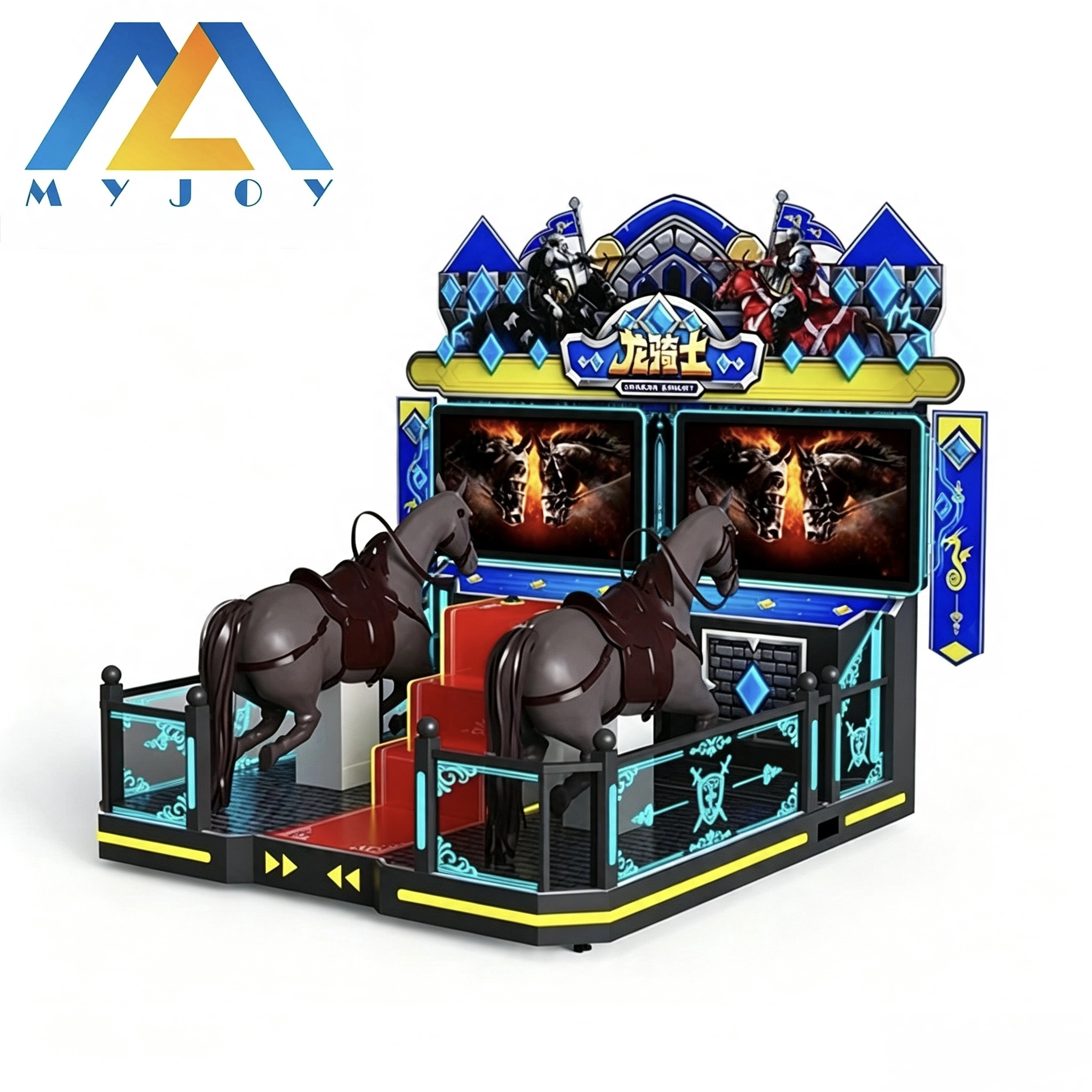
Flying Dragon Knight Horse Racing Simulator is a premium two-player arcade entertainment machine designed for amusement parks, shopping malls, arcades, family entertainment centers and themed attractions. Inspired by medieval knights and fantasy dragon adventures, this simulator combines realistic horse riding motion, interactive racing gameplay and an impressive visual design to create an unforgettable entertainment experience.
Featuring two realistic horse models, dual HD displays, dynamic motion control, vibration feedback and immersive sound effects, players can experience exciting horse racing competitions, adventure challenges and jumping missions. The machine recreates the feeling of real horseback riding through synchronized movement and responsive control systems.
With its eye-catching dragon knight appearance, colorful LED lighting, multiplayer competition mode and safe commercial design, Flying Dragon Knight Horse Racing Simulator is an excellent attraction solution for increasing customer engagement and entertainment value.
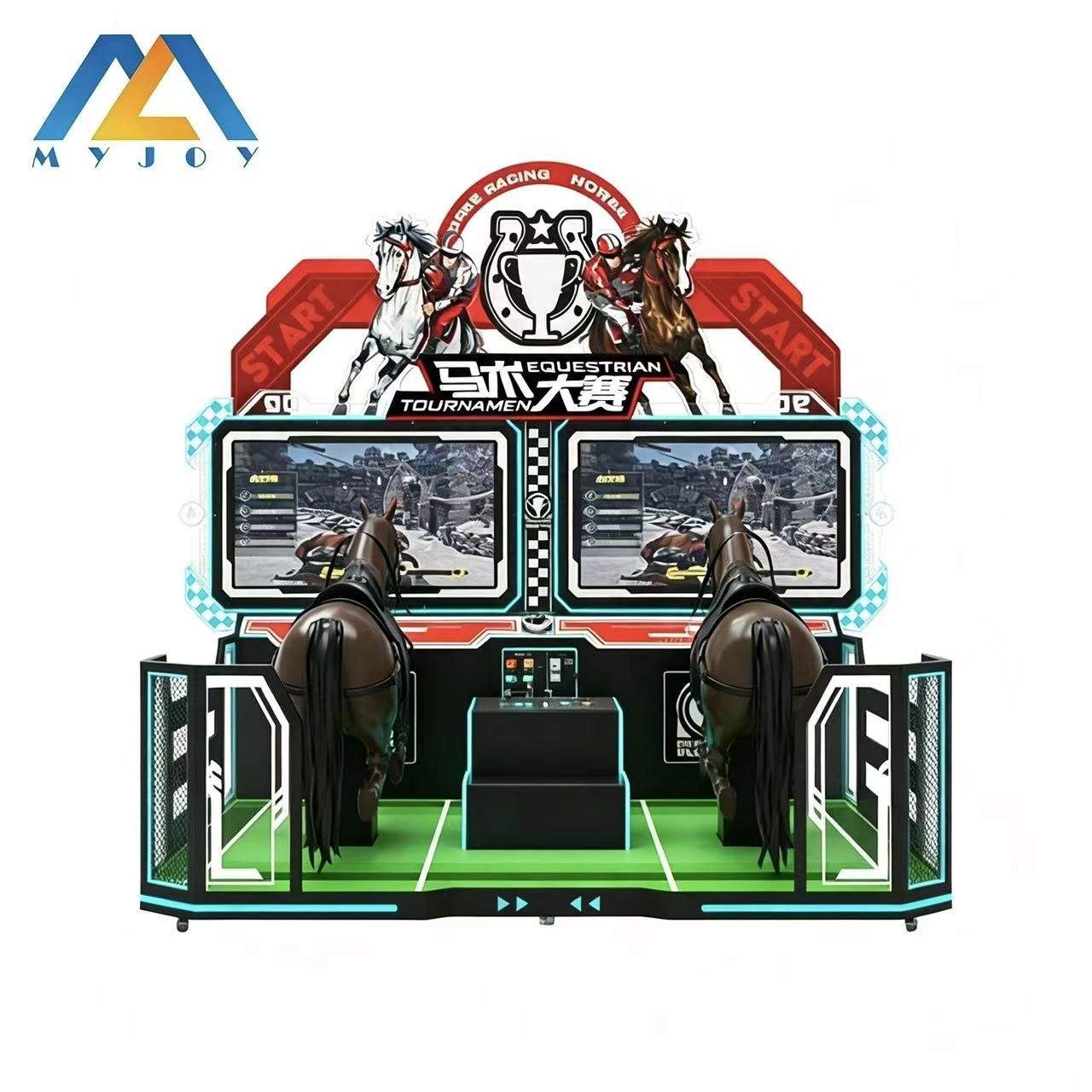
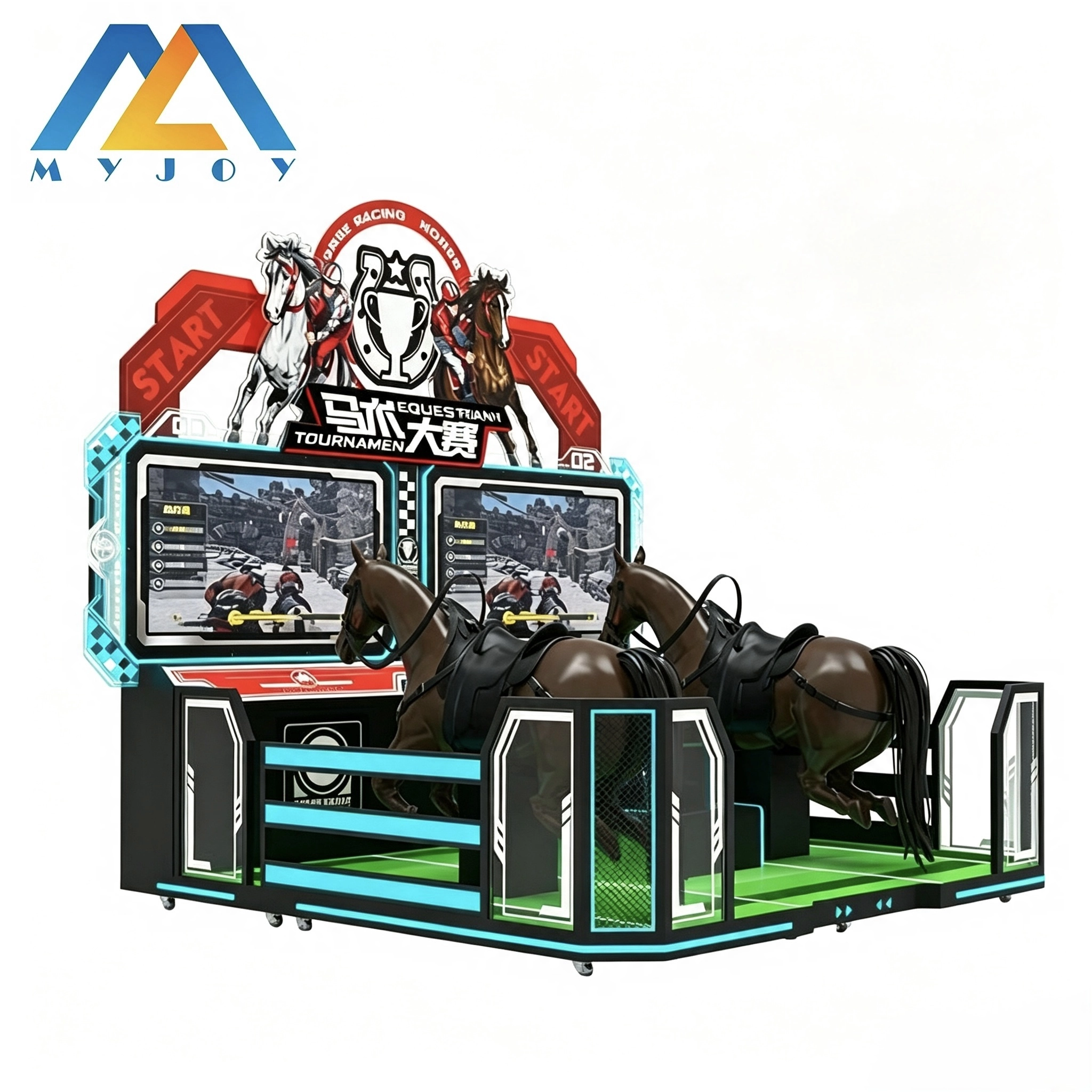
The Horse Racing Championship is a dual-player interactive sports simulator developed by Guangzhou Meiyilian Animation Technology Co., Ltd. It combines simulated horseback riding, competitive racing, physical interaction, and immersive visual effects to create an exciting attraction for players aged 5 to 50.
The machine features two realistic horse models equipped with comfortable saddles and reins. Players control their horses through riding movements and compete on two HD screens. Multiple racing scenes, difficulty levels, and challenge modes make the experience suitable for beginners and experienced players alike.
With its striking equestrian-themed design, dynamic LED lighting, green racetrack-style platform, and competitive ranking system, the machine easily attracts attention and encourages repeat play. It is ideal for amusement arcades, shopping malls, family entertainment centers, sports venues, theme parks, clubs, and tourist attractions.


No. 3, Wenjian Second Road, Wenbian Village, Shiji Town, Panyu District, Guangzhou City, China
Facebook