

OEM/ODM arcade center equipment Manufacturers and Suppliers

Choosing an OEM/ODM partner for arcade center equipment means evaluating more than unit price: buyers should confirm product scope, engineering capability, quality controls, intellectual-property ownership, minimum order quantity (MOQ), and delivery terms before committing. OEM production builds to a buyer’s specifications, while ODM services adapt a supplier’s existing design; either route can support branded cabinets, redemption games, simulators, controls, and other venue equipment when requirements and acceptance criteria are documented. A disciplined sourcing process starts with a product brief and samples, then verifies the factory, tests the pilot build, and puts tooling, software, warranty, and change-control responsibilities in writing.
Why Customization Is Reshaping the Arcade Supply Chain
Match the equipment mix to the venue and market
Arcade operators and distributors often need a product mix that fits a particular footprint, audience, and revenue model. A family entertainment center may prioritize compact redemption games and simple maintenance, while a location-based entertainment venue may need larger simulators, linked player experiences, or a coordinated visual theme. A clear product brief helps the manufacturer translate those goals into cabinet dimensions, display and control specifications, payment interfaces, language options, artwork, and service access.
Before requesting a quotation for arcade center equipment, identify where and how each unit will be used. Include expected operating hours, installation conditions, target age group, local voltage and plug requirements, network or payment needs, and the intended sales region. These details affect component selection, compliance review, packaging, and service planning. They also help suppliers compare like with like instead of quoting different configurations under the same product name.
Choose OEM or ODM based on ownership and speed
OEM is generally the better fit when the buyer supplies the core design, drawings, bill of materials, artwork, or detailed performance requirements and expects the manufacturer to produce to them. ODM is usually more suitable when the supplier has a baseline product that can be adapted with options such as cabinet graphics, controls, language, or selected features. Actual service boundaries vary, so buyers should ask which engineering, tooling, software, and testing tasks are included rather than relying on the label alone.
| Decision area | OEM approach | ODM approach | Buyer check |
|---|---|---|---|
| Starting point | Buyer-provided design or specification | Supplier’s existing design or platform | Who owns and approves the controlled design? |
| Customization | Potentially extensive, subject to capability and cost | Usually based on available options and agreed modifications | List included changes and separately priced engineering |
| Development effort | More buyer input may be needed for design validation | May reduce development work if the existing platform fits | Request a sample and confirm what is production-representative |
| IP and exclusivity | Requires clear ownership and manufacturing-use terms | Existing platform rights may remain with the supplier | Define background IP, new work, territory, and exclusivity |
| Commercial fit | Can suit differentiated products and established demand | Can suit faster market entry and controlled customization | Compare total landed cost, MOQ, and lifecycle support |
Neither model automatically guarantees a lower MOQ, shorter lead time, or exclusive product. A custom control board or new cabinet tooling may require additional engineering and component commitments, while an ODM base product can still need meaningful rework. Ask for a quotation that separates non-recurring engineering, tooling, sample charges, production pricing, spare parts, and packaging so the commercial trade-offs are visible.
How to Vet a Manufacturer and Control Quality
Verify the factory, process, and quality-system scope
Screen potential arcade center equipment suppliers through a structured review of their legal entity, production location, relevant product experience, engineering resources, and subcontracting model. Request a current company profile, factory address, process flow, and references for comparable products. If a supplier presents an ISO 9001 certificate, check the issuing body, validity, site, and scope; certification is evidence about a quality-management system, not proof that every product is safe or fit for your market. Review the ISO 9001 quality management standard as a reference for the system framework.
Ask who performs design review, incoming inspection, in-process checks, final inspection, and corrective action. For arcade cabinets, relevant controls can include inspection of panels and finishes, wiring and connector checks, display and control function tests, software version confirmation, and verification of supplied accessories. Agree on inspection records and defect handling in advance. A supplier should be able to explain how it identifies nonconforming parts, traces production lots, and prevents a confirmed issue from recurring.
Approve samples and define acceptance criteria
Evaluate a production-intent sample rather than relying only on renderings or a showroom unit. Test the machine in the environment it is meant to serve, including repeated play, user access, service access, stability, noise, and recovery after power interruption where relevant. The buyer and manufacturer should document measurable criteria: approved dimensions and artwork, component brands or acceptable equivalents, game and software version, functional test steps, packaging condition, and cosmetic tolerances.
For larger orders, agree on a pilot build and a pre-shipment inspection plan. A functional acceptance test can confirm that each specified feature operates; a sample-based inspection can check workmanship and packaging across a production lot. Neither replaces an appropriate product-safety assessment. Requirements vary by destination, product design, and how the equipment is used, so confirm applicable electrical, electromagnetic compatibility, materials, and consumer-safety rules with qualified compliance professionals. For products placed on the EU market, for example, assess whether the EU RoHS Directive applies to the equipment and its components.
Plan capacity, lead times, and after-sales support
Ask suppliers to break the schedule into engineering, sample approval, material procurement, assembly, testing, and shipping preparation. Lead time depends on design readiness, component availability, production capacity, and the approval cycle; request assumptions and milestone dates instead of accepting a single unsupported estimate. Clarify how the supplier will notify you of delays or proposed component substitutions, and require written approval before a change affects an agreed specification.
Arcade center equipment is a long-life commercial asset, so serviceability belongs in the sourcing decision. Confirm warranty duration and exclusions, remote troubleshooting arrangements, spare-parts availability, repair documentation, and whether replacement parts will remain available if a component is discontinued. For export orders, also specify shipping method, packaging protection, shipping marks, customs documentation responsibilities, and the agreed Incoterms rule and named place. These details reduce the risk of a low factory price turning into an unclear landed cost.
Manage MOQ, Intellectual Property, and the Contract
Understand what drives MOQ and total cost
There is no universal MOQ for arcade center equipment. A supplier may set a minimum by finished unit, cabinet configuration, custom component, print run, or production batch. The practical constraint may be the minimum purchase quantity for a display, control board, coin mechanism, or custom packaging rather than the assembly line itself. Ask for the MOQ by configuration and component, and request pricing at more than one quantity to see whether a pilot order, mixed model order, or phased release is commercially possible.
Compare the full cost, not only the quoted unit price. Include engineering, molds or fixtures, artwork preparation, samples, inspection, spare parts, packaging, freight, duties, and any local testing or certification costs that apply. Discuss payment milestones linked to agreed deliverables, such as sample approval and shipment readiness, and identify what happens if a sample fails. A transparent quotation should state currency, validity period, exclusions, and the assumptions behind production and delivery timing.
Protect design files, software, and brand assets
Before sharing detailed drawings, source files, firmware, artwork, or game content, decide what information the supplier needs at each project stage. Use an appropriate confidentiality agreement and a manufacturing agreement that addresses permitted use, access to files, subcontracting, security, return or deletion of materials, and remedies for unauthorized use. Confidentiality alone does not determine ownership, so separately define pre-existing supplier technology, buyer-provided materials, newly commissioned designs, tooling, and any software modifications.
Specify who owns each deliverable and whether the manufacturer may use it for other customers or markets. If exclusivity is important, define its product scope, territory, duration, sales channel, and any minimum-purchase conditions. Registering or enforcing rights is jurisdiction-specific; consult counsel in relevant markets before relying on a contract alone. The World Intellectual Property Organization’s IP guidance for business offers a useful starting point for understanding how intellectual property supports commercial relationships.
Put change control and dispute handling in writing
A manufacturing contract should identify the approved specification and revision, quality and inspection process, order quantities, delivery milestones, payment terms, warranty obligations, and responsibility for nonconforming goods. It should also define how engineering changes are proposed, assessed for cost and schedule impact, approved, and recorded. This is especially important when a supplier needs to substitute a part because of a shortage: even a seemingly equivalent item can affect fit, play feel, reliability, or compliance.
For a first order, keep the scope manageable and make the sample, pilot, and production release gates explicit. Record decisions in controlled documents rather than relying on informal messaging. Confirm governing law, dispute resolution, liability, and ownership terms with qualified legal advisers for the relevant jurisdictions. A careful process does not eliminate every manufacturing risk, but it gives both parties a shared basis for decisions and makes problems easier to identify early.
When comparing arcade center equipment manufacturers and suppliers, prioritize evidence: a clearly defined product, a reviewable production process, an approved sample, realistic capacity commitments, and a contract that protects the buyer’s commercial interests. An effective OEM/ODM relationship is built through transparent specifications and consistent follow-through, not broad promises. Contact our team to discuss OEM/ODM requirements for your arcade center equipment project and request a sourcing consultation.
Frequently Asked Questions
What is the difference between OEM and ODM for arcade center equipment?
OEM production generally follows buyer-provided designs or detailed specifications. ODM typically starts with a supplier’s existing design or platform, which may be adapted with agreed options. Confirm engineering scope, ownership, tooling, and customization terms with the supplier.
How can I verify an arcade equipment manufacturer’s quality?
Review the factory location, product experience, process flow, and quality-system evidence. Check any ISO 9001 certificate’s issuer, validity, site, and scope, and remember that it does not by itself prove a particular product is safe or suitable. Approve a production-intent sample and document inspection and acceptance criteria.
What is the typical MOQ for arcade center equipment?
There is no universal MOQ. It can depend on the finished unit, configuration, custom components, print runs, or packaging. Ask for minimums by model and component, and discuss whether a pilot order, mixed-model order, or phased release is possible.
How can I protect my arcade game designs and software when working with a supplier?
Share only the files needed for each project stage and use appropriate confidentiality and manufacturing agreements. Define ownership and permitted use separately for pre-existing technology, buyer-provided materials, new designs, tooling, and software changes. Specify subcontracting and file-handling rules, and seek legal advice for relevant jurisdictions.
What should I include in an arcade equipment supplier contract?
Identify the approved specification and revision, quantities, quality checks, sample approval, delivery milestones, payment terms, warranty, and handling of nonconforming goods. Include a written change-control process, component-substitution approvals, IP ownership and use, and appropriate dispute and liability terms.
How do I compare supplier lead times and landed costs?
Ask suppliers to separate engineering, sample approval, procurement, assembly, testing, and shipping-preparation milestones, and state the assumptions behind the schedule. Compare engineering, tooling, samples, inspection, spares, packaging, freight, duties, and any applicable local testing costs, not just the unit price.
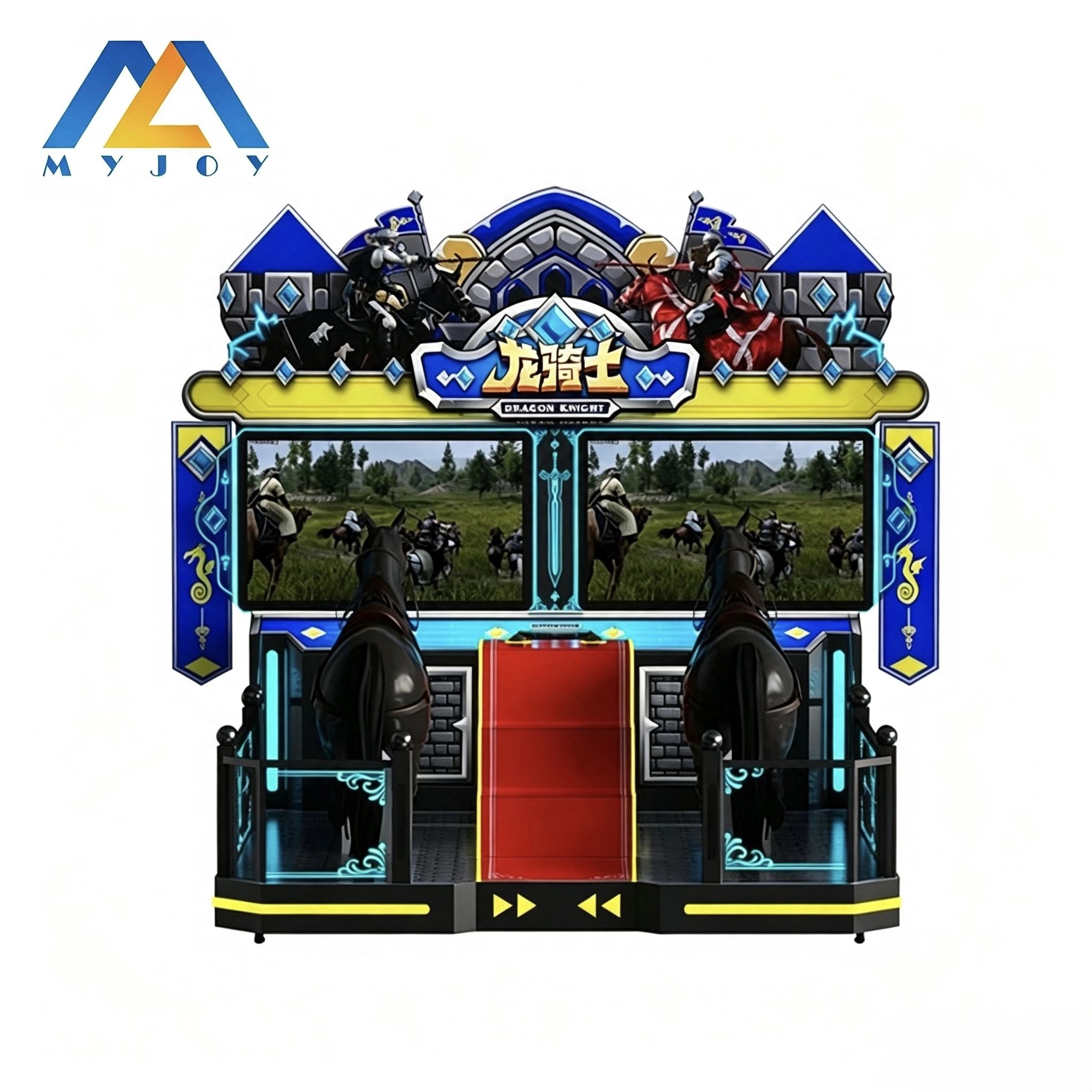
Flying Dragon Knight Horse Racing Simulator is a premium two-player arcade entertainment machine designed for amusement parks, shopping malls, arcades, family entertainment centers and themed attractions. Inspired by medieval knights and fantasy dragon adventures, this simulator combines realistic horse riding motion, interactive racing gameplay and an impressive visual design to create an unforgettable entertainment experience.
Featuring two realistic horse models, dual HD displays, dynamic motion control, vibration feedback and immersive sound effects, players can experience exciting horse racing competitions, adventure challenges and jumping missions. The machine recreates the feeling of real horseback riding through synchronized movement and responsive control systems.
With its eye-catching dragon knight appearance, colorful LED lighting, multiplayer competition mode and safe commercial design, Flying Dragon Knight Horse Racing Simulator is an excellent attraction solution for increasing customer engagement and entertainment value.
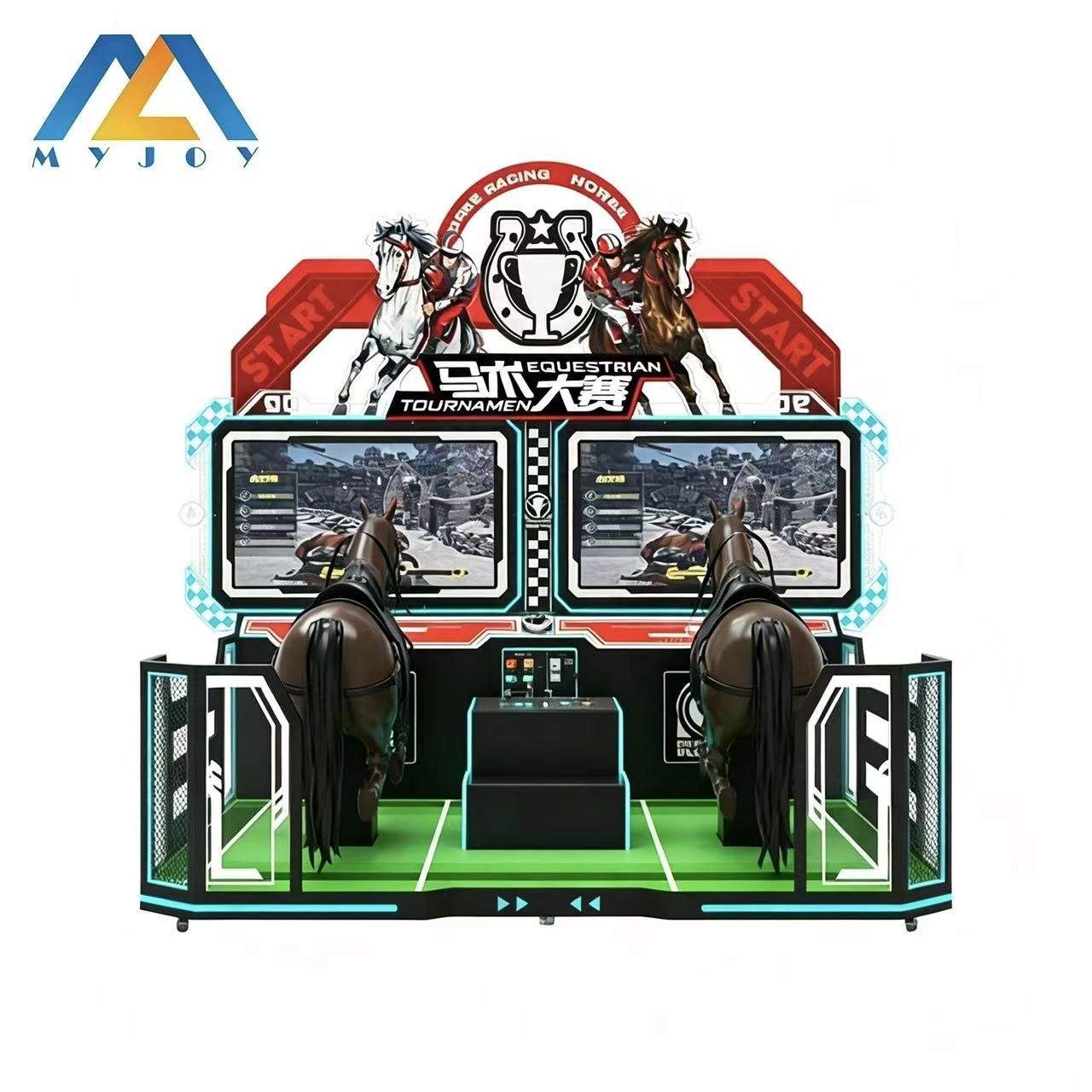
The Horse Racing Championship is a dual-player interactive sports simulator developed by Guangzhou Meiyilian Animation Technology Co., Ltd. It combines simulated horseback riding, competitive racing, physical interaction, and immersive visual effects to create an exciting attraction for players aged 5 to 50.
The machine features two realistic horse models equipped with comfortable saddles and reins. Players control their horses through riding movements and compete on two HD screens. Multiple racing scenes, difficulty levels, and challenge modes make the experience suitable for beginners and experienced players alike.
With its striking equestrian-themed design, dynamic LED lighting, green racetrack-style platform, and competitive ranking system, the machine easily attracts attention and encourages repeat play. It is ideal for amusement arcades, shopping malls, family entertainment centers, sports venues, theme parks, clubs, and tourist attractions.
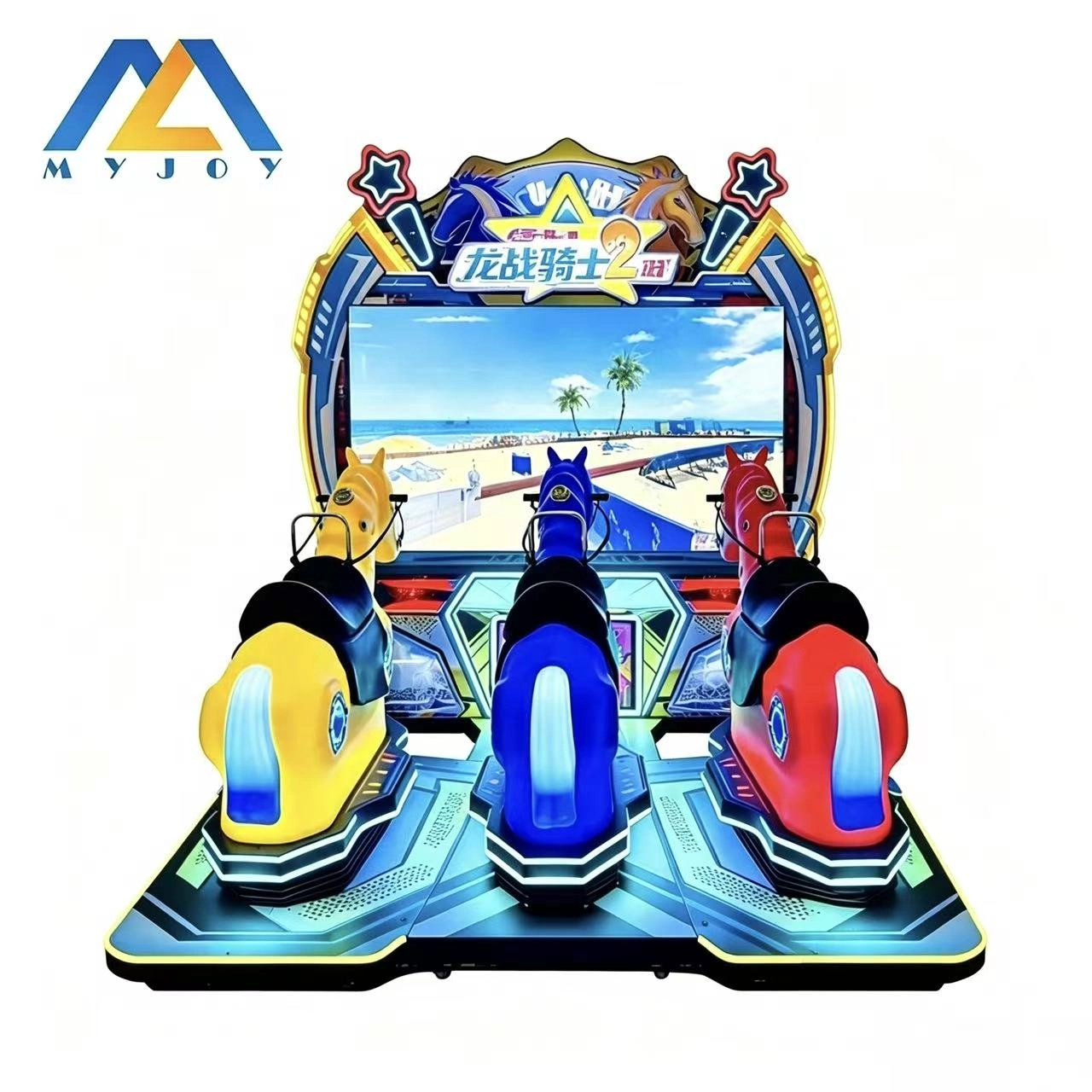
Dragon Warrior Knight 2 – Bring Real Horse Racing Excitement to Indoor Entertainment Venues
Dragon Warrior Knight 2 is an immersive interactive horse riding arcade machine designed around horse racing, obstacle challenges, and multiplayer competition. Featuring a cute and colorful horse design, large HD display, dynamic lighting effects, surround sound system, and realistic rein-control operation, this simulator creates an exciting horse racing experience for children, teenagers, and families.
Players can experience the feeling of riding a racing horse by controlling the reins to accelerate, change direction, and jump over obstacles. The realistic riding movements and interactive gameplay provide strong immersion and encourage repeat play.
The machine supports single-player challenge mode and 3-player competitive racing mode, allowing players to compete with friends, family members, or teammates. It is an ideal attraction for children's playgrounds, arcades, shopping malls, amusement parks, and family entertainment centers.
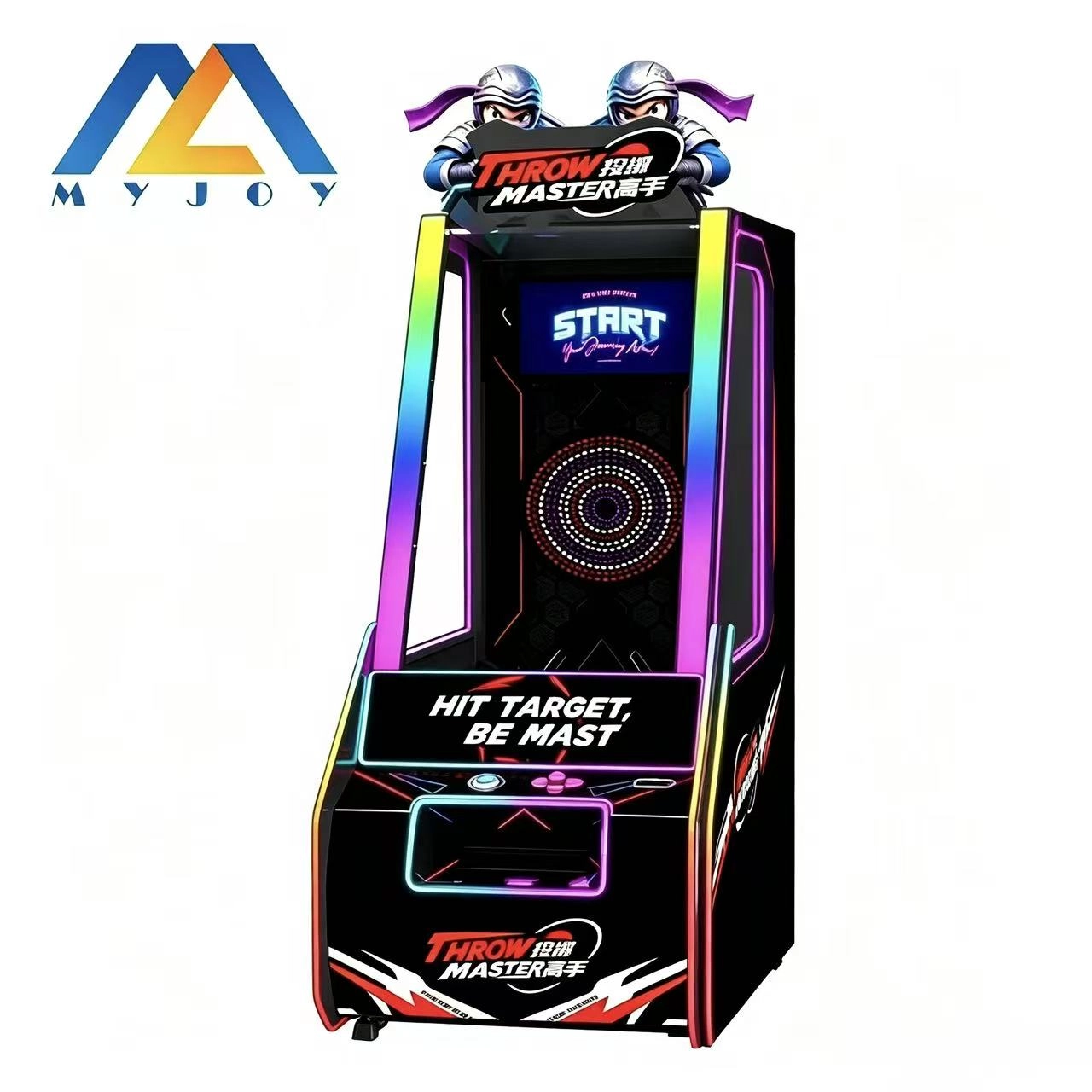
THROW MASTER is a commercial interactive dart throwing arcade machine that combines physical throwing action with an electronic target, digital scoring, on-screen interaction, and camera-based hit detection.
Designed for arcades, family entertainment centers (FECs), indoor amusement venues, shopping malls, and competitive entertainment spaces, THROW MASTER delivers an engaging mix of casual fun and skill-based competition.
Players insert coins, select their player and game mode, and throw darts at the large colorful electronic target. The system detects each result and displays scores, objectives, remaining throws, and game progress on the screen.
With Standard Mode for score-based challenges and Skill Mode for precision target challenges, the machine is suitable for both casual players and those looking for a more competitive experience. Leaderboards, adjustable game settings, and optional ticket rewards also make it well suited for commercial arcade operation.
Its large upright cabinet, colorful circular target, and vibrant RGB-style lighting create a futuristic arcade appearance that helps attract attention in busy entertainment venues.


No. 3, Wenjian Second Road, Wenbian Village, Shiji Town, Panyu District, Guangzhou City, China
Facebook