


What are the application scenarios of interactive sports games?

Interactive sports games use sensors, cameras, projection, displays, or connected equipment to translate physical movement into responsive digital play. They can help venues attract and engage visitors, give schools new ways to support active learning, add participation to events, and make exercise more engaging in workplaces and community settings. Their practical value depends on matching the game format to its audience, space, safety requirements, accessibility needs, and maintenance capacity—not simply adding technology to a room.
Why movement-based digital experiences are gaining ground
From passive screens to active participation
Traditional screens are designed primarily for viewing or touch input, while interactive sports games invite participants to move, react, throw, kick, swing, or coordinate with others. A camera-based system may track body position, while a ball-tracking setup can detect the path or impact of an object. The software turns those inputs into scoring, visual feedback, timed challenges, or cooperative play. This combination makes the experience legible to spectators and gives players an immediate reason to repeat a movement or try another round.
For operators, the format can serve both entertainment and operational objectives. A family venue may use short, easy-to-understand rounds to encourage repeat visits; a school can use a game as a structured activity within a lesson; and an event organizer can use a shared leaderboard to prompt participation. These are different use cases, so success measures should also differ. Guest dwell time, class participation, session completion, and event sign-ups are not interchangeable indicators, and should be selected to reflect the actual goal.
Technology choices shape the experience
Common configurations include projection-based games, large interactive displays, camera tracking, pressure or impact sensors, and sports simulators with dedicated equipment. Each approach has trade-offs. Projection can create a large shared play surface but needs suitable lighting and clear floor space. A display is often easier to install in a compact setting, although it may offer less room for full-body movement. Tracking systems need an unobstructed field of view, while impact-based activities need equipment and surfaces designed for the forces participants will generate.
Planning should begin with the activity and the people who will use it, then work backward to the technology. Consider whether players need to bring their own equipment, whether several people can play at once, how the system handles different heights and movement speeds, and what happens if tracking is interrupted. For public-facing installations, also assess cleaning routines, supervision, cable routing, protective clearances, and access for service. A reliable interactive sports games installation is a combination of appropriate hardware, responsive software, thoughtful space planning, and ongoing operating procedures.
Where interactive sports games deliver practical value
Entertainment venues, retail, and hospitality
Family entertainment centers, arcades, resorts, shopping centers, and hospitality venues can use interactive sports games as attractions that serve individuals, groups, and spectators. A short soccer target challenge, virtual bowling activity, or motion-controlled court game can fit between other attractions and give guests an activity that does not require advanced sporting skills. Operators can choose formats that support quick turnover during busy periods or longer sessions for bookings and group packages. Clear instructions and a visible start-to-finish flow help guests understand the activity without lengthy staff explanations.
In retail and hospitality, the experience can also support a broader visit rather than function as a standalone attraction. A sports retailer might demonstrate equipment through a controlled challenge, while a hotel could offer a family activity in a recreation area. These uses should be designed around the customer journey: where visitors discover the game, how they join, how long a typical round takes, and whether the activity creates congestion nearby. Any promotional scoring or data collection should be transparent and proportionate to the purpose.
Schools, universities, and community recreation
Schools and universities can use interactive sports games to introduce movement-based activities, support recreation breaks, or provide a technology-rich context for lessons about movement, measurement, teamwork, and game design. A teacher may organize students into rotating teams, with each round offering a simple objective and immediate feedback. This can help structure participation, but the technology does not replace curriculum planning, qualified instruction, or appropriate physical education practice. Activities need adaptations for age, skill, mobility, and the available supervision.
Community centers and recreation programs can use adaptable games to bring different age groups together, especially when conventional sports formats are unfamiliar or intimidating to some participants. Cooperative challenges can emphasize shared goals rather than elimination, and adjustable difficulty can give newcomers a way to participate alongside more experienced players. The World Health Organization describes physical activity as beneficial across age groups and recommends regular activity as part of healthy living; interactive games can be one engaging activity option, not a guarantee of health outcomes. See the World Health Organization’s physical activity guidance for broader context.
Corporate wellness, events, and visitor experiences
Employers may include interactive sports games in wellness days, staff events, or shared recreation spaces as an invitation to take an active break. Short, optional challenges can lower the barrier to joining an activity, particularly when participants can choose between solo and team play. To make the experience inclusive, organizers should avoid treating scores as a measure of employee fitness or using participation data for performance assessment. Offer alternatives for people who cannot or do not wish to take part, and communicate the activity’s physical demands before play.
At conferences, exhibitions, and brand activations, interactive sports games can act as a participation point that draws attention and gives visitors something to do while waiting or networking. A compact setup may suit a booth, whereas an outdoor or large-scale activation needs more room, crowd-flow planning, and weather contingencies. Event teams should agree in advance on queue management, staffing, reset time between rounds, and how results will be displayed. If participant details are collected for lead generation, explain what is collected and how it will be used rather than making data capture an implicit condition of play.
How to match a scenario with the right system
Compare the environment, users, and operational demands
The same game can work well in one environment and poorly in another. A school gym may have generous floor space but a short setup window; a retail activation may have high foot traffic but limited room for queues; and a hotel recreation area may need to accommodate mixed ages throughout the day. The table below provides a starting point for evaluating common applications. It is not a substitute for a site survey, equipment assessment, or review of applicable local requirements.
| Application scenario | Typical technical and operational needs | Potential value |
|---|---|---|
| Entertainment venue | Durable equipment, fast game reset, clear instructions, queue and staff planning | Repeatable group play and an additional visitor attraction |
| School or university | Age-appropriate activities, teacher controls, flexible difficulty, supervised space | Structured participation and a practical context for active learning |
| Corporate wellness | Optional participation, accessible alternatives, simple setup, privacy-conscious data use | An engaging format for workplace recreation and group events |
| Exhibition or brand activation | Compact footprint or planned open area, reliable operation, queue management | Visitor interaction and an activity that can support event engagement |
| Community or public space | Robust installation, clear supervision model, inclusive design, environmental suitability | Shared recreation for a broad range of users |
Design for safety, accessibility, and reliable operation
Before selecting interactive sports games, document the activity’s movement range, expected number of users, age groups, and required clearances. Identify trip hazards, pinch points, impact risks, glare, noise, and any equipment that needs anchoring or routine inspection. For installations involving children or outdoor play areas, consult relevant local rules and recognized safety guidance; the U.S. Consumer Product Safety Commission’s Public Playground Safety Handbook is a useful reference for playground hazards and safety considerations, although a digital game installation may require additional assessments.
Accessibility should be addressed during concept design rather than added after installation. Consider step-free access, wheelchair maneuvering space, adjustable controls, readable instructions, visual and audio cues, and ways to participate without rapid movement or forceful actions. The applicable requirements depend on the site and jurisdiction; the U.S. Department of Justice’s 2010 ADA Standards for Accessible Design provide a reference for covered U.S. facilities. A game itself may also need options such as seated play, lower-height targets, flexible timing, or cooperative scoring to support different abilities.
Operational reliability matters as much as the first demonstration. Define who starts and ends sessions, cleans shared equipment, checks sensors, handles software updates, and contacts technical support. Confirm network requirements and whether core gameplay can continue during a connectivity interruption. If the system stores scores, images, or account details, ask what data is collected, where it is stored, who can access it, and how long it is retained. Pilot the experience with representative users in the intended space, then use their feedback and observed bottlenecks to refine the layout, instructions, and game settings.
To plan a fit-for-purpose installation, contact us to discuss your venue, audience, space, and operational goals.
Frequently Asked Questions
What are interactive sports games?
Interactive sports games use sensors, cameras, projection, displays, or connected equipment to translate physical movement into responsive digital play, such as scoring, visual feedback, or timed challenges.
Which industries can use interactive sports games?
Applications include family entertainment centers, arcades, resorts, shopping centers, hospitality venues, schools, universities, community centers, workplaces, conferences, exhibitions, and brand activations.
What technology is used in interactive sports games?
Common configurations include projection-based games, large interactive displays, camera tracking, pressure or impact sensors, and sports simulators with dedicated equipment.
How should a business choose an interactive sports game system?
Start with the activity and intended users, then assess space, number of simultaneous players, tracking needs, lighting, supervision, cleaning, cable routing, maintenance, and the operational goal.
Can interactive sports games be made accessible?
Accessibility can be supported through measures such as step-free access, adjustable controls, readable instructions, visual and audio cues, seated play options, lower-height targets, flexible timing, and cooperative scoring.
Do interactive sports games collect personal data?
Some systems may collect scores, images, or account details. Operators should establish what is collected, where it is stored, who can access it, how long it is retained, and clearly explain any collection to participants.
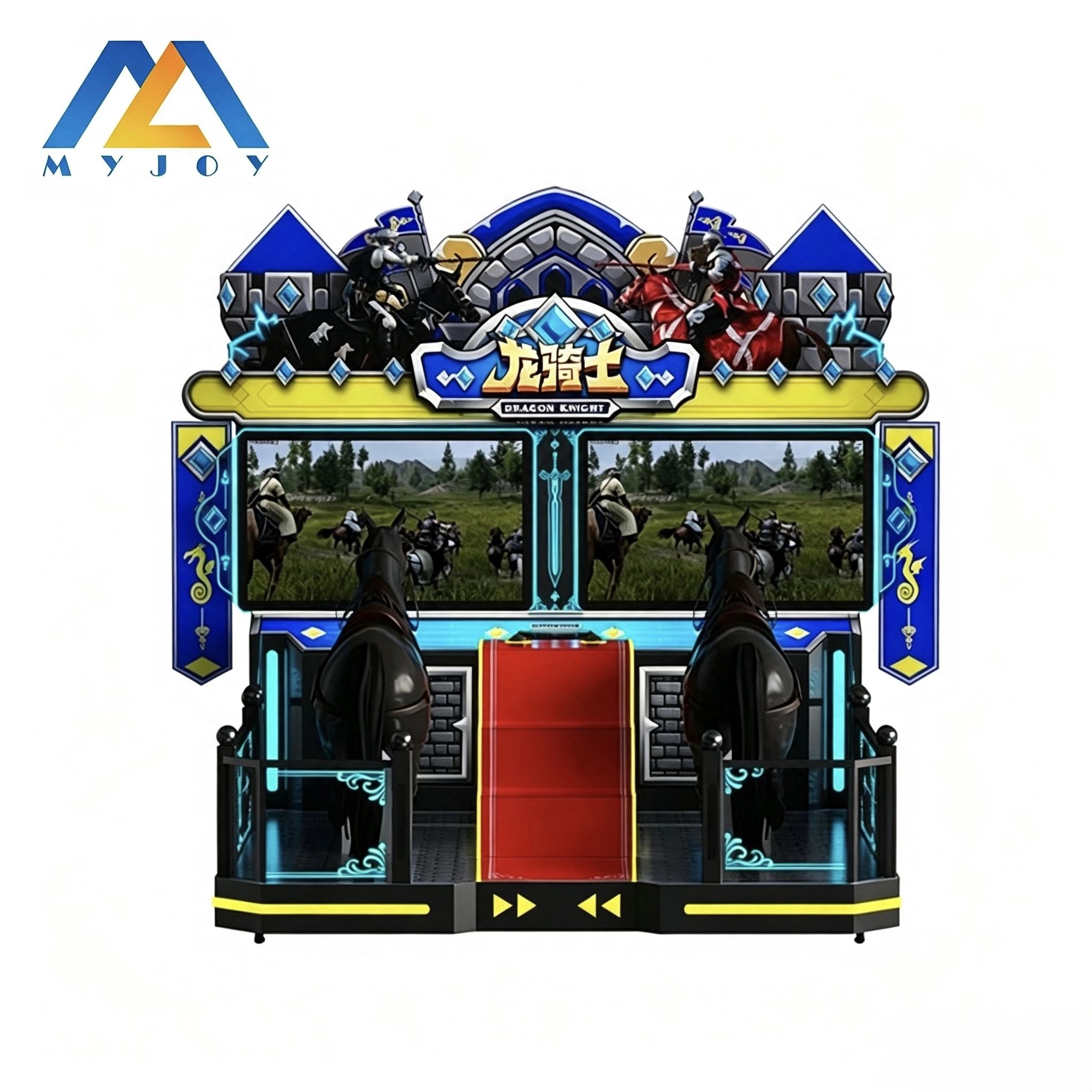
Flying Dragon Knight Horse Racing Simulator is a premium two-player arcade entertainment machine designed for amusement parks, shopping malls, arcades, family entertainment centers and themed attractions. Inspired by medieval knights and fantasy dragon adventures, this simulator combines realistic horse riding motion, interactive racing gameplay and an impressive visual design to create an unforgettable entertainment experience.
Featuring two realistic horse models, dual HD displays, dynamic motion control, vibration feedback and immersive sound effects, players can experience exciting horse racing competitions, adventure challenges and jumping missions. The machine recreates the feeling of real horseback riding through synchronized movement and responsive control systems.
With its eye-catching dragon knight appearance, colorful LED lighting, multiplayer competition mode and safe commercial design, Flying Dragon Knight Horse Racing Simulator is an excellent attraction solution for increasing customer engagement and entertainment value.
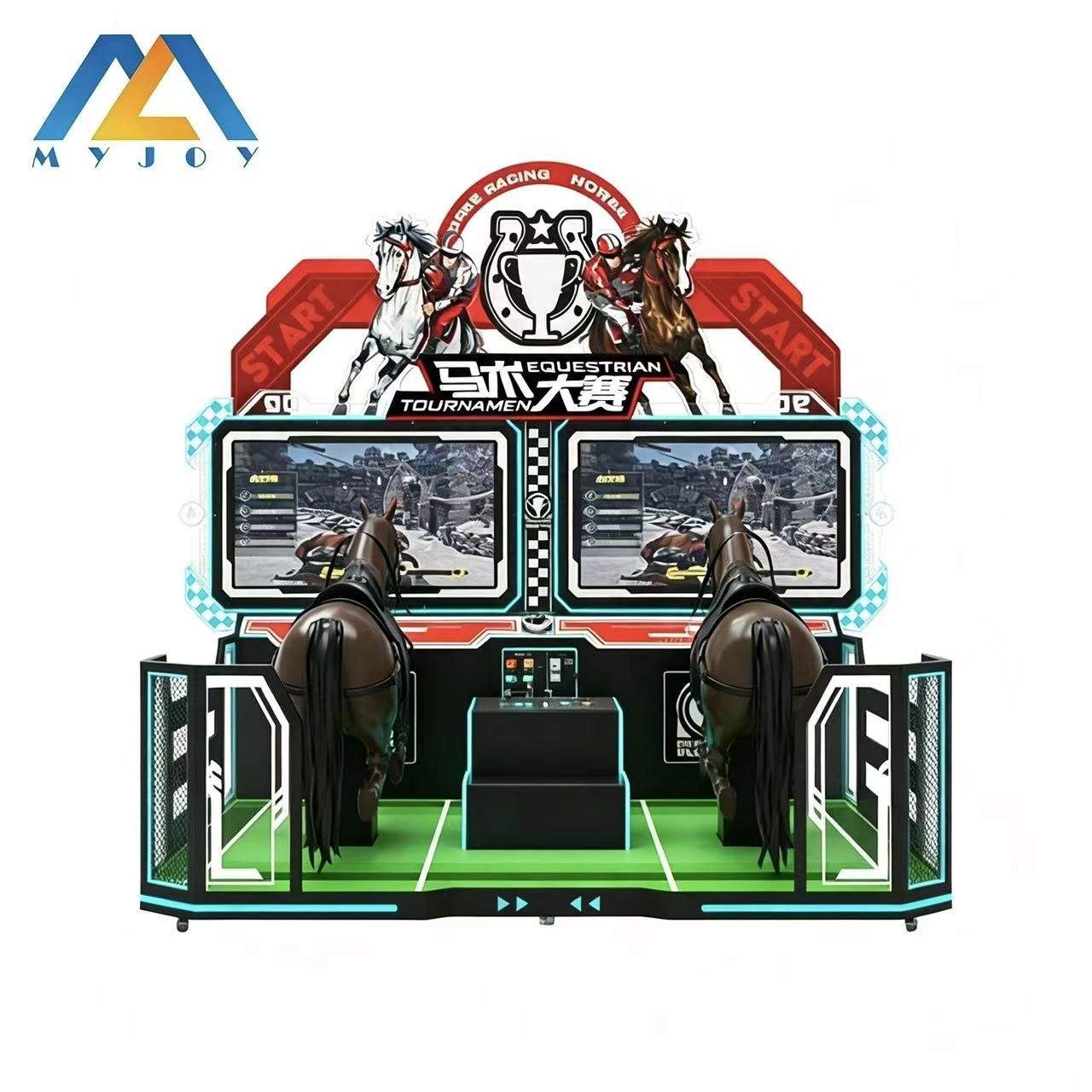
The Horse Racing Championship is a dual-player interactive sports simulator developed by Guangzhou Meiyilian Animation Technology Co., Ltd. It combines simulated horseback riding, competitive racing, physical interaction, and immersive visual effects to create an exciting attraction for players aged 5 to 50.
The machine features two realistic horse models equipped with comfortable saddles and reins. Players control their horses through riding movements and compete on two HD screens. Multiple racing scenes, difficulty levels, and challenge modes make the experience suitable for beginners and experienced players alike.
With its striking equestrian-themed design, dynamic LED lighting, green racetrack-style platform, and competitive ranking system, the machine easily attracts attention and encourages repeat play. It is ideal for amusement arcades, shopping malls, family entertainment centers, sports venues, theme parks, clubs, and tourist attractions.
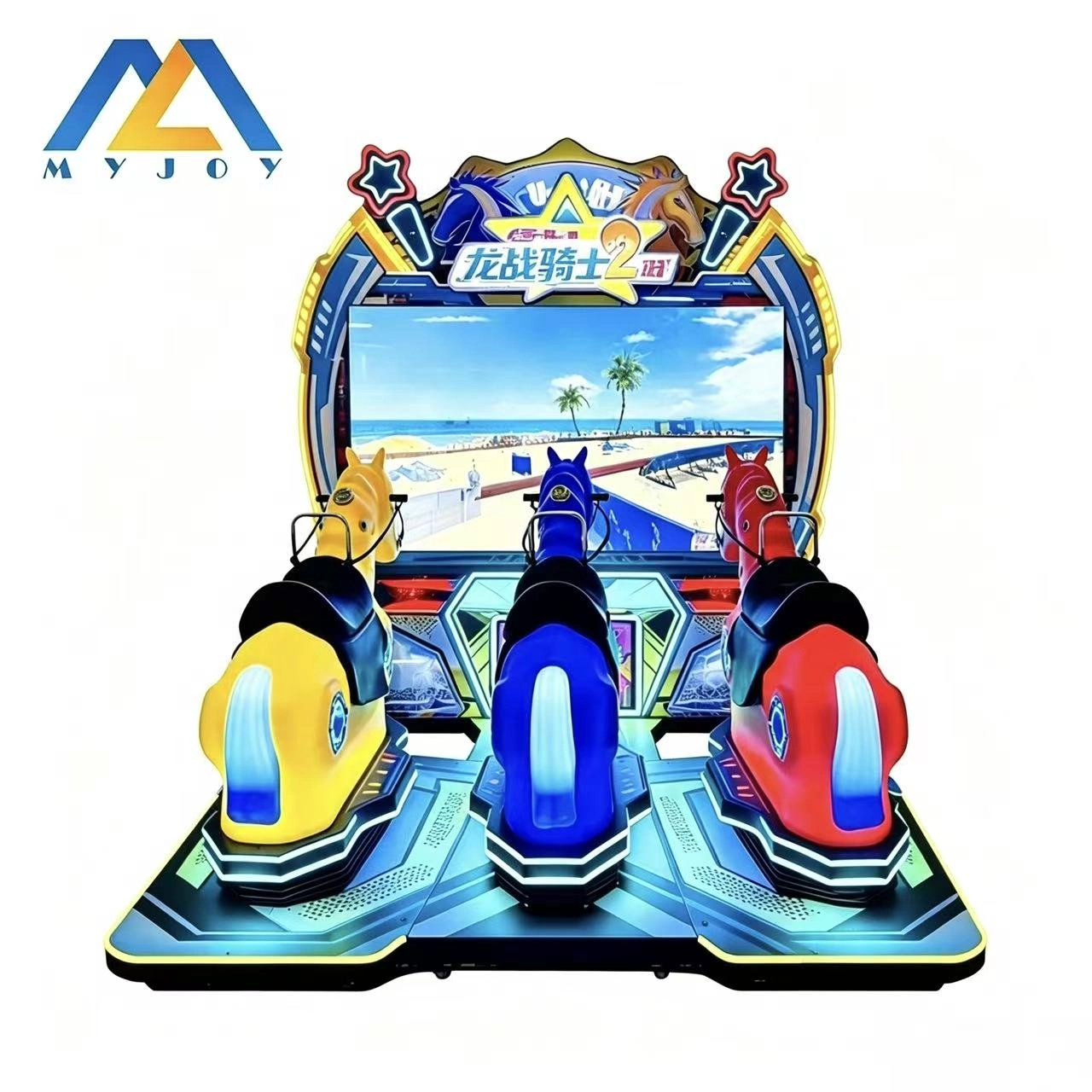
Dragon Warrior Knight 2 – Bring Real Horse Racing Excitement to Indoor Entertainment Venues
Dragon Warrior Knight 2 is an immersive interactive horse riding arcade machine designed around horse racing, obstacle challenges, and multiplayer competition. Featuring a cute and colorful horse design, large HD display, dynamic lighting effects, surround sound system, and realistic rein-control operation, this simulator creates an exciting horse racing experience for children, teenagers, and families.
Players can experience the feeling of riding a racing horse by controlling the reins to accelerate, change direction, and jump over obstacles. The realistic riding movements and interactive gameplay provide strong immersion and encourage repeat play.
The machine supports single-player challenge mode and 3-player competitive racing mode, allowing players to compete with friends, family members, or teammates. It is an ideal attraction for children's playgrounds, arcades, shopping malls, amusement parks, and family entertainment centers.
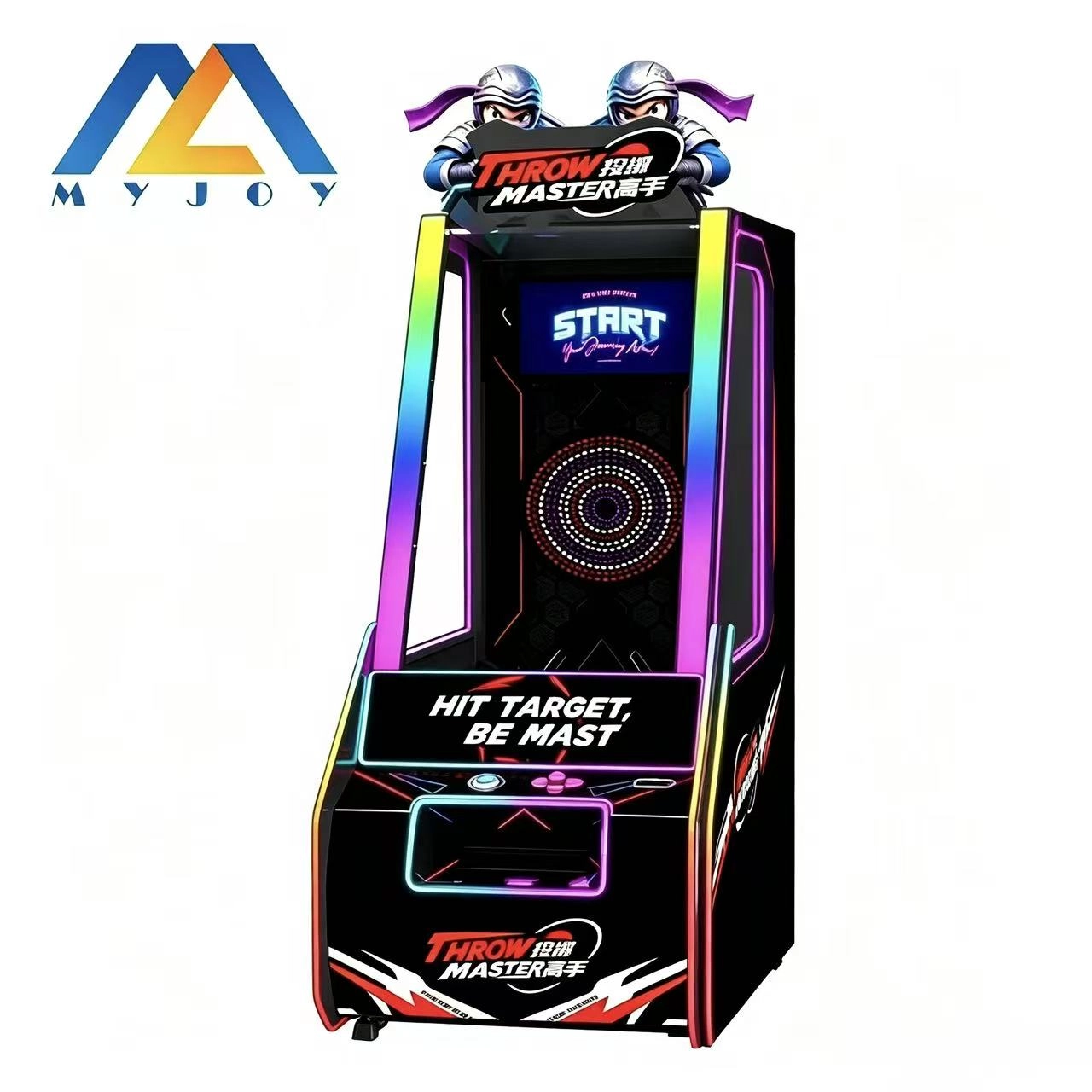
THROW MASTER is a commercial interactive dart throwing arcade machine that combines physical throwing action with an electronic target, digital scoring, on-screen interaction, and camera-based hit detection.
Designed for arcades, family entertainment centers (FECs), indoor amusement venues, shopping malls, and competitive entertainment spaces, THROW MASTER delivers an engaging mix of casual fun and skill-based competition.
Players insert coins, select their player and game mode, and throw darts at the large colorful electronic target. The system detects each result and displays scores, objectives, remaining throws, and game progress on the screen.
With Standard Mode for score-based challenges and Skill Mode for precision target challenges, the machine is suitable for both casual players and those looking for a more competitive experience. Leaderboards, adjustable game settings, and optional ticket rewards also make it well suited for commercial arcade operation.
Its large upright cabinet, colorful circular target, and vibrant RGB-style lighting create a futuristic arcade appearance that helps attract attention in busy entertainment venues.


No. 3, Wenjian Second Road, Wenbian Village, Shiji Town, Panyu District, Guangzhou City, China
Facebook