

How to Choose an Electronic Dart Machine

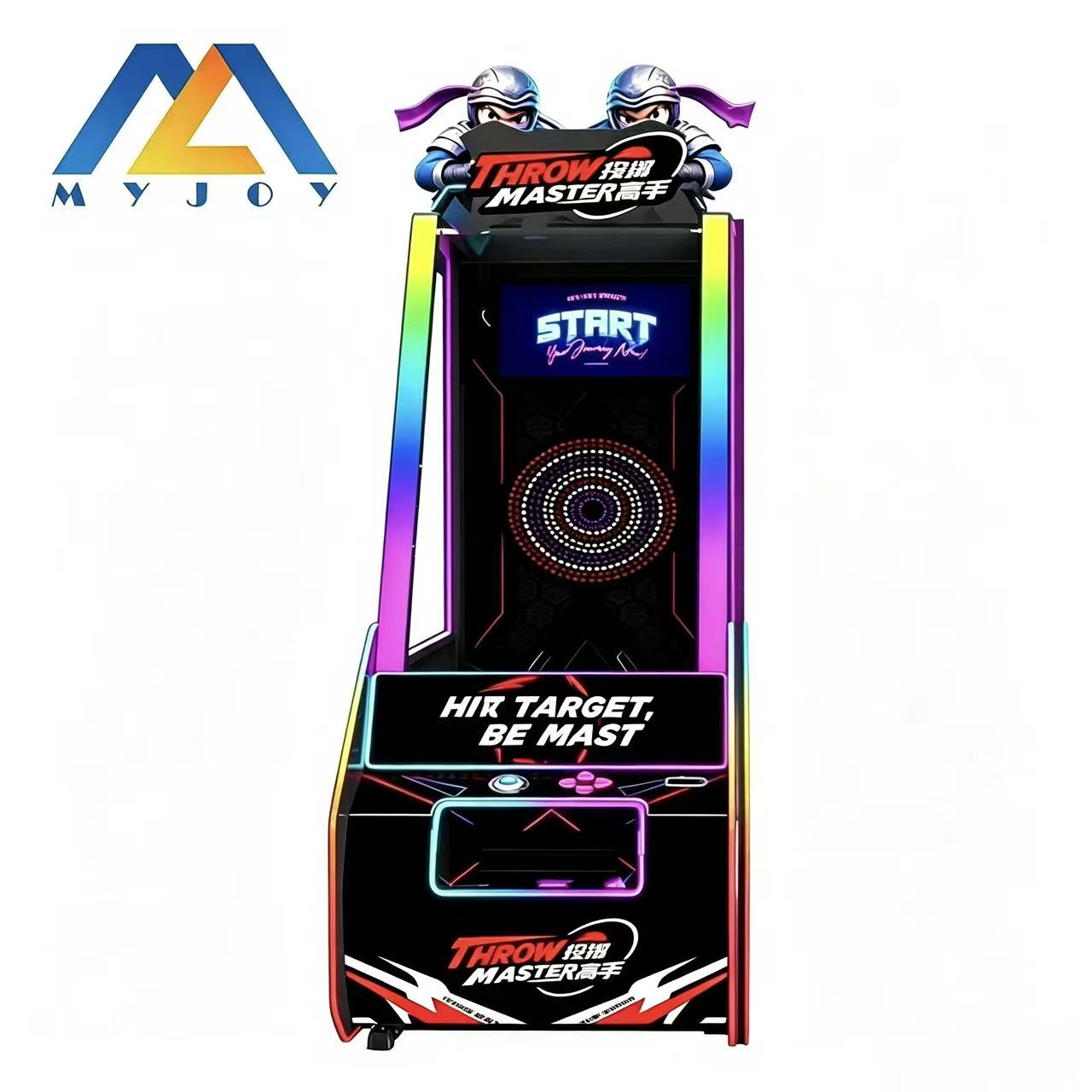
Choosing an electronic dart machine means balancing the player experience with the practical demands of operating a venue. Start with your audience and available space, then assess target design, hit detection, game variety, payment and reward features, durability, service support, and total cost of ownership. A home machine and a commercial arcade cabinet serve different needs. For venues seeking an interactive attraction, THROW MASTER combines physical throwing with a colorful electronic target, camera-based hit detection, on-screen scoring, Standard and Skill modes, leaderboards, and optional ticket rewards.
Start with the Venue and the Players
Decide who will play and how
Before comparing models of electronic dart machine, define the experience you want to offer. A home user may prioritize compact size, straightforward setup, and relaxed play. An arcade or family entertainment center needs a machine that can explain itself quickly, accommodate short visits, and remain engaging across repeat plays. A competitive venue may place more emphasis on precision, consistent scoring, and a challenge players can return to.
Consider the likely mix of ages, group sizes, and experience levels. Casual visitors often appreciate clear instructions, visible objectives, and simple ways to start a game. More experienced players may want a skill-based challenge alongside traditional score-focused play. If the audience varies, choose a machine with multiple modes rather than one built around a single style of play.
Measure the complete play area
Do not measure only the cabinet footprint. Account for the throwing line, player movement, waiting guests, and a safe area around the target. Check ceiling height, access routes for delivery, power access, and whether nearby attractions or walkways could interfere with play. Ask the supplier for the cabinet dimensions, installation requirements, and recommended operating clearance before committing to a location.
For a busy venue, also consider sightlines. An electronic dart machine should be visible enough to attract attention without blocking circulation or creating congestion. A large upright cabinet can work well as a focal point, but its placement should fit the layout and the way guests move through the space.
Set a realistic business objective
Clarify what success means for your purchase. You might want to add a new paid play option, encourage groups to compete, increase dwell time, or complement existing arcade games. The objective affects what to prioritize: a quick coin-operated session, replayable challenges, visible leaderboards, or optional ticket rewards. Ask suppliers how each feature works in practice and whether settings can be adjusted to suit your operating model.
Compare the Play Experience and Technology
Look beyond the electronic target
An electronic target is only one part of the experience. Assess how players start a session, choose a mode, understand the objective, see their remaining throws, and follow their score. Clear on-screen information reduces friction, especially for first-time players. If a demonstration is available, observe whether the flow feels intuitive without staff having to explain every step.
Hit detection is another essential point. Ask the manufacturer to explain how the system registers a hit, what happens when a result is uncertain, and how the target and sensing system should be maintained. For a camera-based electronic dart machine, request a demonstration under realistic venue lighting and ask about calibration, cleaning, and troubleshooting. Do not assume all electronic scoring systems use the same detection method or deliver the same player feedback.
Check game variety and replay value
Different game modes can broaden appeal and give players a reason to try again. Score-based play is familiar to many guests, while precision challenges can make a session feel more like a test of skill. Look for modes that are easy to distinguish and explain. Adjustable settings can be valuable when the machine needs to suit different play sessions or venue preferences, but confirm which settings operators can change and whether changes are straightforward.
THROW MASTER offers Standard Mode for score-based challenges and Skill Mode for precision target challenges. Players insert coins, choose a player and game mode, then throw at a large colorful electronic target. The system uses camera-based hit detection and displays scores, objectives, remaining throws, and game progress on screen. This combination is intended to give casual visitors an accessible starting point while offering a more competitive option for repeat players.
Evaluate payment, competition, and rewards
For commercial operation, confirm how the machine accepts payment and whether the configuration matches your venue. Ask about coin operation and any other payment options available for the specific model and market; do not assume a feature is included unless it is confirmed in writing. If you plan to use rewards, clarify how ticket functionality is configured and whether it integrates with your existing redemption process.
Leaderboards can make results visible and encourage friendly competition, but their value depends on how they are presented and maintained. Ask whether scores are local to a session, machine, or venue, and whether operators can reset or manage them. THROW MASTER includes leaderboards, adjustable game settings, and optional ticket rewards, making it worth considering for venues that want competitive play and a configurable commercial setup.
Assess Durability, Safety, and Operating Costs
Inspect construction and serviceability
A commercial electronic dart machine may receive frequent use, so ask about cabinet construction, target protection, accessible service panels, and the expected maintenance routine. Request details on replaceable parts, warranty terms, technical support, and the availability and lead time of spare components. A supplier should be able to explain what operators can check themselves and which repairs require trained service personnel.
Ask for the written operating and maintenance documentation before purchase. The ISO 12100 machinery safety standard describes a risk-assessment and risk-reduction approach; it can be a useful reference when discussing hazards and operating procedures with a supplier. Its relevance to a particular machine or installation should be confirmed with the manufacturer and local authorities.
Make safety part of site planning
Physical throwing requires thoughtful placement and clear operating rules. Establish a defined throwing area, prevent guests from crossing in front of active players, and follow the machine maker’s instructions for supervision, use, and maintenance. Ask how the target, projectiles, and any moving or electrical parts are designed to be handled, and what procedures are recommended if the machine is damaged or behaves unexpectedly.
Electrical requirements also deserve attention. Confirm the machine’s rated power, plug and supply requirements, and installation instructions, and have venue staff follow applicable local rules. The OSHA electrical safety guidance provides general workplace information, while the IEC 62368-1 standard addresses safety requirements for audio/video, information, and communication technology equipment. Ask the manufacturer which safety documentation applies to the product and verify local requirements rather than treating a standard reference as automatic certification.
Calculate total cost of ownership
Compare more than the quoted purchase price. Build a simple ownership estimate that includes delivery, installation, payment setup, routine cleaning, repairs, replacement parts, and staff time. If rewards are used, include their operating cost as well. Ask about warranty coverage, exclusions, response times, and whether remote troubleshooting or on-site service is available in your region.
Revenue potential depends on location, pricing, utilization, and operating costs, so avoid relying on unsupported payback promises. Instead, estimate realistic sessions per day and test how the machine fits your audience and floor plan. If possible, request references from comparable venues or a live demonstration. A supplier should answer questions directly and provide clear specifications, operating guidance, and after-sales support.
Use a Practical Comparison Before You Buy
Compare machines against the same criteria
Use a consistent checklist when evaluating each electronic dart machine. A feature that sounds impressive may not be useful if it is difficult to operate, incompatible with your venue, or expensive to maintain. Record the supplier’s answer for each item and identify any information that still needs written confirmation.
| Decision factor | Questions to ask | Why it matters |
|---|---|---|
| Audience and modes | Are there options for casual and competitive play? Can players understand the rules quickly? | Supports a wider range of visitors and repeat sessions. |
| Scoring and detection | How are hits detected? What is shown on screen? What maintenance or calibration is required? | Affects confidence in results and the smoothness of play. |
| Space and installation | What are the cabinet dimensions, power needs, and recommended clearances? | Helps avoid layout, access, and installation problems. |
| Commercial operation | How does payment work? Are leaderboards or ticket rewards available? | Determines how well the machine fits your business model. |
| Support and ownership | What is covered by warranty? Are parts and technical help available locally? | Helps manage downtime and long-term operating costs. |
Match features to the venue rather than buying on appearance
Lighting and cabinet design can help a machine stand out, but visual impact should support a playable and maintainable attraction. THROW MASTER uses a large upright cabinet, a colorful circular target, and vibrant RGB-style lighting to create a futuristic arcade appearance. Those features may suit arcades, family entertainment centers, indoor amusement venues, shopping malls, and competitive entertainment spaces where visibility matters. Confirm the actual footprint, power needs, and installation details for your location before ordering.
In a final evaluation, separate must-haves from nice-to-haves. For example, a venue may require coin operation and simple game selection, while leaderboards or ticket rewards may be optional. Compare the machine’s documented capabilities with those requirements, and request written clarification for any feature that affects safety, operation, or cost. This approach makes it easier to choose an electronic dart machine that fits the business rather than one that merely has the longest feature list.
When comparing options, prioritize a clear player journey, dependable scoring, appropriate safety and installation guidance, and accessible after-sales support. THROW MASTER brings together physical throwing, digital scoring, camera-based hit detection, two distinct game styles, and commercial-oriented options in one interactive arcade cabinet. To review the THROW MASTER Interactive Dart Throwing Arcade Game Machine or discuss whether it fits your venue, contact us at tangping@joyfulsport.com.
Frequently Asked Questions
What should I look for when choosing an electronic dart machine for a commercial venue?
Compare the audience and game modes, scoring and hit-detection method, cabinet footprint and installation requirements, payment and reward features, durability, maintenance needs, warranty, spare parts, and technical support. Match these factors to your venue rather than choosing by purchase price or appearance alone.
How do I know whether an electronic dart machine will fit my venue?
Check the cabinet dimensions, delivery access, power requirements, ceiling height, throwing line, player movement, waiting area, and safe clearance around the target. Ask the supplier for installation requirements and recommended operating clearance before purchase.
Why does hit detection matter in an electronic dart machine?
Hit detection affects how results are registered and how confidently players can follow scores. Ask the manufacturer how the system detects hits, how uncertain results are handled, and what calibration, cleaning, or troubleshooting is required. Request a demonstration under realistic venue conditions when possible.
What game modes does THROW MASTER offer?
THROW MASTER offers Standard Mode for score-based challenges and Skill Mode for precision target challenges. It displays scores, objectives, remaining throws, and game progress, and also includes leaderboards, adjustable game settings, and optional ticket rewards.
What ongoing costs should I consider before buying an electronic dart machine?
Consider delivery, installation, payment setup, routine cleaning, repairs, replacement parts, staff time, and any ticket reward costs. Also review warranty coverage, exclusions, service response times, and the availability of spare parts and technical support.
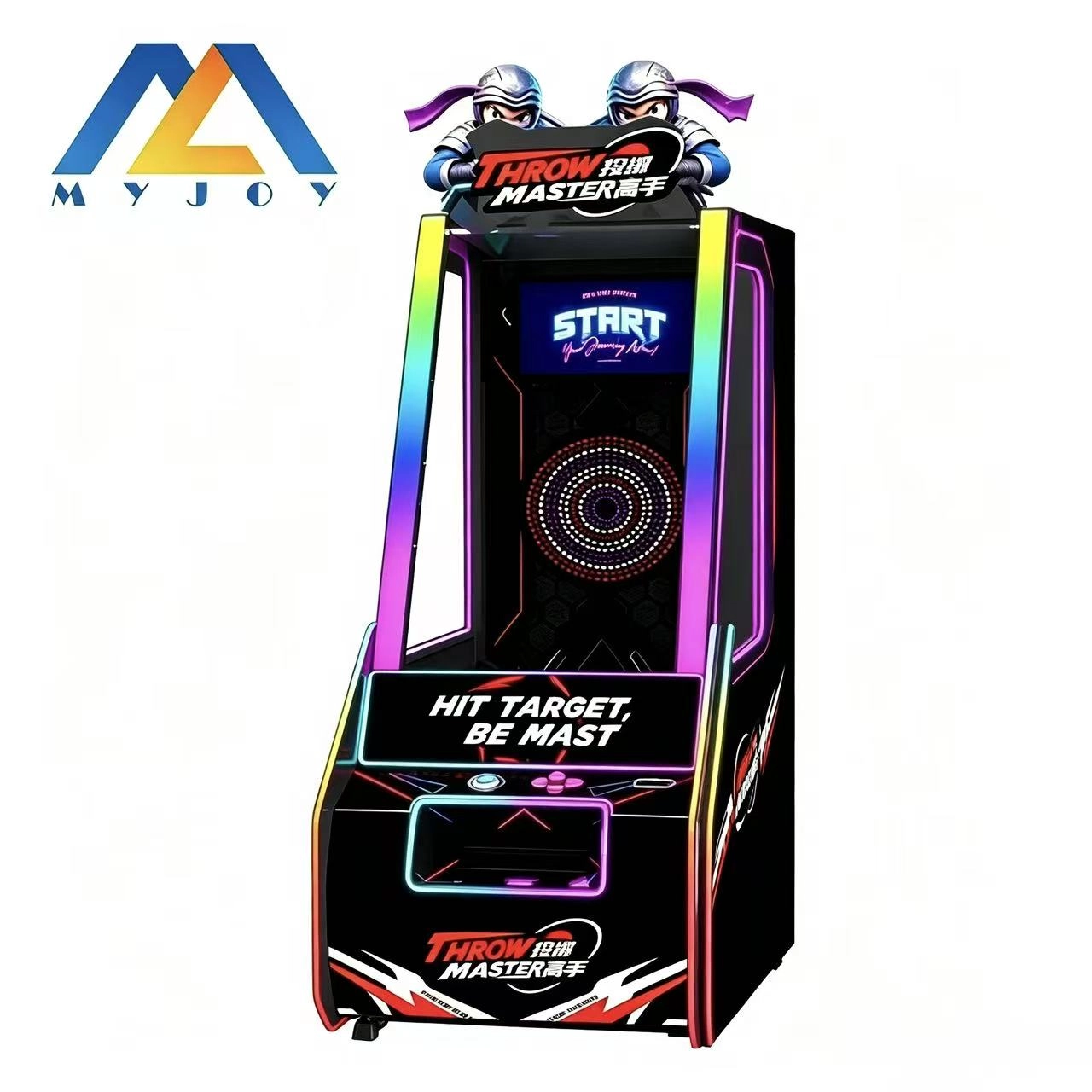
THROW MASTER is a commercial interactive dart throwing arcade machine that combines physical throwing action with an electronic target, digital scoring, on-screen interaction, and camera-based hit detection.
Designed for arcades, family entertainment centers (FECs), indoor amusement venues, shopping malls, and competitive entertainment spaces, THROW MASTER delivers an engaging mix of casual fun and skill-based competition.
Players insert coins, select their player and game mode, and throw darts at the large colorful electronic target. The system detects each result and displays scores, objectives, remaining throws, and game progress on the screen.
With Standard Mode for score-based challenges and Skill Mode for precision target challenges, the machine is suitable for both casual players and those looking for a more competitive experience. Leaderboards, adjustable game settings, and optional ticket rewards also make it well suited for commercial arcade operation.
Its large upright cabinet, colorful circular target, and vibrant RGB-style lighting create a futuristic arcade appearance that helps attract attention in busy entertainment venues.
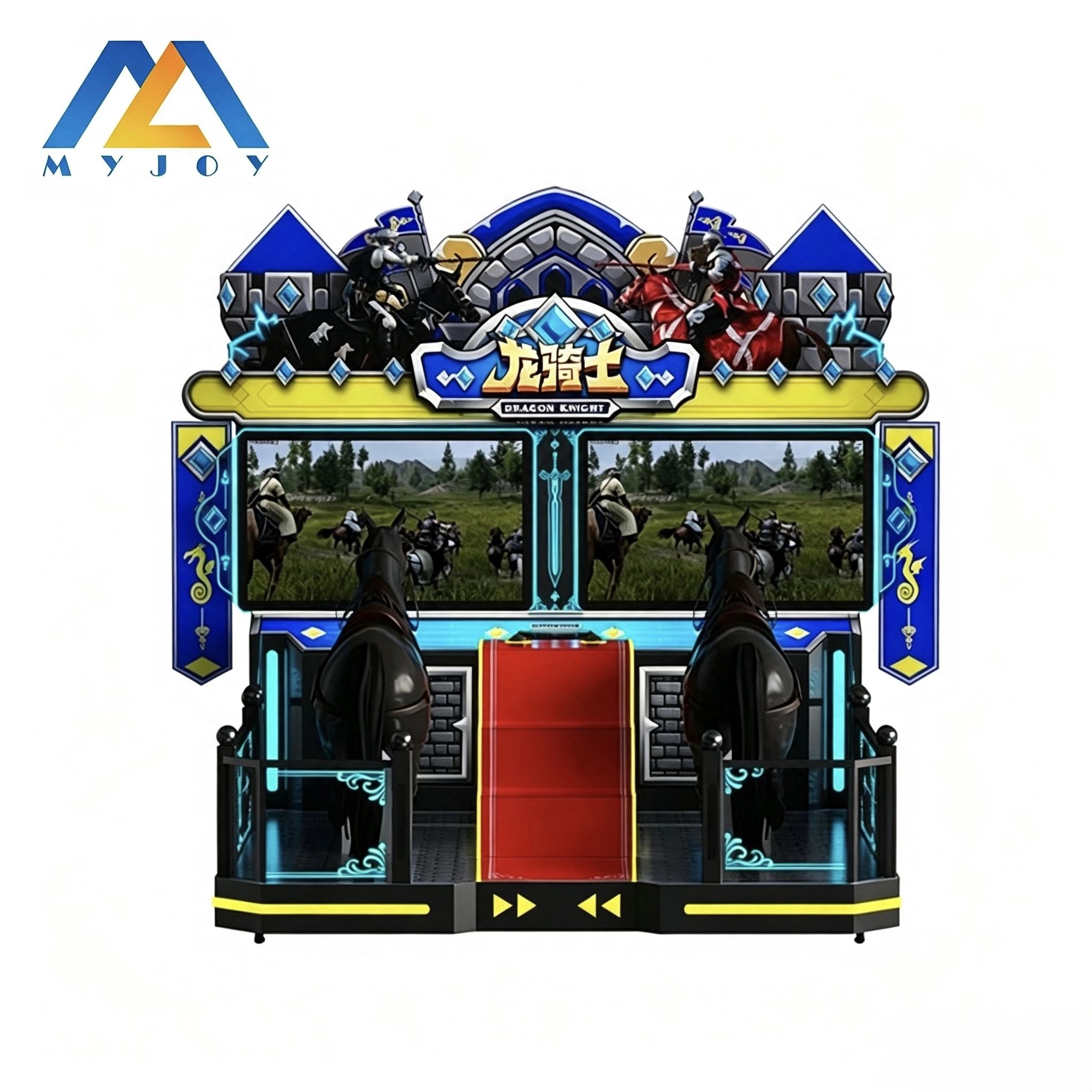
Flying Dragon Knight Horse Racing Simulator is a premium two-player arcade entertainment machine designed for amusement parks, shopping malls, arcades, family entertainment centers and themed attractions. Inspired by medieval knights and fantasy dragon adventures, this simulator combines realistic horse riding motion, interactive racing gameplay and an impressive visual design to create an unforgettable entertainment experience.
Featuring two realistic horse models, dual HD displays, dynamic motion control, vibration feedback and immersive sound effects, players can experience exciting horse racing competitions, adventure challenges and jumping missions. The machine recreates the feeling of real horseback riding through synchronized movement and responsive control systems.
With its eye-catching dragon knight appearance, colorful LED lighting, multiplayer competition mode and safe commercial design, Flying Dragon Knight Horse Racing Simulator is an excellent attraction solution for increasing customer engagement and entertainment value.
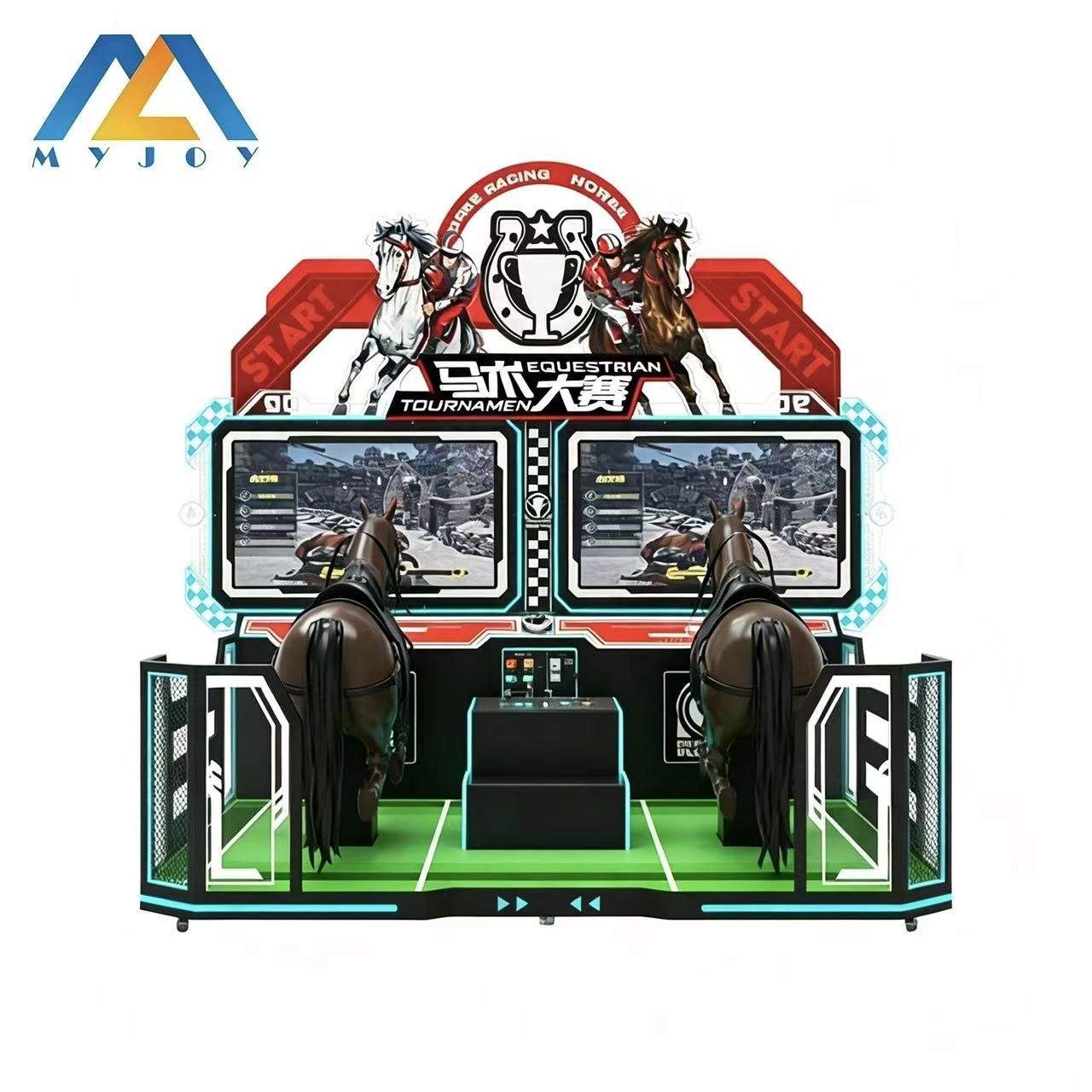
The Horse Racing Championship is a dual-player interactive sports simulator developed by Guangzhou Meiyilian Animation Technology Co., Ltd. It combines simulated horseback riding, competitive racing, physical interaction, and immersive visual effects to create an exciting attraction for players aged 5 to 50.
The machine features two realistic horse models equipped with comfortable saddles and reins. Players control their horses through riding movements and compete on two HD screens. Multiple racing scenes, difficulty levels, and challenge modes make the experience suitable for beginners and experienced players alike.
With its striking equestrian-themed design, dynamic LED lighting, green racetrack-style platform, and competitive ranking system, the machine easily attracts attention and encourages repeat play. It is ideal for amusement arcades, shopping malls, family entertainment centers, sports venues, theme parks, clubs, and tourist attractions.
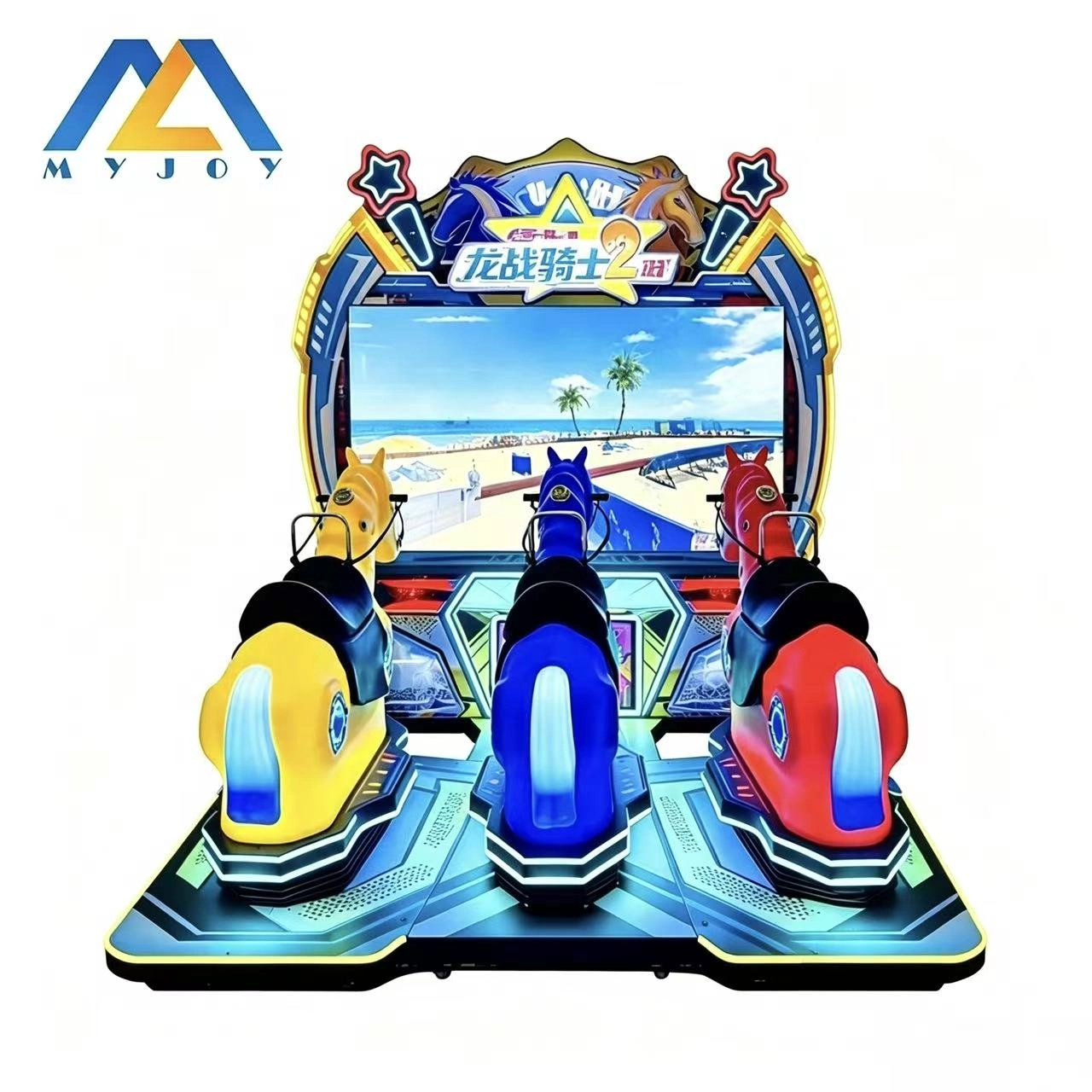
Dragon Warrior Knight 2 – Bring Real Horse Racing Excitement to Indoor Entertainment Venues
Dragon Warrior Knight 2 is an immersive interactive horse riding arcade machine designed around horse racing, obstacle challenges, and multiplayer competition. Featuring a cute and colorful horse design, large HD display, dynamic lighting effects, surround sound system, and realistic rein-control operation, this simulator creates an exciting horse racing experience for children, teenagers, and families.
Players can experience the feeling of riding a racing horse by controlling the reins to accelerate, change direction, and jump over obstacles. The realistic riding movements and interactive gameplay provide strong immersion and encourage repeat play.
The machine supports single-player challenge mode and 3-player competitive racing mode, allowing players to compete with friends, family members, or teammates. It is an ideal attraction for children's playgrounds, arcades, shopping malls, amusement parks, and family entertainment centers.


No. 3, Wenjian Second Road, Wenbian Village, Shiji Town, Panyu District, Guangzhou City, China
Facebook