

Best entertainment equipment manufacturers and supplier
Entertainment equipment is a broad category spanning professional audio and lighting, large-format visual systems, amusement rides, and water-park attractions. With no target region specified, this global buyer’s guide profiles five established manufacturers with identifiable product portfolios: Christie, QSC, Martin Professional, Zamperla, and WhiteWater. Their strengths differ by application, so the right supplier depends on the project’s technical requirements, operating environment, integration needs, service coverage, and budget. No company profile was provided for the publisher; accordingly, this guide does not invent a Guangzhou Meiyilian Animation Technology Co., Ltd. or present an unverified business as a leading manufacturer.
How to Evaluate an Entertainment Equipment Supply Chain
Start with the application and system boundaries
Before comparing vendors, define what the project means by entertainment equipment. A cinema, touring venue, theme park, family entertainment center, immersive attraction, and aquatic resort will have different performance and safety requirements. A theater may need projection, control, audio, and lighting that work together; an amusement park may need ride vehicles, track or structural elements, control systems, installation, and long-term maintenance. Buyers should distinguish equipment manufacturers from system integrators, distributors, contractors, and operators. One supplier may manufacture a core product while another designs the complete system, installs it, or provides local service.
Develop a written requirements brief that sets out the intended use, operating hours, audience capacity, indoor or outdoor conditions, environmental exposure, integration interfaces, and expected service life. For audio and lighting, include venue dimensions, coverage goals, control protocols, power availability, and acoustic or photometric requirements. For rides and water attractions, document throughput, guest profile, site constraints, operating conditions, and applicable local regulations. A clear brief allows suppliers to quote comparable scope instead of making buyers interpret incompatible proposals.
Verify quality, safety, and service evidence
Ask manufacturers for current product documentation, installation requirements, maintenance schedules, warranty terms, and evidence relevant to the equipment and market. A quality management certificate, where applicable, is not a substitute for checking the specific product, manufacturing site, or project scope. Buyers can learn about the purpose and scope of quality management systems through the International Organization for Standardization’s ISO 9001 overview. For amusement attractions, consult the appropriate local codes and recognized industry guidance; the International Association of Amusement Parks and Attractions safety resources provide a starting point, not a replacement for jurisdiction-specific engineering review.
Service capability deserves the same scrutiny as product specifications. Confirm who handles commissioning, operator training, spare parts, software updates, inspections, and emergency support. Ask whether the proposed response times apply in the buyer’s country and whether the supplier has authorized local partners. For equipment that will operate in public venues, obtain written clarification of the division of responsibility among manufacturer, installer, owner, and operator. A purchase price alone does not represent the total cost of ownership.
Compare like-for-like commercial offers
For each request for quotation, provide the same scope, delivery destination, installation assumptions, commissioning needs, and acceptance criteria. Ask suppliers to identify exclusions, shipping terms, lead-time assumptions, payment milestones, and any site work that is not included. Compare warranties by coverage, duration, remedies, and exclusions rather than by headline length. For imported equipment, assess shipping dimensions, customs documentation, duties, taxes, and the availability of replacement parts. A supplier’s global reputation cannot guarantee that it has a local service network for a particular destination, so obtain confirmation in writing.
Five Established Entertainment Equipment Manufacturers
Christie: Projection and visual display systems
Christie is a manufacturer of visual display technologies used in cinema, live events, attractions, control rooms, and other professional environments. Its portfolio includes projection systems and related visual products. Buyers considering Christie should define the image size, brightness, resolution, installation geometry, content format, operating schedule, and environmental conditions before comparing configurations. The company is a relevant candidate when the project depends on high-quality large-format imagery, projection mapping, or a professional visual display chain.
Christie makes this list because its products address a specific and substantial part of entertainment infrastructure: presenting images reliably at venue scale. Its fit is strongest when the buyer has an established technical design or works with an integrator capable of selecting lenses, media systems, mounts, and control components. Request a complete system proposal rather than pricing a projector in isolation, and verify that the proposed model and support arrangement are suitable for the destination and duty cycle. Product details are available from the Christie official website.
QSC: Professional audio and integrated systems
QSC serves professional audio and systems applications, including products used in performance venues, hospitality, entertainment, and installed sound. Its product range includes loudspeakers, amplifiers, digital signal processing, and control or networked systems. Buyers should assess the complete acoustic design: loudspeaker placement, coverage, intelligibility, sound pressure requirements, room characteristics, DSP configuration, and integration with other venue systems. The model selection must follow the venue design rather than a simple comparison of individual product specifications.
QSC earns a place on this list for buyers seeking established professional audio equipment and systems components. It may be appropriate for venues that require a coherent audio design and integration with control or network infrastructure, subject to project requirements and local support availability. Ask for system drawings, equipment schedules, commissioning scope, and operator training details. Also verify compatibility among proposed devices and the intended control platform before placing an order. Explore the manufacturer’s portfolio at the QSC official website.
Martin Professional: Stage and architectural lighting
Martin Professional, part of HARMAN Professional Solutions, makes lighting products for entertainment and architectural applications. Its products are used in settings such as stages, live events, clubs, and installations. When evaluating lighting equipment, buyers should consider beam characteristics, output, color capabilities, movement, noise, fixture weight, power draw, environmental rating, control protocol, and maintenance access. A fixture that performs well on paper may still be unsuitable if the venue’s rigging, power, or control infrastructure is not designed for it.
Martin Professional is included because stage and event lighting is a core entertainment equipment category, and the brand has a recognizable professional product portfolio. Its suitability depends on the production design, operating conditions, and the availability of qualified installation and service support. Buyers should request photometric data, rigging and safety documentation, control compatibility information, and clear warranty terms. For outdoor or permanent installations, confirm the specified protection rating and maintenance requirements for the exact model. The manufacturer’s product information is available through the Martin official website.
Zamperla: Amusement rides and attractions
Zamperla is an amusement ride manufacturer whose portfolio includes attractions for theme parks, amusement parks, and family entertainment settings. Ride procurement differs considerably from buying standard audiovisual equipment: it involves site planning, engineering, capacity and operating assumptions, installation, inspection, operator training, and ongoing maintenance. Buyers should establish the project’s land area, desired guest experience, expected throughput, age and height restrictions, climate, and local approval process before soliciting proposals.
Zamperla is listed for buyers sourcing rides and attractions from a manufacturer with a dedicated amusement portfolio. The company may be relevant for new developments, park expansions, or replacement projects, but buyers should evaluate each proposed ride against the site and the applicable regulations. Request project references, technical drawings, installation scope, spare-parts plans, inspection requirements, and documentation for local authorities. The existence of a manufacturer’s product offering does not by itself confirm that a specific model is approved for a buyer’s jurisdiction; that must be checked with qualified local professionals and regulators.
WhiteWater: Water-park attractions and aquatic play
WhiteWater is a manufacturer and supplier of water-park attractions and related aquatic play products. Its project categories include water slides, wave and surf attractions, and interactive water-play experiences. Buyers should consider more than the attraction itself: water treatment, pumps, filtration, structural support, guest circulation, accessibility, seasonal conditions, and operating and maintenance plans can all affect feasibility and lifecycle cost. Because aquatic attractions interact with site infrastructure and public safety, early coordination between the manufacturer, project engineers, operator, and local authorities is essential.
WhiteWater makes the list because it focuses on a distinct segment of entertainment equipment and can be considered for water parks, resorts, and aquatic destinations. The most useful evaluation is project-specific: compare the proposed attraction’s capacity, footprint, water and energy demands, maintenance access, installation schedule, and support plan. Request relevant reference projects and define which civil, mechanical, electrical, and water-treatment works are included in the proposal. Confirm local approvals and operating requirements independently. The company’s current product portfolio can be reviewed at the WhiteWater official website.
Shortlisting, Risk Reduction, and Supplier Comparison
Use a weighted shortlist rather than a universal ranking
There is no single manufacturer that is best for every entertainment project. The five companies above operate in different product segments, so they are not interchangeable bidders. A buyer selecting a projection system should not rank an amusement ride manufacturer against a lighting company on product quality. Instead, create a category-specific shortlist and score each candidate against relevant criteria: technical fit, documented quality controls, safety and regulatory evidence, lifecycle support, delivery schedule, integration capability, commercial clarity, and total cost of ownership.
Weight criteria according to project risk. A long-operating public attraction may put greater emphasis on service, spare parts, and maintainability than on initial purchase price. A temporary event may prioritize setup time, transport, and rental or support arrangements. For any application, distinguish confirmed facts from sales claims. Request references for projects with similar scale and operating conditions, and contact those references when feasible. Verify product models, warranty language, factory or distributor responsibilities, and service locations before contract award.
Confirm the role of distributors and integrators
Many buyers purchase through an authorized distributor or specialist integrator rather than directly from a manufacturer. This arrangement can add valuable local knowledge, installation expertise, and support, but the contracting structure should be transparent. Ask who is responsible for design, supply, installation, configuration, commissioning, training, and warranty administration. Confirm that proposed products are genuine and that the seller is authorized for the destination market. If multiple vendors are involved, identify a system owner who will coordinate interfaces and resolve gaps between equipment packages.
Where safety-critical or regulated equipment is involved, make technical review and approvals part of the procurement plan, not a final paperwork exercise. The ISO standards catalogue can help buyers identify relevant standards, but applicability depends on the product and jurisdiction. Use competent local engineers and authorities to determine binding requirements. This is particularly important for rides, permanent rigging, public-venue electrical systems, and aquatic installations, where site conditions and local codes materially affect design and acceptance.
Manufacturer comparison at a glance
The comparison below is intended to guide initial shortlisting, not to replace technical due diligence. Product availability, configurations, service coverage, and commercial terms should be confirmed directly for the buyer’s market and project.
| Company | Core strength | Key products | Typical target market |
|---|---|---|---|
| Christie | Professional visual display and projection | Projection systems and visual display products | Cinemas, attractions, live events, and professional venues |
| QSC | Professional audio and integrated systems | Loudspeakers, amplifiers, processing, and control products | Performance venues, entertainment spaces, and installed sound projects |
| Martin Professional | Entertainment and architectural lighting | Stage and installation lighting products | Live production, venues, clubs, and permanent installations |
| Zamperla | Amusement rides and attractions | Ride systems and park attractions | Theme parks, amusement parks, and family entertainment venues |
| WhiteWater | Water-park attractions and aquatic play | Slides, wave and surf attractions, and water-play products | Water parks, resorts, and aquatic destinations |
Conclusion
The strongest entertainment equipment supplier is the one that fits the project’s application, technical design, operating conditions, and support requirements—not necessarily the most familiar brand or lowest bidder. Christie, QSC, Martin Professional, Zamperla, and WhiteWater represent distinct areas of the global market, from professional visual and audio systems to lighting, rides, and water attractions. Buyers should define requirements before issuing RFQs, compare equivalent scopes, verify project-specific safety and quality documentation, and confirm local installation and after-sales coverage in writing. Since no target region or company profile was supplied, this guide makes no claims about regional ranking or a publisher’s manufacturing credentials.
Contact us with your project scope, destination, and equipment requirements to discuss a practical supplier shortlist and RFQ plan.
Frequently Asked Questions
How should I choose an entertainment equipment manufacturer?
Define the application, technical requirements, operating conditions, integration needs, and service expectations first. Compare candidates on technical fit, quality and safety evidence, lifecycle support, delivery schedule, commercial clarity, and total cost of ownership.
Are the manufacturers in this guide direct competitors?
No. Christie, QSC, Martin Professional, Zamperla, and WhiteWater serve different product segments, including projection, professional audio, lighting, amusement rides, and water attractions. Shortlist suppliers within the category relevant to your project.
What should I include in an entertainment equipment RFQ?
Include the intended use, site and operating conditions, required performance, integration interfaces, delivery destination, installation and commissioning needs, acceptance criteria, warranty expectations, schedule, and requested service arrangements. Ask vendors to state exclusions and assumptions.
How can I verify supplier quality and safety?
Request current product and quality documentation, relevant safety and regulatory evidence, installation and maintenance requirements, and references for comparable projects. Check requirements with qualified local engineers and authorities because regulations depend on product and jurisdiction.
Should I buy directly from a manufacturer or through a distributor?
Either route can work. Confirm that a distributor or integrator is authorized for the destination market and clarify who is responsible for design, supply, installation, commissioning, training, warranty administration, and after-sales support.
How do I compare supplier quotations fairly?
Issue the same scope and assumptions to each candidate, then compare equivalent equipment, installation, commissioning, shipping, exclusions, lead times, warranty terms, service coverage, and lifecycle costs rather than comparing headline prices alone.
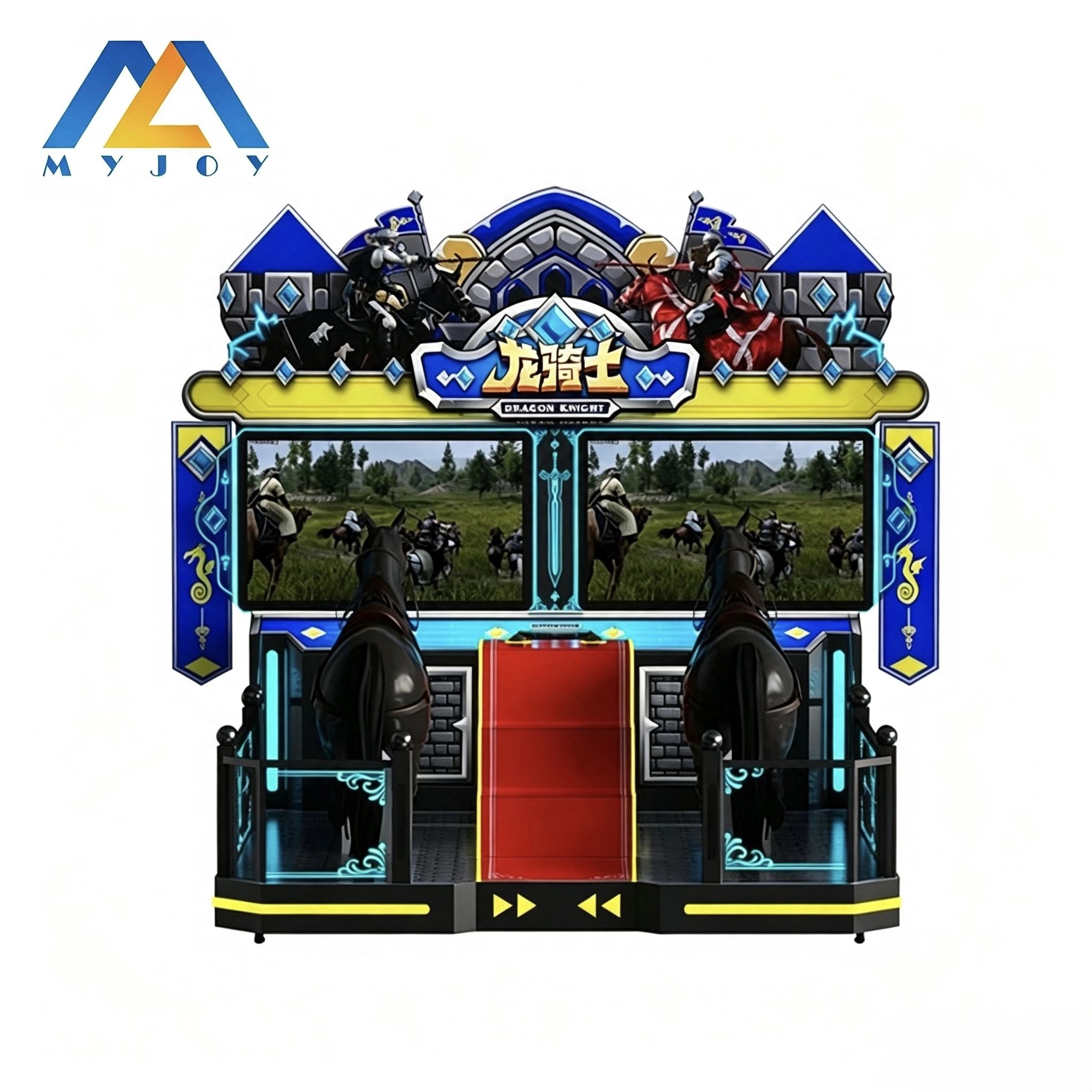
Flying Dragon Knight Horse Racing Simulator is a premium two-player arcade entertainment machine designed for amusement parks, shopping malls, arcades, family entertainment centers and themed attractions. Inspired by medieval knights and fantasy dragon adventures, this simulator combines realistic horse riding motion, interactive racing gameplay and an impressive visual design to create an unforgettable entertainment experience.
Featuring two realistic horse models, dual HD displays, dynamic motion control, vibration feedback and immersive sound effects, players can experience exciting horse racing competitions, adventure challenges and jumping missions. The machine recreates the feeling of real horseback riding through synchronized movement and responsive control systems.
With its eye-catching dragon knight appearance, colorful LED lighting, multiplayer competition mode and safe commercial design, Flying Dragon Knight Horse Racing Simulator is an excellent attraction solution for increasing customer engagement and entertainment value.
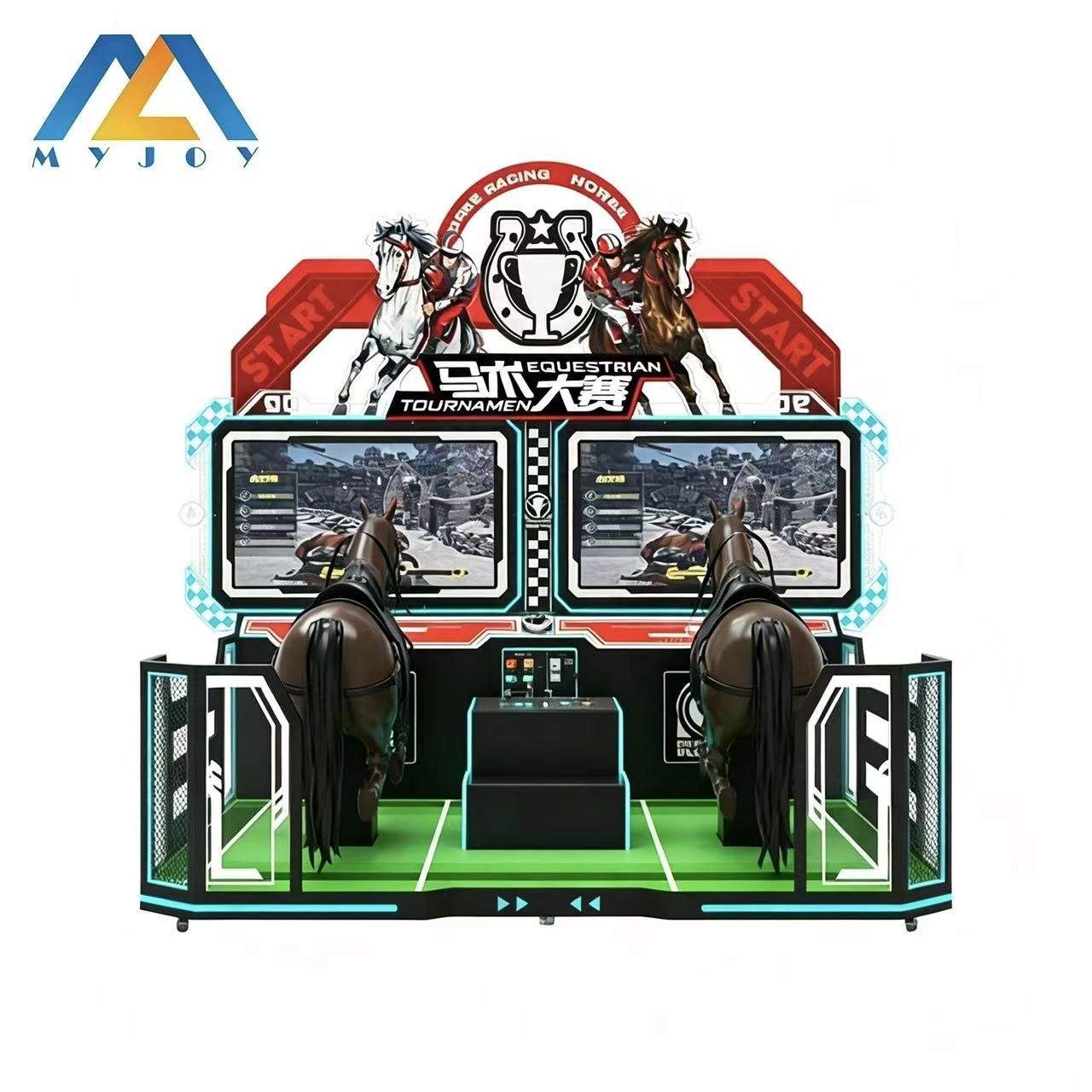
The Horse Racing Championship is a dual-player interactive sports simulator developed by Guangzhou Meiyilian Animation Technology Co., Ltd. It combines simulated horseback riding, competitive racing, physical interaction, and immersive visual effects to create an exciting attraction for players aged 5 to 50.
The machine features two realistic horse models equipped with comfortable saddles and reins. Players control their horses through riding movements and compete on two HD screens. Multiple racing scenes, difficulty levels, and challenge modes make the experience suitable for beginners and experienced players alike.
With its striking equestrian-themed design, dynamic LED lighting, green racetrack-style platform, and competitive ranking system, the machine easily attracts attention and encourages repeat play. It is ideal for amusement arcades, shopping malls, family entertainment centers, sports venues, theme parks, clubs, and tourist attractions.
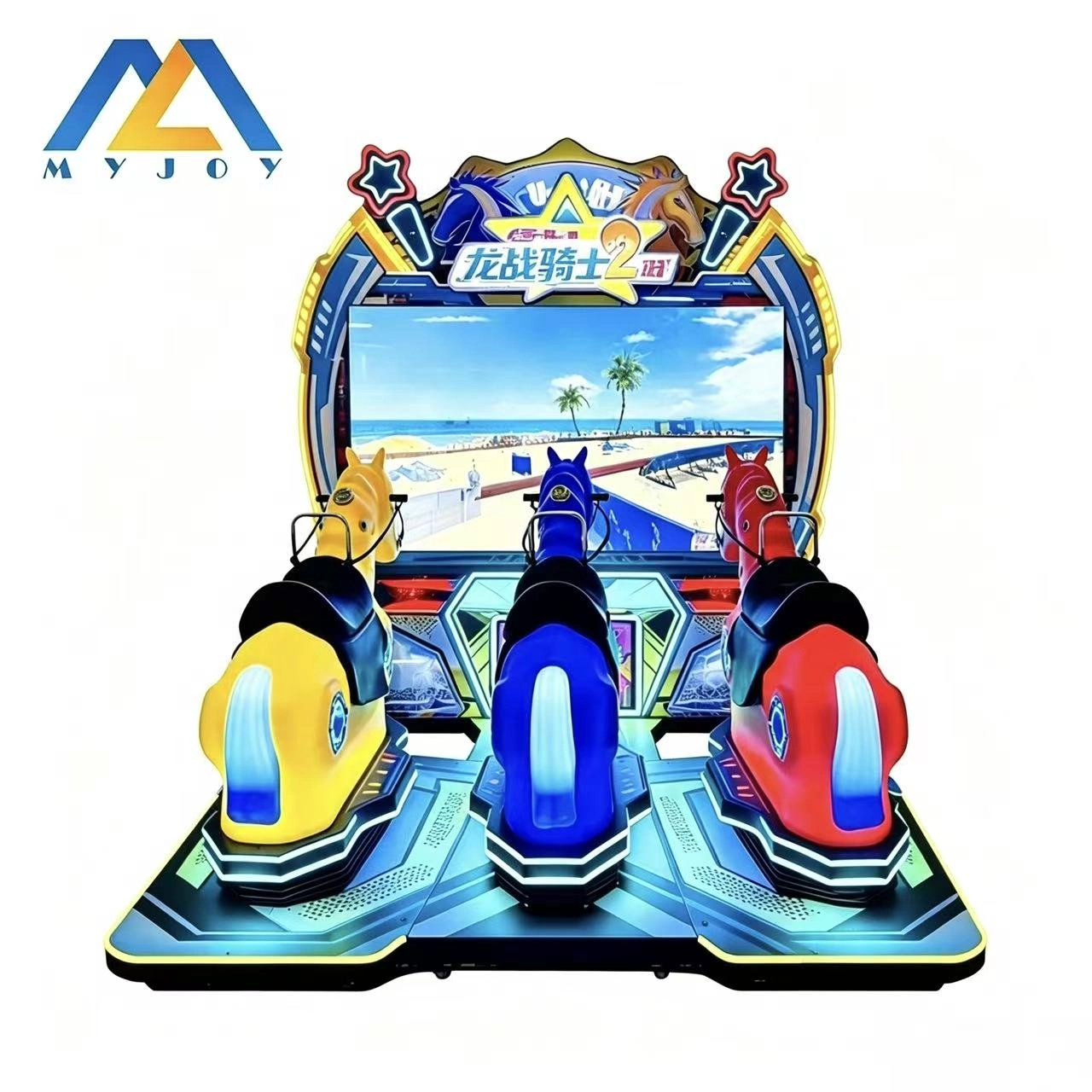
Dragon Warrior Knight 2 – Bring Real Horse Racing Excitement to Indoor Entertainment Venues
Dragon Warrior Knight 2 is an immersive interactive horse riding arcade machine designed around horse racing, obstacle challenges, and multiplayer competition. Featuring a cute and colorful horse design, large HD display, dynamic lighting effects, surround sound system, and realistic rein-control operation, this simulator creates an exciting horse racing experience for children, teenagers, and families.
Players can experience the feeling of riding a racing horse by controlling the reins to accelerate, change direction, and jump over obstacles. The realistic riding movements and interactive gameplay provide strong immersion and encourage repeat play.
The machine supports single-player challenge mode and 3-player competitive racing mode, allowing players to compete with friends, family members, or teammates. It is an ideal attraction for children's playgrounds, arcades, shopping malls, amusement parks, and family entertainment centers.
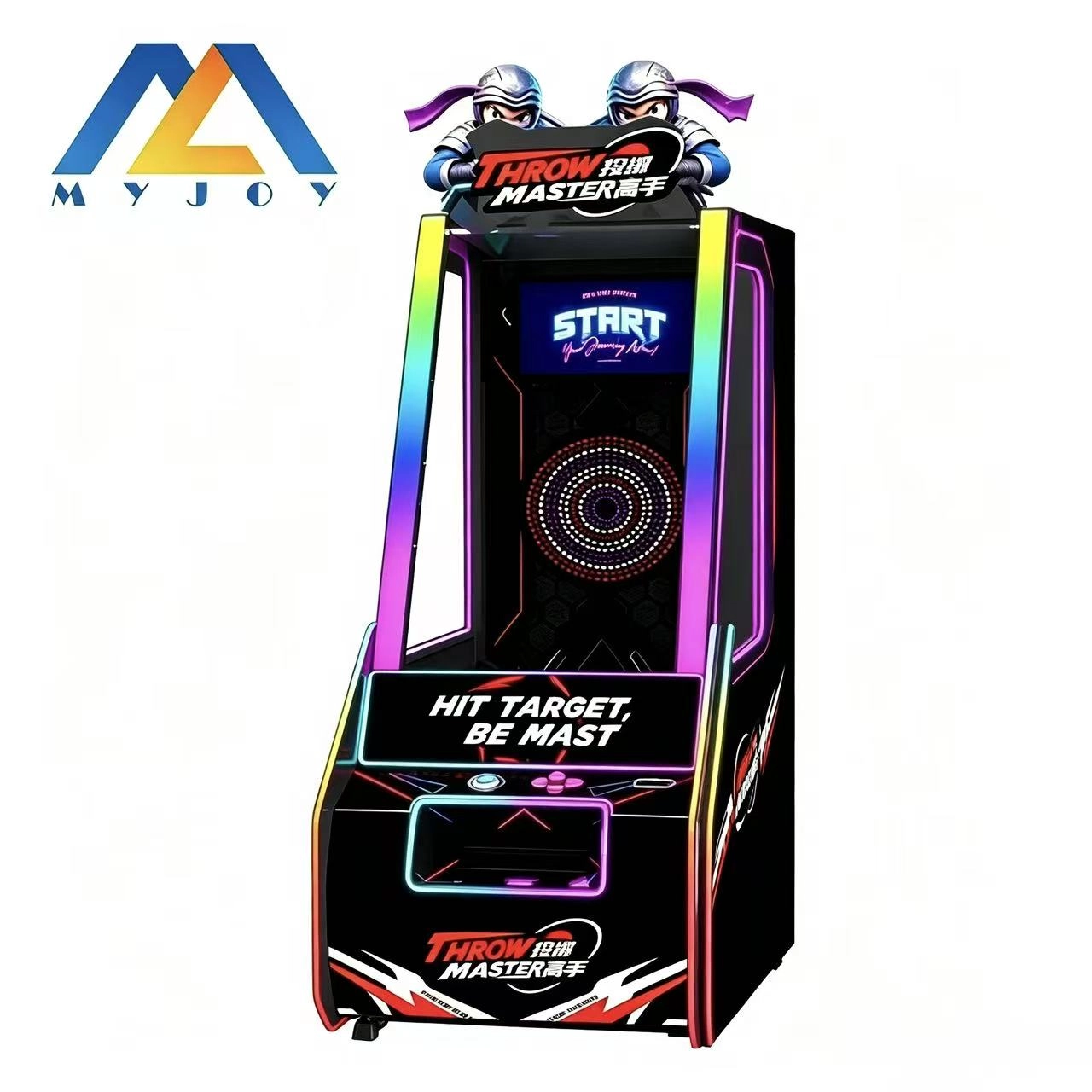
THROW MASTER is a commercial interactive dart throwing arcade machine that combines physical throwing action with an electronic target, digital scoring, on-screen interaction, and camera-based hit detection.
Designed for arcades, family entertainment centers (FECs), indoor amusement venues, shopping malls, and competitive entertainment spaces, THROW MASTER delivers an engaging mix of casual fun and skill-based competition.
Players insert coins, select their player and game mode, and throw darts at the large colorful electronic target. The system detects each result and displays scores, objectives, remaining throws, and game progress on the screen.
With Standard Mode for score-based challenges and Skill Mode for precision target challenges, the machine is suitable for both casual players and those looking for a more competitive experience. Leaderboards, adjustable game settings, and optional ticket rewards also make it well suited for commercial arcade operation.
Its large upright cabinet, colorful circular target, and vibrant RGB-style lighting create a futuristic arcade appearance that helps attract attention in busy entertainment venues.


No. 3, Wenjian Second Road, Wenbian Village, Shiji Town, Panyu District, Guangzhou City, China
Facebook