

Best Dual-Player Riding Simulators for Arcades

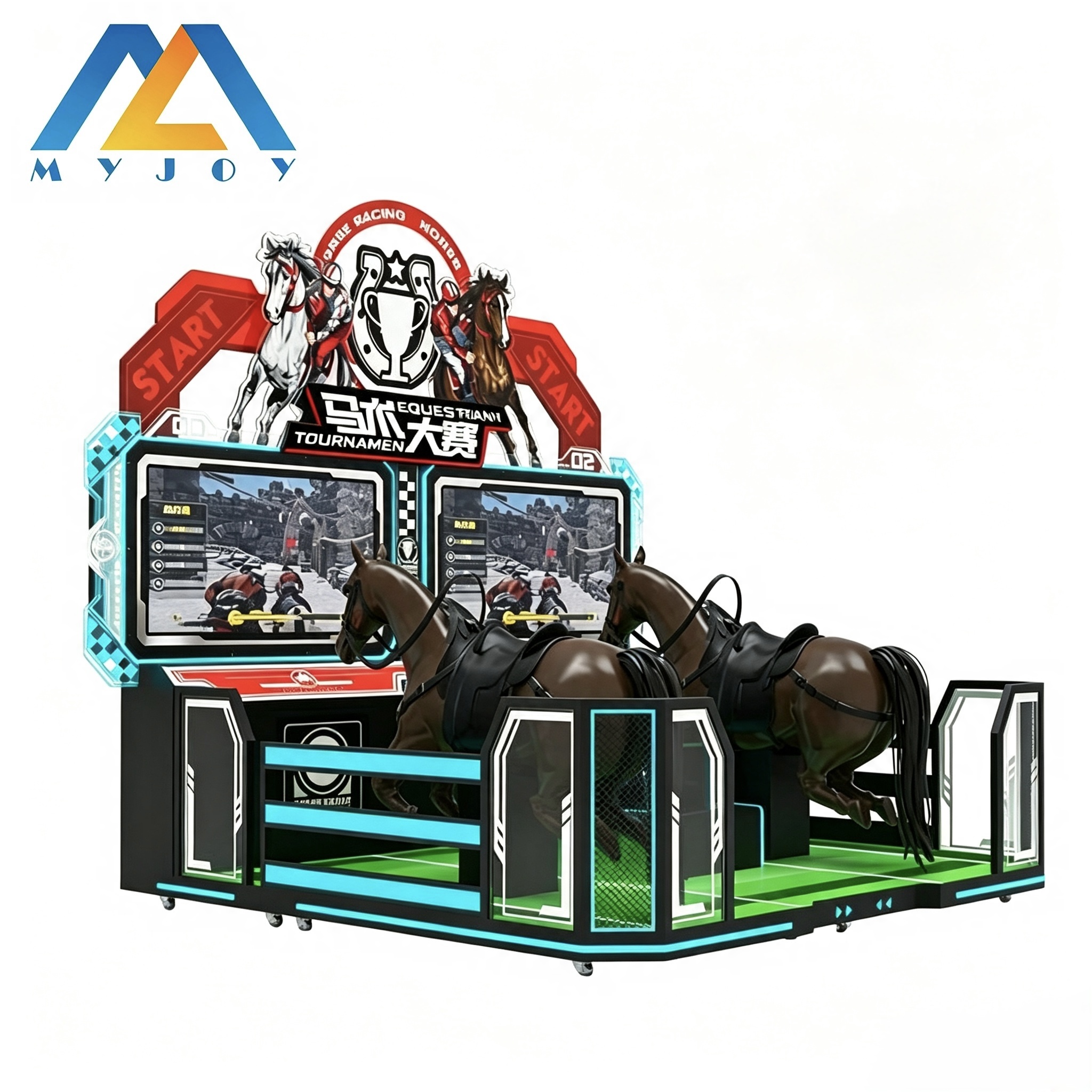
A dual-player riding simulator can turn a quick arcade visit into a head-to-head attraction that encourages spectators, rematches, and shared play. The best choice depends on more than appearance: operators should compare how players control the ride, whether the experience suits different ages and skill levels, how clearly competition is presented, and what the supplier can document about installation and maintenance. The Horse Racing Championship– Dual-Player Riding Simulator brings two realistic horse models, saddles and reins, riding-motion controls, two HD screens, multiple racing scenes and challenge modes, LED lighting, and a ranking system into one equestrian-themed attraction for arcades and other entertainment venues.
What Arcade Operators Should Compare Before Buying
Player interaction and learning curve
A strong dual-player riding simulator should make the main action understandable within moments. Guests need to recognize where to sit, how to hold the reins, and what movements affect the race. Physical interaction can make a ride more engaging than a button-only game, but the controls should still be approachable to first-time players. Ask the supplier to explain the control logic and, where possible, arrange a demonstration for staff and representative guests before making a purchase.
Consider who will use the machine during a typical day. A family entertainment center may see children, parents, and groups with different levels of gaming experience, while a sports venue may attract guests seeking a more competitive challenge. Look for clear instructions and a game structure that gives newcomers a way to participate without removing meaningful goals for experienced players. The Horse Racing Championship is described as suitable for players aged 5 to 50, with multiple difficulty levels and challenge modes intended to accommodate beginners and more experienced riders.
Competition, visibility, and repeat play
Head-to-head play is most effective when both participants can follow the action and understand who is ahead. When evaluating a dual-player riding simulator, check whether the two players receive clear visual feedback, whether the race has an obvious finish, and whether the venue can explain the game quickly to passersby. A ranking system can give players a reason to try again, but operators should ask how scores are displayed and whether the feature can be configured for their location.
Visibility matters because arcade attractions compete for attention in a busy environment. Look at the machine from the approach paths guests actually use, not only in a product photograph. The footprint, lighting, colors, screen placement, and sightlines all influence whether visitors notice the game and whether spectators can watch without obstructing circulation. Before ordering, request dimensions, power requirements, delivery details, and installation guidance from the supplier; these specifics are not a substitute for a site survey.
Riding Simulator Formats: A Practical Comparison
Match the format to the venue and audience
Not every riding-themed game serves the same purpose. A motion-based horse race emphasizes physical participation and a shared contest, while a seated screen game may prioritize a more conventional video-game experience. Single-player attractions can suit solo visitors, but they do not inherently provide the immediate side-by-side challenge that can draw a pair of guests. Comparing formats by player experience and operational needs helps avoid selecting a machine solely because it looks impressive.
Use a supplier demonstration to assess how quickly guests understand the experience, how comfortably two people can participate, and how the attraction performs when watched from the surrounding floor. Do not assume that all machines in a category share the same controls, display setup, game content, or operating requirements. Confirm each point in writing, including what is included with the machine and what the venue must provide.
| Format | Typical appeal | Questions for operators |
|---|---|---|
| Dual-player motion-based riding simulator | Physical interaction and direct competition between two guests | Are controls intuitive? Can both screens and players be seen clearly? What site and service requirements apply? |
| Single-player riding game | Individual play and a potentially smaller social footprint | Does the venue need a shared competitive experience, or is solo play the priority? |
| Screen-led racing game | Familiar digital racing with limited or no riding movement | Will the audience value physical participation, themed presentation, or straightforward game controls most? |
Use standards as prompts for due diligence
Standards can help operators ask informed questions, but a product description alone does not establish that a machine complies with a particular standard. The ISO 12100 standard on machinery safety provides a framework for risk assessment and risk reduction. Ask the manufacturer what safety assessments and documentation apply to the specific machine, and verify requirements for the country and venue where it will operate.
Ergonomics is another useful consideration for a dual-player riding simulator: the saddle, reins, mounting approach, and player positions should be assessed in person where possible. ISO 9241-210 describes a human-centred approach to designing interactive systems. It is not a product certification, but it reinforces the value of evaluating the experience from the user's perspective. Operators should also consult local accessibility, electrical, fire, and supervision requirements rather than assuming one checklist applies everywhere.
Why the Horse Racing Championship Stands Out
Two riders, shared race, and themed presentation
The Horse Racing Championship– Dual-Player Riding Simulator is an interactive sports simulator developed by Guangzhou Meiyilian Animation Technology Co., Ltd. It combines simulated horseback riding, competitive racing, physical interaction, and visual effects. Two realistic horse models are fitted with comfortable saddles and reins, and players control their horses through riding movements while competing on two HD screens. For venues looking for a dual-player riding simulator that offers more than a passive viewing experience, this combination gives both participants an active role in the race.
The equestrian styling is part of the attraction's presentation. Its green racetrack-style platform, horse models, and dynamic LED lighting are intended to make the unit noticeable in settings such as an arcade, shopping mall, family entertainment center, sports venue, theme park, club, or tourist attraction. Operators should still confirm the machine's measurements and placement needs against their own floor plan, including circulation space for guests and staff.
Game variety for different experience levels
Multiple racing scenes, difficulty levels, and challenge modes can help a dual-player riding simulator serve both first-time players and guests who want a tougher contest. Variety is valuable when a venue expects repeat visitors, but buyers should request a demonstration of the available modes and clarify how they are selected. Ask whether instructions, language options, and game settings match the audience at the intended location.
The machine also includes a competitive ranking system, which can support friendly rivalry and encourage players to return for another attempt. Ranking features work best when guests can easily understand what a score means and how a new result is achieved. Confirm what ranking information is shown, how it is reset or managed, and whether the display fits the venue's operating preferences. These practical questions help translate a list of features into a usable guest experience.
Planning Installation and Day-to-Day Operation
Check the site, staffing, and support plan
Before purchasing a dual-player riding simulator, compare the supplier's installation information with the intended site. Confirm the machine's footprint, access route for delivery, power needs, ventilation or clearance guidance, and any floor-loading information the supplier provides. If the attraction is going into a mall or a multi-tenant center, coordinate delivery and installation windows with building management. A pre-installation checklist can prevent avoidable delays and make it easier to prepare the space responsibly.
Ask who handles setup, what training is available, how routine cleaning and inspection should be performed, and how service requests are managed. Clarify warranty coverage, replacement-part availability, response expectations, and which maintenance tasks are appropriate for venue staff. Keep supplier instructions accessible to the people who open, supervise, and close the attraction. The World Health Organization's physical activity guidance concerns health and activity, not amusement-machine specifications; it is a reminder that physical experiences should be considered in context, with suitable supervision and venue policies for the guests using them.
Measure performance after opening
Once the machine is operating, track practical indicators rather than relying on first-week excitement alone. Staff can note how often guests stop to watch, whether pairs begin play without assistance, which modes attract repeat attempts, and when queues or operating issues occur. If the venue uses play counts or revenue reporting, review those figures alongside observations and feedback. A dual-player riding simulator may have different results in a tourist attraction than in a neighborhood arcade, so use local evidence to guide signage, placement, and staffing.
Keep the surrounding area orderly and make instructions visible at the point where guests decide whether to play. Train staff to explain the basic controls, supervise younger visitors according to venue policy, and respond to any reported discomfort or equipment issue. Regular checks should follow the manufacturer's guidance and applicable local rules. Clear procedures support a more consistent experience while helping operators spot problems before they affect guest confidence.
For operators seeking an active, competitive attraction, the Horse Racing Championship combines two-player horseback racing, physical controls, multiple modes, HD displays, themed lighting, and rankings in one product. Evaluate it against your audience, floor plan, supplier documentation, and service expectations, then request a demonstration and written specifications before committing. A careful buying process makes it easier to choose a dual-player riding simulator that fits the venue rather than relying on visual appeal alone.
To view the Horse Racing Championship– Dual-Player Riding Simulator or discuss product details, contact us at tangping@joyfulsport.com.
Frequently Asked Questions
What should arcade operators compare when choosing a dual-player riding simulator?
Compare player controls and learning curve, suitability for the intended audience, screen visibility, competitive features, footprint, site and power requirements, installation guidance, safety documentation, and service support.
What features does the Horse Racing Championship– Dual-Player Riding Simulator include?
It has two realistic horse models with saddles and reins, riding-motion controls, two HD screens, multiple racing scenes, difficulty levels and challenge modes, dynamic LED lighting, a green racetrack-style platform, and a competitive ranking system.
Who is the Horse Racing Championship designed for?
The product is described as suitable for players aged 5 to 50, including beginners and more experienced players, and is intended for venues such as arcades, malls, family entertainment centers, sports venues, theme parks, clubs, and tourist attractions.
What should a venue confirm before installing a riding simulator?
Confirm the machine's footprint, delivery access, power needs, clearance guidance, any available floor-loading information, installation arrangements, staff training, maintenance instructions, warranty coverage, and local safety requirements with the supplier and relevant authorities.
Does a product description prove that a riding simulator complies with safety standards?
No. Operators should ask the manufacturer for safety assessments and documentation applicable to the specific machine and verify the requirements that apply in the country and venue where it will operate.
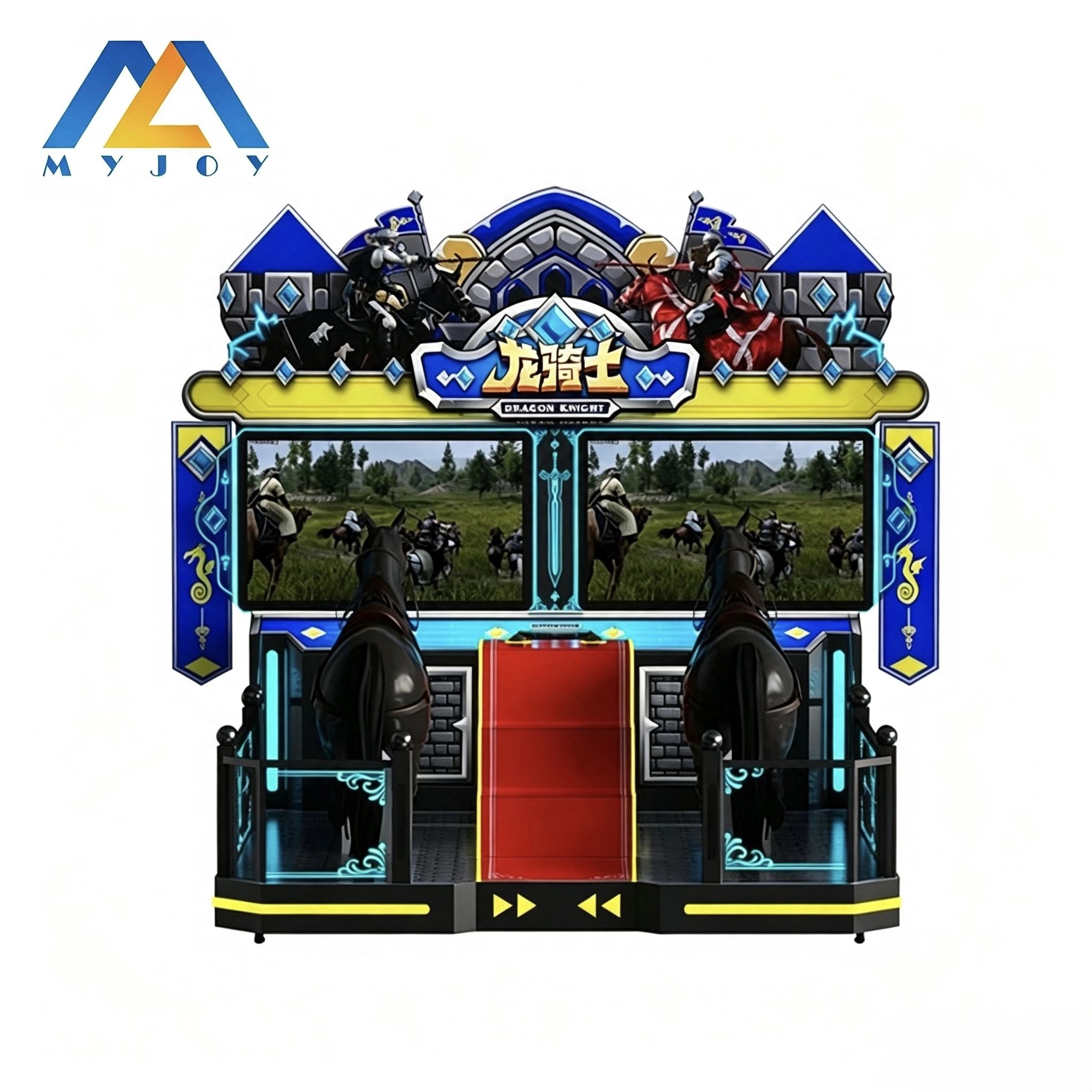
Flying Dragon Knight Horse Racing Simulator is a premium two-player arcade entertainment machine designed for amusement parks, shopping malls, arcades, family entertainment centers and themed attractions. Inspired by medieval knights and fantasy dragon adventures, this simulator combines realistic horse riding motion, interactive racing gameplay and an impressive visual design to create an unforgettable entertainment experience.
Featuring two realistic horse models, dual HD displays, dynamic motion control, vibration feedback and immersive sound effects, players can experience exciting horse racing competitions, adventure challenges and jumping missions. The machine recreates the feeling of real horseback riding through synchronized movement and responsive control systems.
With its eye-catching dragon knight appearance, colorful LED lighting, multiplayer competition mode and safe commercial design, Flying Dragon Knight Horse Racing Simulator is an excellent attraction solution for increasing customer engagement and entertainment value.
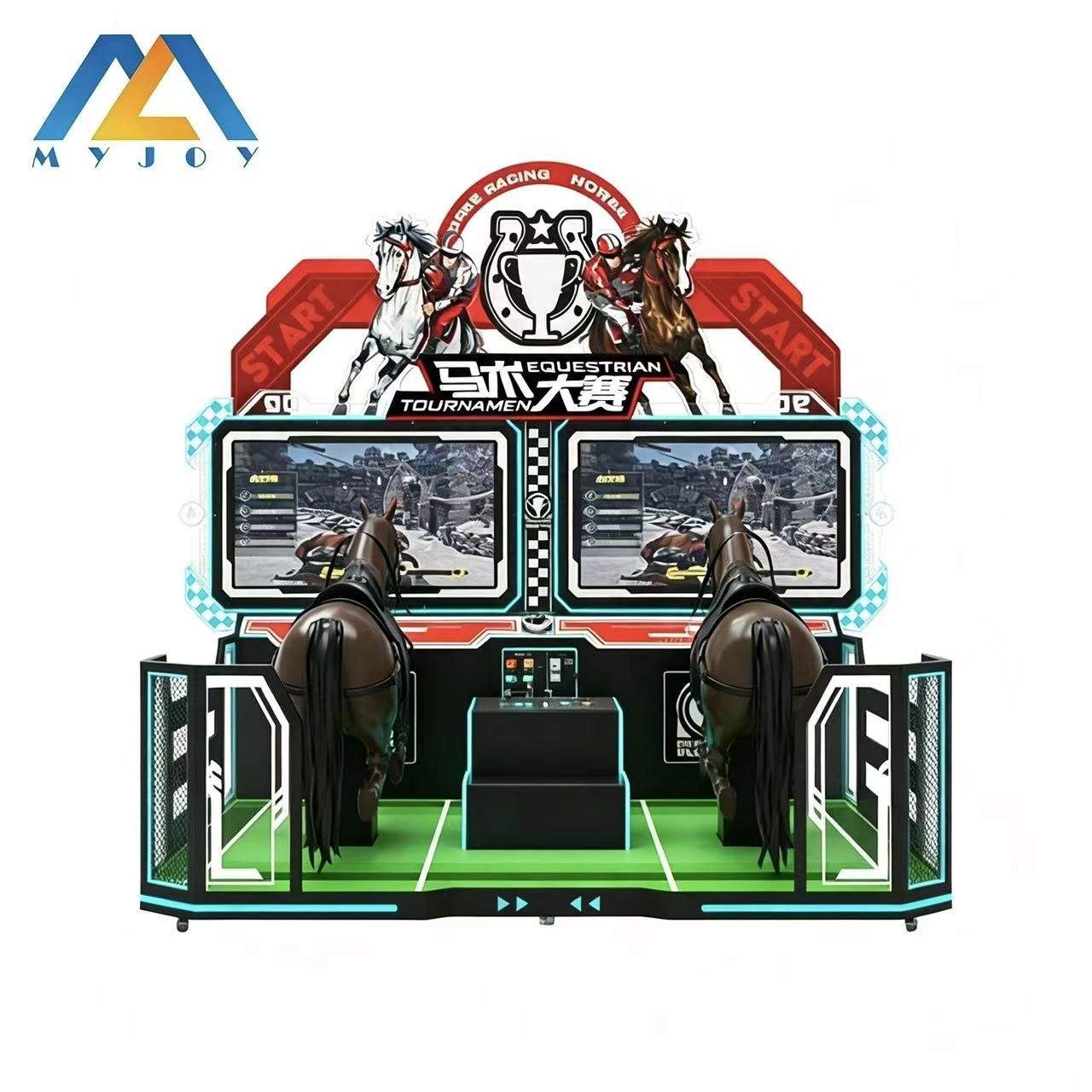
The Horse Racing Championship is a dual-player interactive sports simulator developed by Guangzhou Meiyilian Animation Technology Co., Ltd. It combines simulated horseback riding, competitive racing, physical interaction, and immersive visual effects to create an exciting attraction for players aged 5 to 50.
The machine features two realistic horse models equipped with comfortable saddles and reins. Players control their horses through riding movements and compete on two HD screens. Multiple racing scenes, difficulty levels, and challenge modes make the experience suitable for beginners and experienced players alike.
With its striking equestrian-themed design, dynamic LED lighting, green racetrack-style platform, and competitive ranking system, the machine easily attracts attention and encourages repeat play. It is ideal for amusement arcades, shopping malls, family entertainment centers, sports venues, theme parks, clubs, and tourist attractions.
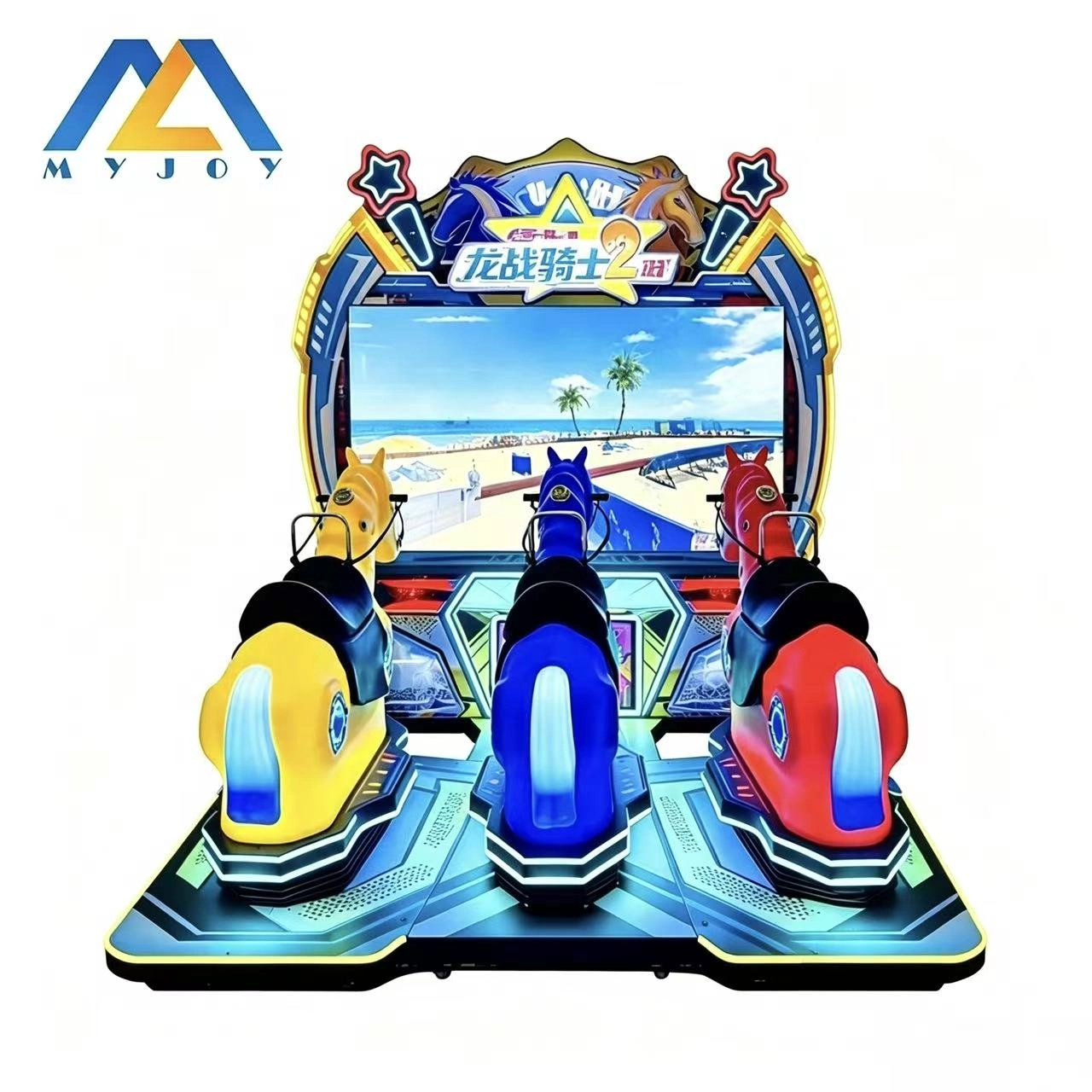
Dragon Warrior Knight 2 – Bring Real Horse Racing Excitement to Indoor Entertainment Venues
Dragon Warrior Knight 2 is an immersive interactive horse riding arcade machine designed around horse racing, obstacle challenges, and multiplayer competition. Featuring a cute and colorful horse design, large HD display, dynamic lighting effects, surround sound system, and realistic rein-control operation, this simulator creates an exciting horse racing experience for children, teenagers, and families.
Players can experience the feeling of riding a racing horse by controlling the reins to accelerate, change direction, and jump over obstacles. The realistic riding movements and interactive gameplay provide strong immersion and encourage repeat play.
The machine supports single-player challenge mode and 3-player competitive racing mode, allowing players to compete with friends, family members, or teammates. It is an ideal attraction for children's playgrounds, arcades, shopping malls, amusement parks, and family entertainment centers.
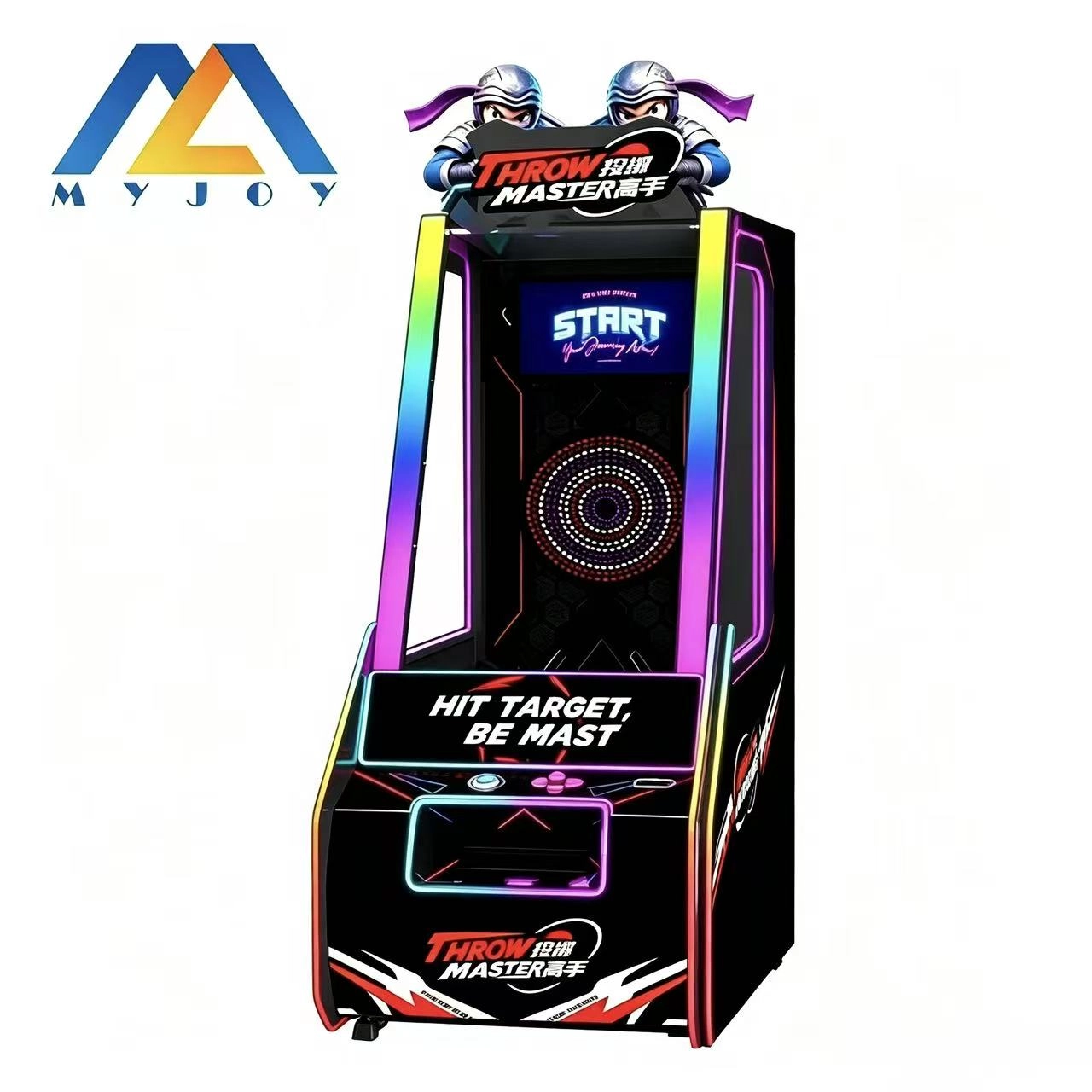
THROW MASTER is a commercial interactive dart throwing arcade machine that combines physical throwing action with an electronic target, digital scoring, on-screen interaction, and camera-based hit detection.
Designed for arcades, family entertainment centers (FECs), indoor amusement venues, shopping malls, and competitive entertainment spaces, THROW MASTER delivers an engaging mix of casual fun and skill-based competition.
Players insert coins, select their player and game mode, and throw darts at the large colorful electronic target. The system detects each result and displays scores, objectives, remaining throws, and game progress on the screen.
With Standard Mode for score-based challenges and Skill Mode for precision target challenges, the machine is suitable for both casual players and those looking for a more competitive experience. Leaderboards, adjustable game settings, and optional ticket rewards also make it well suited for commercial arcade operation.
Its large upright cabinet, colorful circular target, and vibrant RGB-style lighting create a futuristic arcade appearance that helps attract attention in busy entertainment venues.


No. 3, Wenjian Second Road, Wenbian Village, Shiji Town, Panyu District, Guangzhou City, China
Facebook