

The B2B Buyer’s Guide to game machine | MYL ARCADE Ultimate Insights

Commercial game machine procurement is a long-term operating decision: buyers need to match equipment to the venue, verify electrical and safety requirements, assess landed cost and expected utilization, and confirm that a supplier can provide parts and service after delivery. Use this guide to compare machine formats, test supplier claims, estimate return on investment, and document acceptance criteria before committing to a single unit or a bulk order.
How Commercial Game Machine Buying Has Evolved
Venue Fit and Game Machine Demand
A game machine succeeds when its format, footprint, play pattern, and price point fit the venue and its visitors. An arcade may prioritize throughput and repeat play, while a family entertainment center may favor a mix of skill games, redemption units, and attractions that encourage longer visits. Hotels, restaurants, and cinemas often have less floor space and may need equipment that is easy to supervise and maintain. Define the intended audience, operating hours, available floor area, and revenue model before comparing models; otherwise, a visually impressive cabinet can become an expensive mismatch.
Game Machine Formats and Operating Models
Common commercial formats include video arcade cabinets, racing and sports simulators, prize or redemption games, claw machines, and interactive group games. Each has different requirements for footprint, player turnover, staffing, consumables, and maintenance. A redemption game may require prizes and a process for managing stock, while a simulator may need more floor space and scheduled maintenance for moving components. Ask suppliers to identify the game format, intended commercial duty, included software, payment options, and any recurring fees. Confirm whether the unit is sold outright, leased, or offered under a revenue-share arrangement, since those models allocate ownership, service, and earnings differently.
Wholesale Pricing and Total Cost of Ownership
Compare the full cost of a game machine rather than relying on the quoted factory price. A landed-cost estimate should identify the machine, optional accessories, packaging, freight, insurance, customs duties or taxes where applicable, installation, payment-system setup, and initial spare parts. Add expected recurring expenses such as software subscriptions, payment processing, prize replenishment, routine servicing, and replacement components. Request an itemized quotation with currency, Incoterms or another clearly defined delivery basis, production lead time, quote validity, and a written list of included and excluded items. A lower unit price may not represent better value if it excludes essential components or leaves the buyer with difficult-to-source parts.
Technical Due Diligence Before You Order
Game Machine Specifications and Site Readiness
Request a current specification sheet for every proposed model and verify that the details match the final quotation. Important fields include external dimensions, weight, required access clearance, rated voltage and frequency, power consumption, plug type, display size, connectivity, operating environment, and whether assembly is required. Check doorways, lifts, floor loading, power availability, ventilation, and network coverage at the installation site. If several machines will share a circuit, have a qualified electrician or facilities professional review the planned load against local requirements instead of assuming that a standard outlet is sufficient.
Safety, Electrical Compliance, and Documentation
Ask which regulations and standards apply to the exact machine, its intended use, and the destination market. Compliance depends on product classification and jurisdiction, so a generic certificate or a logo on a brochure is not enough to establish that a particular configuration is suitable. Request the declaration or certification documents relevant to the destination, test reports where applicable, electrical ratings, user and maintenance instructions, and details of any modifications made for your order. Machinery risk assessment principles are described in ISO 12100; the IEC standards catalogue can help buyers identify relevant electrotechnical standards. For equipment placed on the European market, ask the supplier to explain applicable obligations, including whether RoHS requirements apply to the product. Treat these references as starting points for verification, not as proof that a specific machine is compliant.
Game Machine Comparison Table for Procurement
Use a structured comparison to expose gaps between supplier proposals. The values below are procurement fields to collect, not universal benchmarks: model specifications and regulatory obligations vary, and should be verified for each offer.
| Comparison area | What to record | Buyer verification |
|---|---|---|
| Physical fit | Dimensions, weight, access clearance, assembly needs | Compare with site measurements and delivery route |
| Electrical | Voltage, frequency, rated power, plug and grounding details | Confirm compatibility with local supply and qualified installer |
| Commercial terms | Unit price, options, delivery basis, taxes, payment schedule | Reconcile quotation with landed-cost calculation |
| Serviceability | Warranty period, response process, parts list and availability | Request written terms and parts lead-time commitments |
| Compliance evidence | Applicable declarations, reports, instructions, product labels | Check model and configuration against destination requirements |
| Acceptance | Factory test, shipping condition, installation and sign-off criteria | Agree inspection steps and defect remedies before payment |
Supplier Vetting, ROI, and Bulk Procurement
Supply Chain Reliability and Supplier Checks
Assess a game machine supplier as an operating partner, not just as a seller. Verify the legal business name, manufacturing or distribution role, years of relevant product experience, export markets, and the identity of the party responsible for warranty service. Request references from buyers operating comparable venues and ask what happened when a machine failed, arrived damaged, or needed a replacement part. Review recent production and quality-control evidence, and determine whether the quoted model is manufactured in-house or sourced from another company. For a new or high-value relationship, consider a video factory walkthrough, independent inspection, or a smaller initial order before approving a large purchase.
Warranty, Spare Parts, and After-Sales Service
Warranty language should be specific enough to use. Confirm the start date, covered parts and labor, exclusions, claim process, required evidence, shipping responsibility, and whether service is remote or on-site. Ask for an itemized recommended spare-parts kit, part numbers, prices, stock location, and typical replenishment lead times. For game machines that rely on proprietary boards, displays, sensors, or software, clarify whether replacement parts will remain available and whether repairs require supplier authorization. A warranty with no practical claim route or unavailable parts offers limited operational protection, so compare the service commitment alongside the hardware price.
ROI Analysis and Payback Assumptions
Estimate payback with assumptions that your team can test, rather than accepting a supplier’s headline revenue projection. Start with the machine’s total installed cost and model expected paid plays or transactions, average revenue per play, operating days, downtime, payment fees, prizes or consumables, and maintenance. Calculate contribution after variable costs, then compare it with fixed costs and the purchase investment. Use conservative, expected, and optimistic scenarios, and test how the result changes if utilization is lower than forecast or repairs take longer. Where possible, use your own venue data from similar attractions; supplier examples can inform questions but should not substitute for local demand evidence.
Bulk Procurement, Samples, and Acceptance Testing
For multi-unit orders, confirm whether all units will share the same configuration, software version, payment hardware, language settings, and spare-parts compatibility. Agree on a production schedule, batch inspection process, packaging standard, shipping documents, and a remedy for short shipments or nonconforming units. Consider approving a sample or pilot game machine before releasing the balance of a larger order, particularly when the model is new to your operation. Define acceptance tests in writing: visual condition, startup and reset behavior, game controls, payment operation, sound and display, included accessories, and documentation. Specify how defects will be reported, what evidence is needed, and who pays for repair, replacement, or return freight.
Contract Terms and Delivery Risk
Put the commercial agreement in writing and ensure it reflects the approved specification and final quotation. Record model identifiers, quantities, customization, packaging, delivery dates, payment milestones, inspection rights, warranty terms, spare-parts commitments, and procedures for delays or damage. Clarify which party arranges freight, insurance, export paperwork, import clearance, duties, and delivery to the final site. If delivery depends on a seasonal opening or launch date, build in a realistic buffer and identify the supplier’s escalation contact. For electrical and electronic equipment entering markets with end-of-life obligations, ask who is responsible for relevant documentation and take-back information; the European Commission explains the scope of its WEEE framework.
Game Machine Procurement Decision Checklist
Before authorizing a purchase order, confirm that the machine fits the venue, the site is ready, and the model-specific documents have been reviewed. Reconcile the quotation with a landed-cost worksheet and compare supplier offers on the same delivery basis. Obtain written warranty and service terms, check parts availability, and validate the supplier’s track record with relevant references. Agree on inspection and acceptance criteria, then assign an internal owner for installation, maintenance, revenue tracking, and supplier escalation. This documented process makes a game machine decision easier to defend internally and gives both parties a clear reference if the delivered product differs from what was agreed.
Contact your shortlisted game machine supplier to request a model-specific quotation, compliance documents, parts plan, and written acceptance terms before placing your order.
Game Machine Procurement FAQs
What should a B2B buyer check before ordering a game machine?
Verify that the format and footprint fit the venue, check site access and electrical requirements, review model-specific compliance documents, calculate landed cost, and obtain written warranty, parts, and acceptance terms.
How do I compare game machine supplier quotes fairly?
Compare quotations on the same delivery basis and include options, freight, insurance, applicable duties or taxes, installation, payment setup, spare parts, and recurring costs. Confirm what is included or excluded and compare service commitments as well as unit price.
Can a supplier’s certificate prove that a game machine is compliant?
A generic certificate or logo alone is not enough to establish that a specific machine configuration is suitable. Ask for documents relevant to the exact model, configuration, intended use, and destination market, and verify applicable local requirements.
How should I estimate ROI for a commercial game machine?
Use installed cost and realistic assumptions for paid plays, revenue per play, operating days, utilization, downtime, payment fees, prizes or consumables, and maintenance. Model conservative, expected, and optimistic scenarios, ideally using comparable venue data.
Why should I order a pilot unit before a bulk game machine purchase?
A pilot can reveal configuration, installation, usability, service, or performance issues before they affect a larger order. Agree in advance on inspection criteria and how defects, replacements, or other remedies will be handled.
What should a game machine warranty and spare-parts agreement specify?
Confirm the warranty start date, covered parts and labor, exclusions, claim process, shipping responsibility, and service method. Request part numbers, prices, stock location, and replenishment lead times for recommended spare parts.
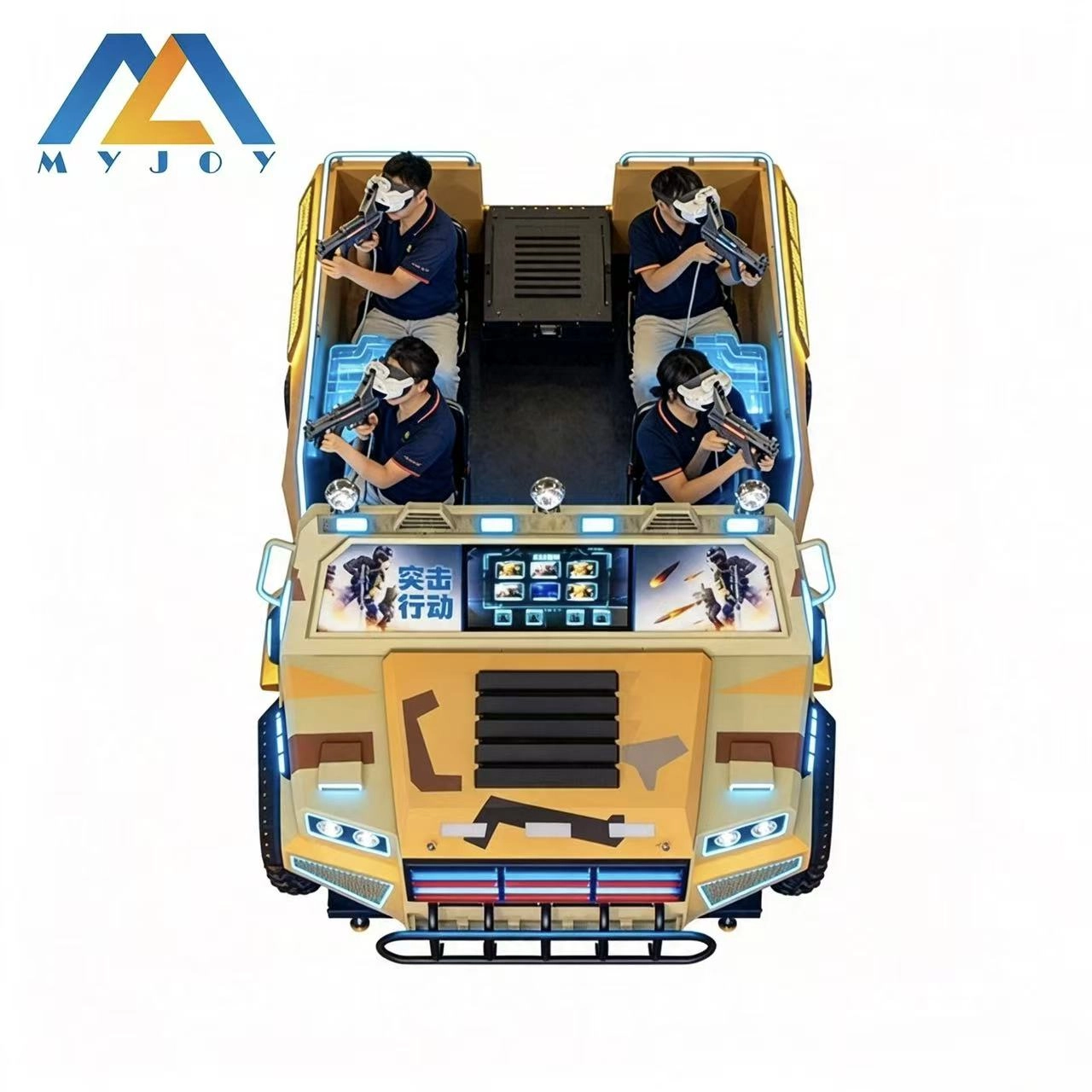
Assault Operation is a four-player VR immersive shooting machine designed with a military armored jeep appearance. Players wear VR headsets and hold electronic guns to enter a virtual battlefield, where they experience shooting missions, enemy battles, cooperative gameplay, and boss challenges
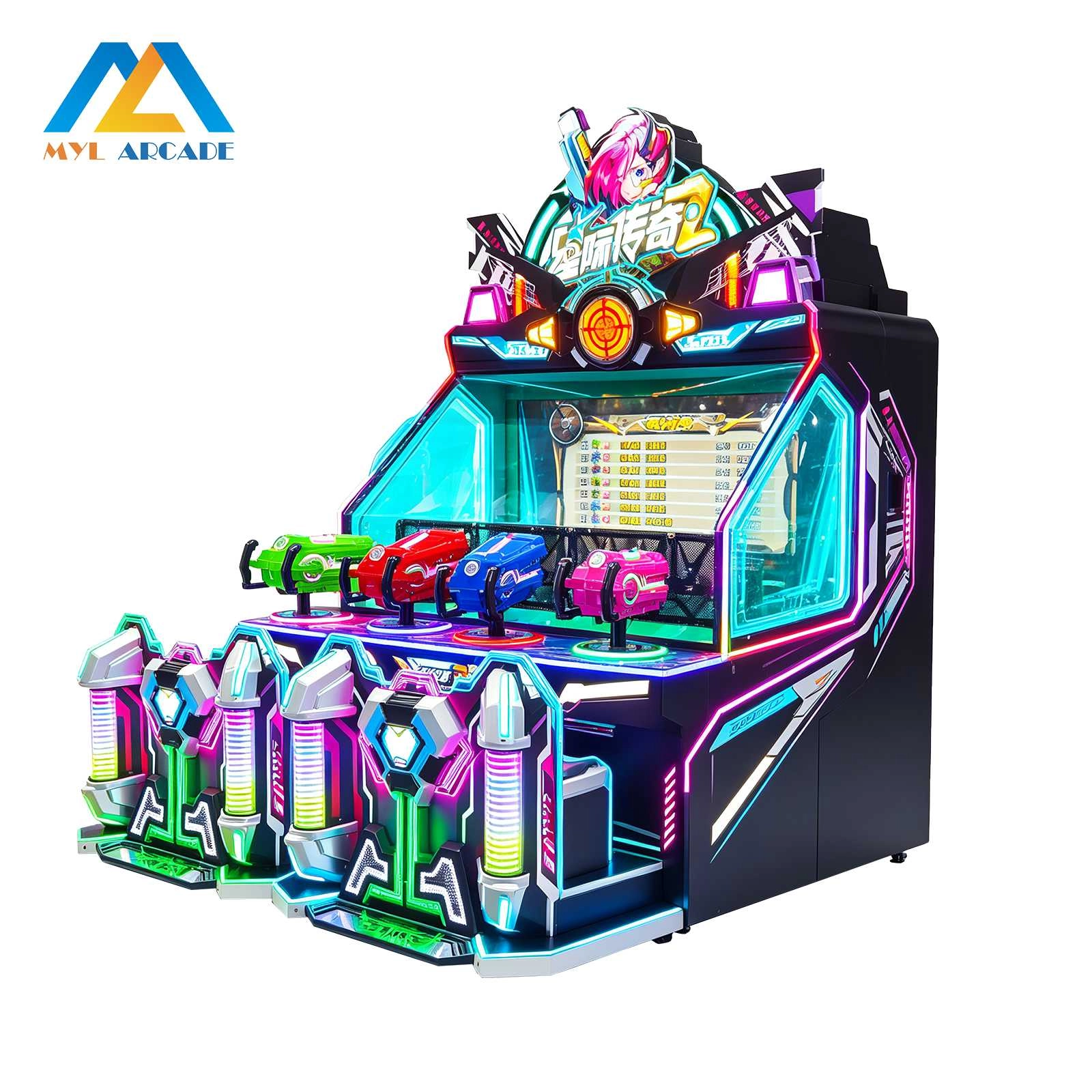
Star Legend is a newly designed 4 player shooting arcade machine featuring a 75-inch HD interactive display, realistic ball shooting gameplay, and colorful LED lighting effects. Designed for commercial entertainment venues, this arcade game machine combines physical interaction, multiplayer competition, and immersive adventure themes to create an exciting gaming experience for children, families, and players of all ages.
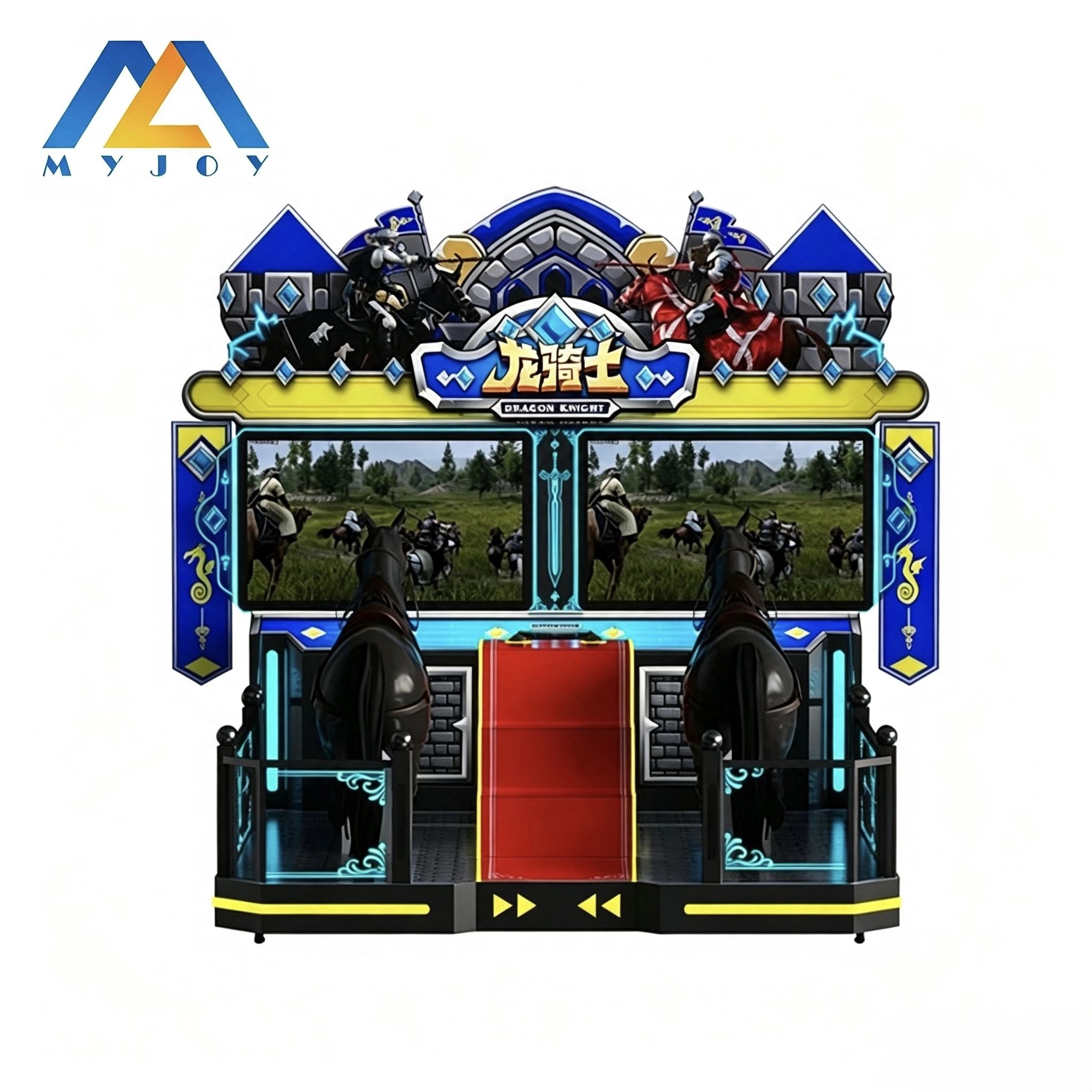
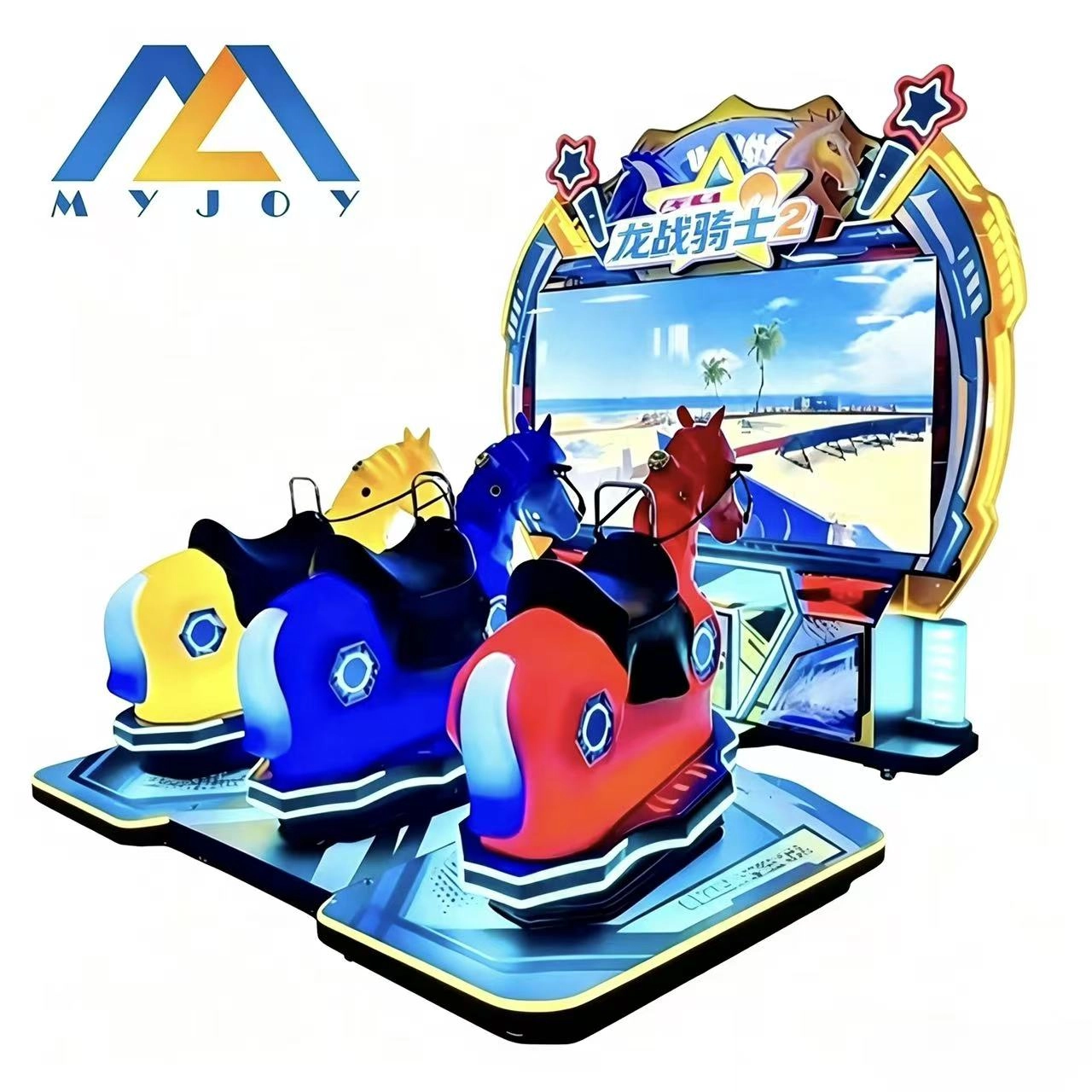
Flying Dragon Knight Horse Racing Simulator is a premium two-player arcade entertainment machine designed for amusement parks, shopping malls, arcades, family entertainment centers and themed attractions. Inspired by medieval knights and fantasy dragon adventures, this simulator combines realistic horse riding motion, interactive racing gameplay and an impressive visual design to create an unforgettable entertainment experience.
Featuring two realistic horse models, dual HD displays, dynamic motion control, vibration feedback and immersive sound effects, players can experience exciting horse racing competitions, adventure challenges and jumping missions. The machine recreates the feeling of real horseback riding through synchronized movement and responsive control systems.
With its eye-catching dragon knight appearance, colorful LED lighting, multiplayer competition mode and safe commercial design, Flying Dragon Knight Horse Racing Simulator is an excellent attraction solution for increasing customer engagement and entertainment value.
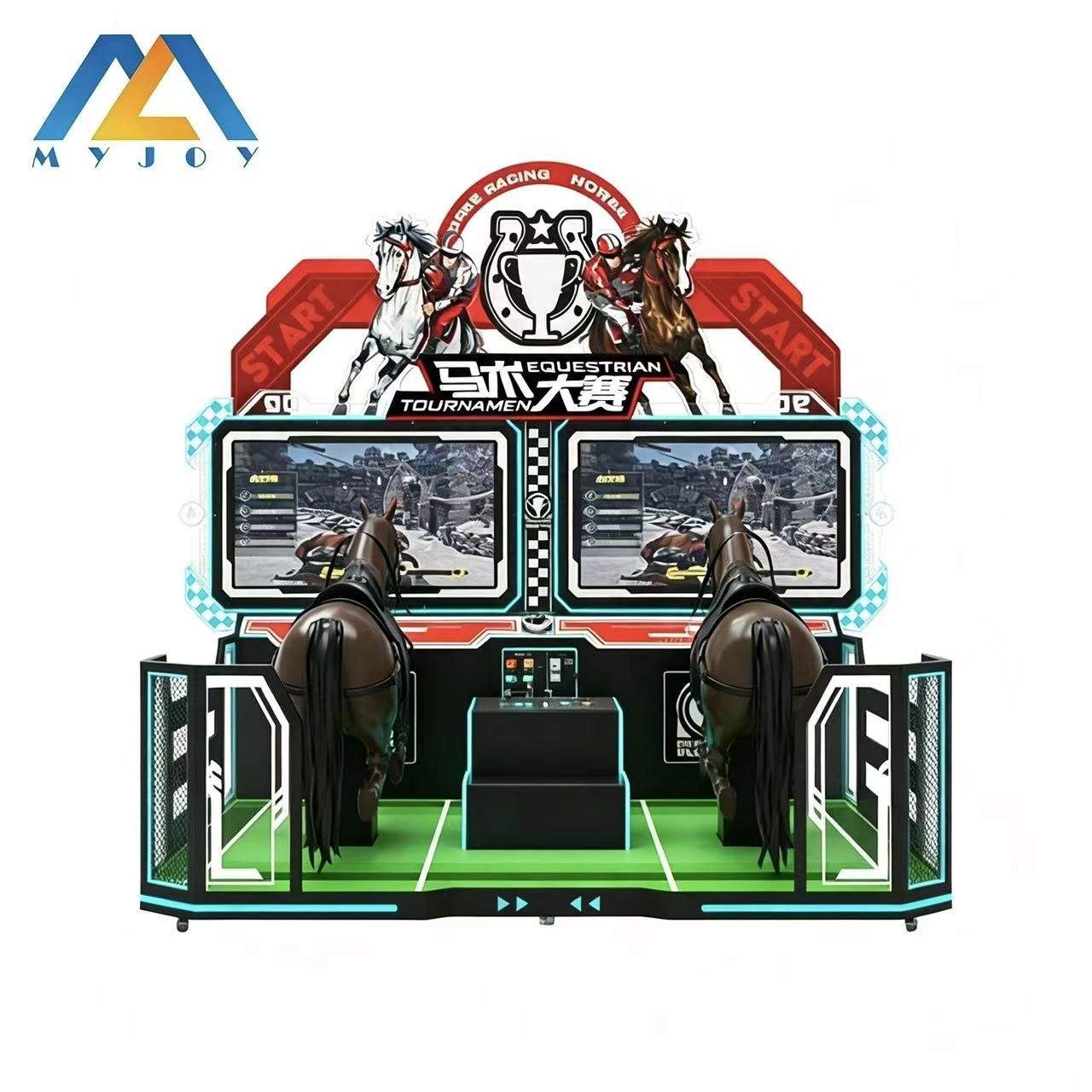
The Horse Racing Championship is a dual-player interactive sports simulator developed by Guangzhou Meiyilian Animation Technology Co., Ltd. It combines simulated horseback riding, competitive racing, physical interaction, and immersive visual effects to create an exciting attraction for players aged 5 to 50.
The machine features two realistic horse models equipped with comfortable saddles and reins. Players control their horses through riding movements and compete on two HD screens. Multiple racing scenes, difficulty levels, and challenge modes make the experience suitable for beginners and experienced players alike.
With its striking equestrian-themed design, dynamic LED lighting, green racetrack-style platform, and competitive ranking system, the machine easily attracts attention and encourages repeat play. It is ideal for amusement arcades, shopping malls, family entertainment centers, sports venues, theme parks, clubs, and tourist attractions.


No. 3, Wenjian Second Road, Wenbian Village, Shiji Town, Panyu District, Guangzhou City, China
Facebook