

The arcade machine Cost Guide | MYL ARCADE Ultimate Insights

A commercial arcade machine can cost approximately $1,500 to more than $60,000, depending on its format, construction, software, and level of interactivity. Typical planning ranges are $1,500–$4,000 for tabletop units, $3,000–$8,000 for standard uprights, $8,000–$20,000 for many driving or redemption games, and $20,000–$60,000 or more for High Quality motion simulators. Those figures are indicative equipment budgets in U.S. dollars, not quotes: freight, duties, installation, payment hardware, licensing, sales tax, and ongoing service can materially increase the total cost of ownership. For a sound buying decision, compare the delivered and supported arcade machine cost with expected use, revenue potential, warranty coverage, and the cost of downtime.
How the commercial arcade market shapes pricing
Game format and cabinet complexity
The most important price driver is what the game asks the cabinet to do. A straightforward upright with a display, controls, and a single-player game generally uses fewer mechanical and electronic components than a multiplayer sports cabinet, a linked racing setup, or a motion simulator. Larger screens, force-feedback steering, moving platforms, specialized sensors, ticket dispensers, and multiplayer networking can add cost and create more parts to maintain. A low-priced arcade machine may suit a small venue or a limited-use area, while a higher-spec model may be more appropriate where a distinctive experience supports repeat play or High Quality pricing.
Redemption games require particular attention to their operating setup. The cabinet may include ticket handling, sensors, counters, or other mechanisms that need regular replenishment and adjustment. A game with a simple purchase price can therefore create more day-to-day operating work than a basic video cabinet. Before selecting a model, confirm what consumables it uses, how frequently components need attention, whether the operator can perform routine service, and how replacement parts are sourced.
New, used, and refurbished equipment
New equipment usually offers the clearest route to current manufacturer support, a defined warranty, and a known configuration. Used equipment may reduce the initial outlay, but its actual value depends on condition, age, service history, parts availability, software status, and whether the sale includes a transferable license. “Refurbished” is not a uniform technical standard: ask for a written scope describing which components were inspected, repaired, or replaced, and request a demonstration under normal operating conditions.
For a used arcade machine, inspect the display, controls, wiring, cabinet structure, coin or card mechanisms, and any moving assemblies. Confirm that the game boots reliably and can run for an extended test without errors. Ask the seller to identify excluded items, such as a payment reader, shipping crate, or software entitlement. A bargain that needs a display replacement, specialist labor, or unavailable proprietary parts may cost more over its first year than a supported new unit.
Typical equipment price bands
The ranges below are broad planning estimates for commercial buyers. They are not a substitute for a current supplier quote, and they do not assume a particular brand, country, shipping route, or tax treatment. Specifications and market conditions can move prices substantially. Use the ranges to create a shortlist, then request itemized pricing for the exact configuration and destination.
| Equipment category | Indicative equipment range (USD) | Common cost considerations |
|---|---|---|
| Tabletop or compact cabinet | $1,500–$4,000 | Screen size, controls, commercial durability, and software rights |
| Standard upright video cabinet | $3,000–$8,000 | Display, control layout, cabinet finish, and payment options |
| Driving, sports, or redemption game | $8,000–$20,000 | Specialized controls, ticket systems, linked play, and mechanical parts |
| High Quality motion or simulator cabinet | $20,000–$60,000+ | Motion hardware, larger footprint, installation, and service requirements |
What your arcade machine budget should include
Freight, delivery, installation, and site readiness
The quoted equipment price may not include delivery to the final operating location. Ask whether the quote covers packing, freight, liftgate service, inside delivery, stairs, uncrating, assembly, testing, and removal of packaging. A large or heavy arcade machine can require specialist handling, and a venue with narrow doors, restricted loading access, or upper-floor placement may incur additional labor. For international purchases, clarify who is responsible for customs paperwork, import duties, brokerage, and local taxes before comparing supplier quotes.
Site preparation can also affect the budget. Confirm the cabinet’s dimensions, weight, access route, electrical requirements, ventilation needs, and any clearance needed for doors or moving parts. Check that the floor and intended location can accommodate the equipment and that the required power outlets are available. For public-facing venues, consider accessible circulation and operation; the U.S. ADA design standards provide requirements for covered facilities, although their application to a particular game and site depends on the circumstances. Resolve layout and compliance questions with the relevant qualified professional before installation.
Payment systems, software, and licensing
Determine how customers will pay and what hardware is included. A cabinet may accept coins, tokens, bills, contactless payments, or venue-specific cards, but readers and integrations can be optional extras. Ask about transaction fees, reader compatibility, connectivity requirements, software subscriptions, and who provides technical support if the payment system stops communicating with the game. If you plan to connect several machines to a venue-wide system, verify compatibility and any setup charges across the entire group rather than evaluating each cabinet in isolation.
Software rights deserve equal scrutiny. Confirm that the purchase permits the intended commercial use, identifies any recurring fees, and explains whether updates or game content are included. Do not assume that a consumer home license allows operation in a paid entertainment venue. For a game containing third-party intellectual property, ask the seller to document the commercial license and its term, territory, and transfer conditions. A low equipment price is not a complete comparison if another quote includes rights or support that the first quote excludes.
Warranty, service, and operating expenses
Read the warranty for its duration, covered components, exclusions, labor terms, and process for obtaining repairs. Some warranties require the buyer to pay for shipping or on-site labor; others may cover parts but not consequential losses from downtime. Ask how service is requested, what the normal response process is, and whether the supplier stocks replacement parts for the model. The FTC’s guide to federal warranty law explains U.S. warranty considerations; buyers operating elsewhere should check applicable local rules.
Recurring expenses can include electricity, cleaning supplies, consumables, payment processing, software fees, routine inspections, repairs, and staff time. Electricity use depends on the cabinet’s actual power draw, hours of operation, and local utility rate. Request the manufacturer’s power specification and use your venue’s tariff to estimate energy expense rather than relying on a generic figure. For accounting and tax planning, depreciation treatment depends on the buyer’s jurisdiction and circumstances; U.S. businesses can consult the IRS guidance on business depreciation and their tax adviser.
Compare value, revenue potential, and ownership risk
Evaluate total cost of ownership, not just purchase price
A useful comparison adds the purchase price to the costs required to put the game into service and keep it operational over the period you expect to own it. Include delivery, installation, payment setup, licensing, maintenance, consumables, and likely parts replacement. Then account for residual value only if there is a realistic resale market and you have evidence to support the estimate. This approach makes it easier to compare a basic arcade machine with a higher-priced model that includes better support, a stronger warranty, or components designed for heavier use.
Ask suppliers for a line-item quote with the equipment model and options clearly identified. Request separate figures for freight, installation, payment hardware, software, taxes, and service agreements. Make the quotation comparable by specifying the destination, delivery conditions, desired payment method, operating environment, and required support. Keep a contingency in the project budget for uncertain costs, particularly on international orders, used equipment, and installations where site access has not been verified.
Model revenue with transparent assumptions
Revenue is not guaranteed by the cabinet’s purchase price or its advertised popularity. Build a conservative operating model using the price per play, estimated plays per day, days open, and the share of revenue retained after any venue, payment, or revenue-sharing arrangements. For example, a hypothetical unit priced at $10,000 that earns $8 per day over 300 operating days would generate $2,400 in annual gross receipts before expenses. That simple illustration does not establish that a particular game will achieve those plays or that the resulting receipts represent profit.
Test lower, expected, and higher utilization cases before committing. Consider seasonality, audience fit, competing attractions, machine placement, opening hours, and how often the game may be unavailable. If you use revenue sharing with a location partner, define gross receipts, deductions, reporting access, payment timing, and responsibility for refunds in writing. Track actual plays and downtime after installation so you can compare performance with the assumptions used to approve the purchase.
Choose quality that fits the operating environment
Equipment in a busy family entertainment center may face more frequent use, spills, and rough handling than a cabinet in a staff lounge or a low-traffic hospitality space. Match construction and serviceability to the expected duty cycle. Ask about replacement control panels, button and joystick availability, display sourcing, cabinet repair, and whether common service tasks can be performed without proprietary tools. A more durable build can be financially sensible when it reduces service interruptions, but High Quality features only create value when customers use them and the venue can maintain them.
Use the International Association of Amusement Parks and Attractions as a starting point for broader attraction-industry resources and professional context, not as a source of guaranteed machine prices. Compare vendor references and service coverage for your region, and ask for evidence of support on the exact model under consideration. A supplier’s ability to explain parts availability, warranty limits, software rights, and realistic delivery schedules is a meaningful part of the value proposition.
Practical steps to control purchasing risk
Request quotes that can be compared fairly
Send each shortlisted supplier the same requirements: game type, intended audience, expected use, destination, payment method, preferred delivery window, and service expectations. Ask each to state the exact model, configuration, included accessories, warranty, software terms, freight method, and exclusions. If the machine is used or refurbished, request its age, service records, known defects, repair history, and current photos or a live demonstration. A consistent request prevents a feature-rich quote from being compared unfairly with a stripped-down price.
Protect the purchase with clear acceptance terms
Before paying a deposit, document payment milestones, cancellation terms, delivery estimates, damage reporting deadlines, acceptance testing, and the remedy for equipment that arrives incomplete or nonfunctional. Confirm who bears risk during transport and what documentation is required to make a freight claim. For a custom cabinet or multi-unit order, specify the approved design and configuration in writing. Ensure the final invoice matches the commercial terms and that licensing, warranty, and support documents are delivered with the equipment.
Plan for performance after launch
Assign an owner for inspections, cleaning, cash or card reconciliation, fault reporting, and supplier contact. Maintain a log of operating hours, plays, incidents, repairs, and time out of service. Those records help identify whether a problem is caused by the machine, placement, payment setup, or customer demand. They also inform later buying decisions: a second arcade machine should be justified by measured utilization and operating experience, not simply by the first unit’s novelty.
For a project-specific budget, compare itemized delivered quotes and verify that the proposed equipment, licensing, and support match your venue’s needs before committing.
Arcade Machine Cost FAQs
How much does a commercial arcade machine cost?
Indicative equipment prices range from about $1,500–$4,000 for tabletop cabinets and $3,000–$8,000 for standard uprights to $8,000–$20,000 for many driving, sports, or redemption games. Premium motion simulators may cost $20,000–$60,000 or more. Freight, installation, licensing, and other extras may not be included.
What costs are commonly excluded from the listed arcade machine price?
Potential exclusions include freight, customs duties, brokerage, taxes, liftgate or inside delivery, installation, payment readers, software or licensing fees, and service agreements. Ask for an itemized quote that states what is included and what is not.
Is a used arcade machine a good way to reduce costs?
It can lower the initial purchase price, but value depends on condition, service history, parts availability, software rights, and warranty coverage. Test the machine, inspect major components, and obtain a written list of refurbishments and exclusions before buying.
How do I estimate the return on an arcade machine?
Estimate gross receipts using price per play, expected plays per day, and operating days, then subtract venue or revenue-sharing costs, payment fees, maintenance, consumables, utilities, and other operating expenses. Model conservative, expected, and higher-utilization cases; revenue is not guaranteed.
What should I check before accepting delivery?
Confirm the delivery route and site readiness in advance. Document delivery and damage-reporting terms, test the machine against the agreed configuration, verify that accessories and licensing documents are present, and record any damage or faults promptly.
What information should I request in a supplier quote?
Request the exact model and configuration, included accessories, software and commercial-use terms, warranty details, freight and installation charges, payment-system costs, taxes, delivery estimates, service coverage, and any exclusions. For used or refurbished equipment, also request its age, repair history, and condition.
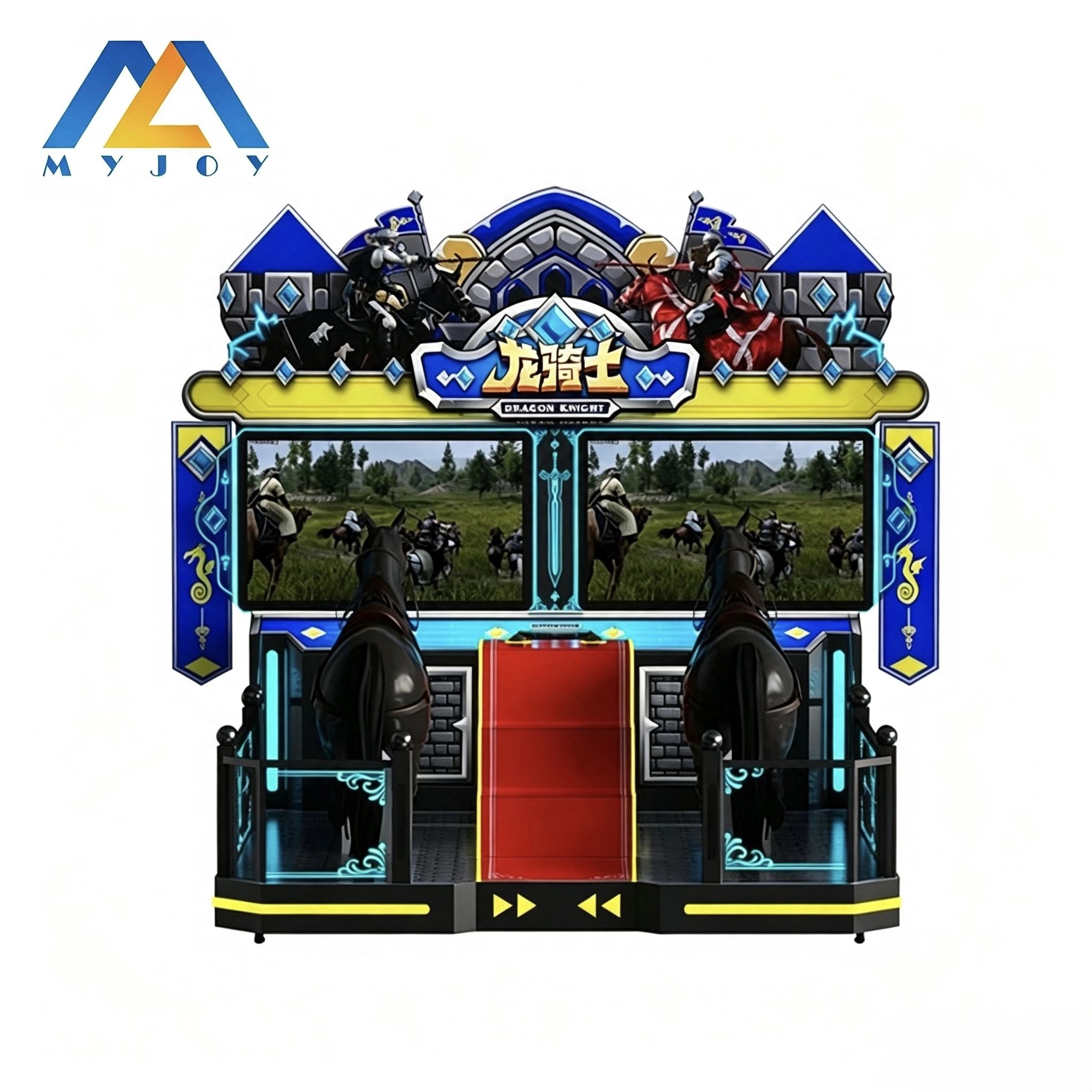
Flying Dragon Knight Horse Racing Simulator is a premium two-player arcade entertainment machine designed for amusement parks, shopping malls, arcades, family entertainment centers and themed attractions. Inspired by medieval knights and fantasy dragon adventures, this simulator combines realistic horse riding motion, interactive racing gameplay and an impressive visual design to create an unforgettable entertainment experience.
Featuring two realistic horse models, dual HD displays, dynamic motion control, vibration feedback and immersive sound effects, players can experience exciting horse racing competitions, adventure challenges and jumping missions. The machine recreates the feeling of real horseback riding through synchronized movement and responsive control systems.
With its eye-catching dragon knight appearance, colorful LED lighting, multiplayer competition mode and safe commercial design, Flying Dragon Knight Horse Racing Simulator is an excellent attraction solution for increasing customer engagement and entertainment value.
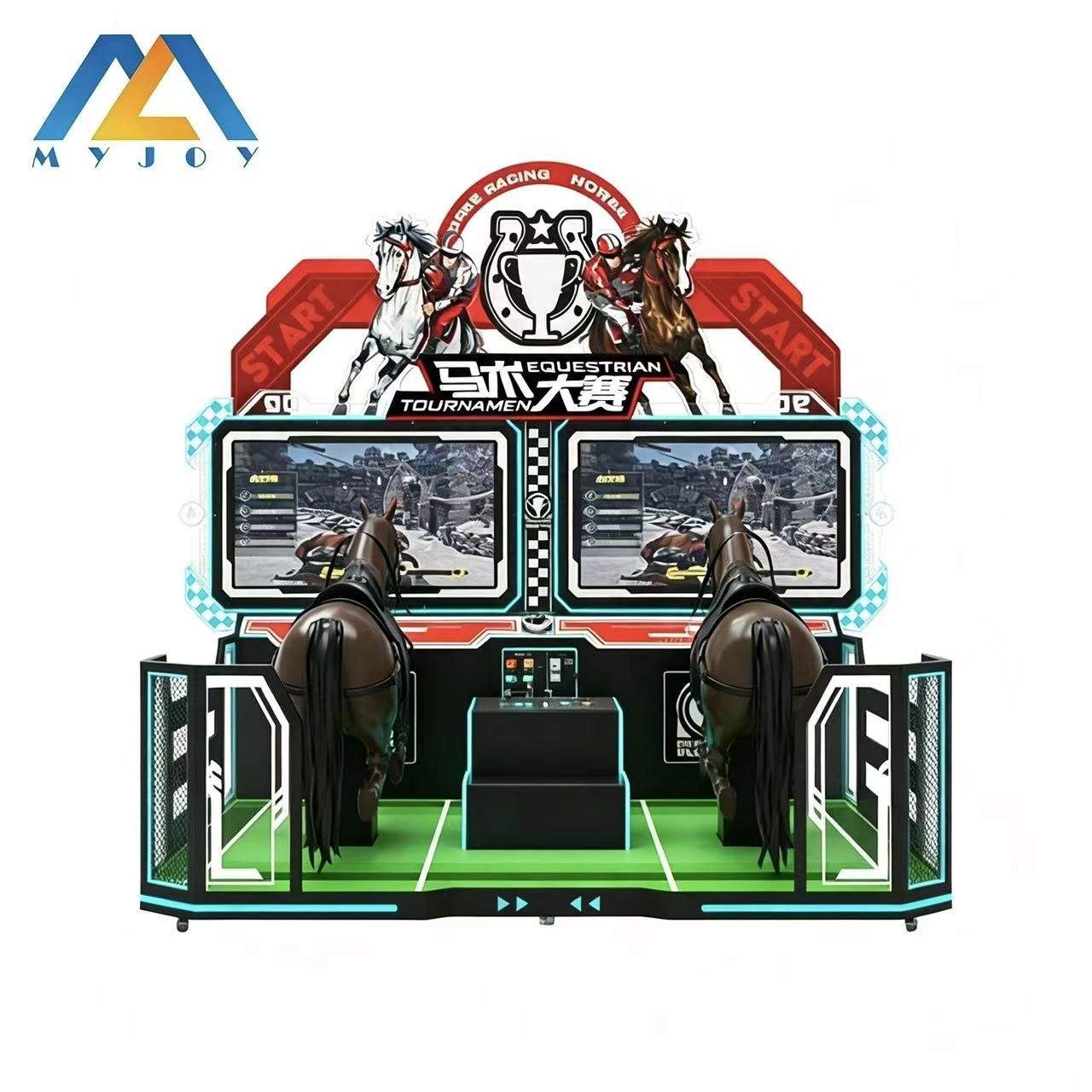
The Horse Racing Championship is a dual-player interactive sports simulator developed by Guangzhou Meiyilian Animation Technology Co., Ltd. It combines simulated horseback riding, competitive racing, physical interaction, and immersive visual effects to create an exciting attraction for players aged 5 to 50.
The machine features two realistic horse models equipped with comfortable saddles and reins. Players control their horses through riding movements and compete on two HD screens. Multiple racing scenes, difficulty levels, and challenge modes make the experience suitable for beginners and experienced players alike.
With its striking equestrian-themed design, dynamic LED lighting, green racetrack-style platform, and competitive ranking system, the machine easily attracts attention and encourages repeat play. It is ideal for amusement arcades, shopping malls, family entertainment centers, sports venues, theme parks, clubs, and tourist attractions.
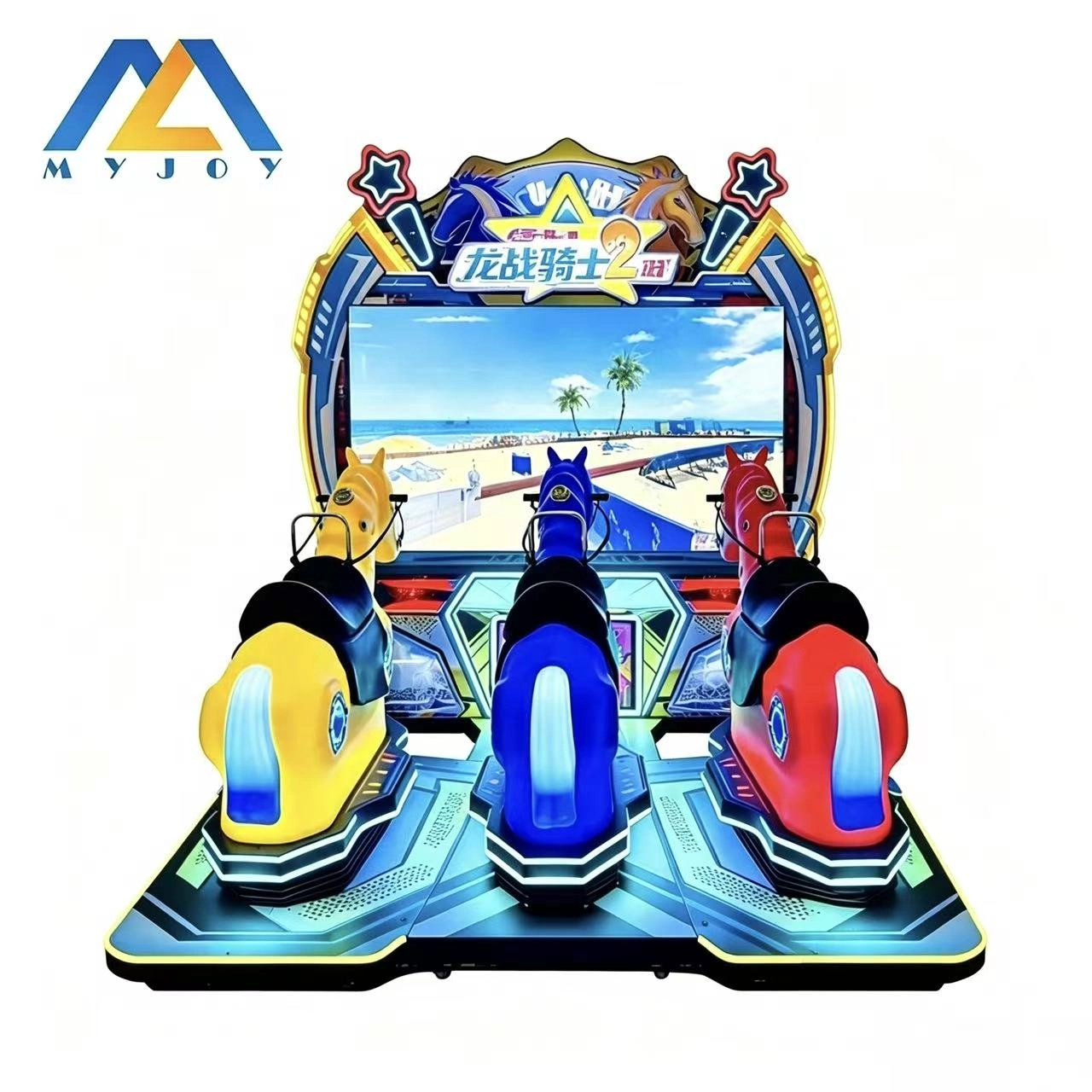
Dragon Warrior Knight 2 – Bring Real Horse Racing Excitement to Indoor Entertainment Venues
Dragon Warrior Knight 2 is an immersive interactive horse riding arcade machine designed around horse racing, obstacle challenges, and multiplayer competition. Featuring a cute and colorful horse design, large HD display, dynamic lighting effects, surround sound system, and realistic rein-control operation, this simulator creates an exciting horse racing experience for children, teenagers, and families.
Players can experience the feeling of riding a racing horse by controlling the reins to accelerate, change direction, and jump over obstacles. The realistic riding movements and interactive gameplay provide strong immersion and encourage repeat play.
The machine supports single-player challenge mode and 3-player competitive racing mode, allowing players to compete with friends, family members, or teammates. It is an ideal attraction for children's playgrounds, arcades, shopping malls, amusement parks, and family entertainment centers.
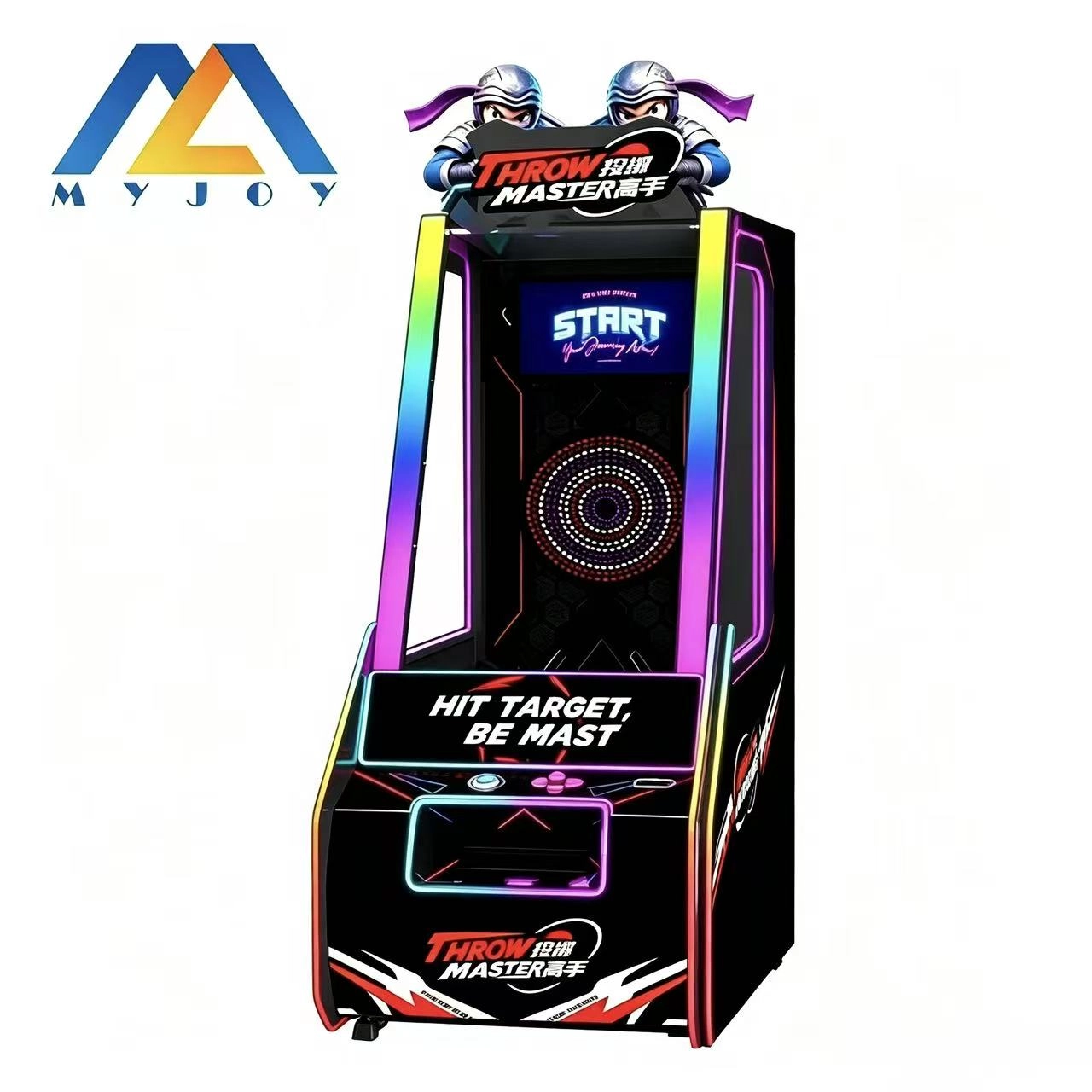
THROW MASTER is a commercial interactive dart throwing arcade machine that combines physical throwing action with an electronic target, digital scoring, on-screen interaction, and camera-based hit detection.
Designed for arcades, family entertainment centers (FECs), indoor amusement venues, shopping malls, and competitive entertainment spaces, THROW MASTER delivers an engaging mix of casual fun and skill-based competition.
Players insert coins, select their player and game mode, and throw darts at the large colorful electronic target. The system detects each result and displays scores, objectives, remaining throws, and game progress on the screen.
With Standard Mode for score-based challenges and Skill Mode for precision target challenges, the machine is suitable for both casual players and those looking for a more competitive experience. Leaderboards, adjustable game settings, and optional ticket rewards also make it well suited for commercial arcade operation.
Its large upright cabinet, colorful circular target, and vibrant RGB-style lighting create a futuristic arcade appearance that helps attract attention in busy entertainment venues.


No. 3, Wenjian Second Road, Wenbian Village, Shiji Town, Panyu District, Guangzhou City, China
Facebook